Reconsideration of Working Hours System Reform Amid Public Backlash
Growing Calls for Minister Lee Jeong-sik's Accountability Within Ruling Party
Poor Preliminary Work on Inclusive Wages and Leave Usage
Ministry of Employment Strives to Persuade MZ Generation... Alternatives Not Easy
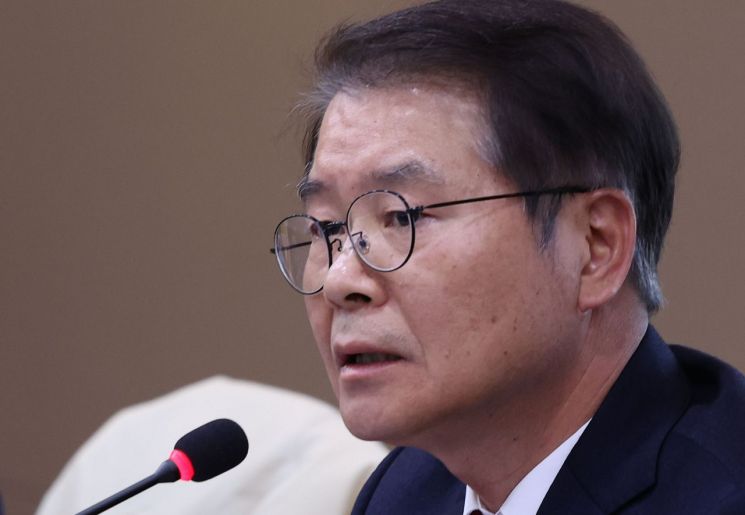 Lee Jeong-sik, Minister of Employment and Labor, is speaking at the labor-management meeting for workplaces excelling in working hours recording and management held on the afternoon of the 15th at the Seoul Employment and Labor Office in Jung-gu, Seoul.
 [Photo by Yonhap News]
The Ministry of Employment and Labor, the main government agency in charge, has found itself in a dire situation as public criticism intensifies over the proposed reform of the working hours system, represented by the "69 hours per week" plan. Critics argue that pushing ahead with the reform without measures to address anticipated side effects such as unpaid overtime, overnight work, and difficulties in taking leave has only fueled public opposition from the outset of labor reform. Although the ministry belatedly announced that it would "keep all options open and gather opinions again," analysts suggest that communication will be challenging due to the lack of clear alternatives.
According to government officials on the 16th, the Ministry of Employment and Labor began supplementary work on the working hours system reform plan announced on the 6th. The measures to eradicate the misuse of the comprehensive wage system, initially scheduled to be announced on the same day, have been indefinitely postponed. A ministry official stated, "We have been instructed to listen carefully to opinions on the working hours system and review it further, so measures related to the comprehensive wage system, which are part of this, also need to be supplemented," adding, "The announcement timing is still undecided."
Growing Calls for Ministry Accountability... Ruling Party Also Says "Not Smooth"
As the reform plan to increase the maximum working hours from the current 52 hours per week to 69 hours per week faces backlash, calls for accountability within the Ministry of Employment and Labor are growing even within the ruling party. Kim Ki-hyun, leader of the People Power Party, criticized the emerging responsibility of Minister Lee Jeong-sik, saying, "The process of announcing or building consensus was not smooth, and the explanations were given in a way that could cause misunderstandings, which is very regrettable." Since President Yoon Seok-yeol has instructed the ministry to make improvements regarding the working hours reform plan, the ruling party is also interpreted to be aligning with this stance.
The Ministry of Employment and Labor, which had previously praised the working hours reform plan as a "historic advancement," has now taken a step back. Minister Lee told reporters at the Seoul Regional Employment and Labor Office the day before that regarding the revision of the "69 hours per week" plan, "We are keeping all possibilities open," and "Better ideas may emerge during the legislative notice period." This marks a shift from the ministry's previous stance, which dismissed concerns about increased overwork due to the reform as misunderstandings and focused solely on persuading public opinion. The presidential office has also indicated that it will move away from the "69 hours" figure and propose a more reasonable standard, raising the possibility of significant revisions to the reform plan.
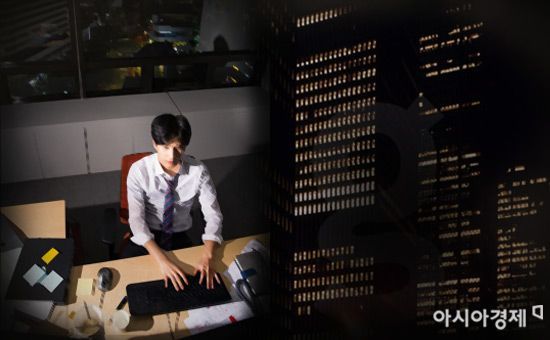
"No Leave, Only Unpaid Overtime"... Ministry's Deep Concerns
Labor groups emphasize that measures to address the biggest concerns of workers?unpaid overtime and guaranteed leave usage?must be prioritized. The government's reform plan aims to allow workers to accumulate up to 69 hours per week during busy periods and take long vacations when work is light. However, many workers criticize this, saying, "We will still do overtime, but will be hesitant to take leave." In particular, incentives proposed by the ministry, such as "living in Jeju Island for a month" or a "four-day workweek," are criticized as ideas that do not consider the realities of most small and medium-sized enterprises.
Deputy Minister Kwon Ki-seop also acknowledged during a briefing on the 9th that "there are extreme criticisms of the reform plan," but added, "It is reasonable to wonder whether workers can actually rest after concentrated work." However, since leave usage varies by company culture and the government cannot enforce it through regulation, it is difficult to devise concrete measures. A ministry official said, "Whether leave is taken is really a matter of (company) culture," and "It is difficult for the government to clearly propose specific measures."
Labor groups particularly argue that the misuse of the comprehensive wage system must be resolved before flexibilizing working hours. The comprehensive wage system pays a lump sum including overtime without separate allowances. Under this wage system, increasing the maximum working hours could lead to more unpaid overtime. The Korean Confederation of Trade Unions criticized, "Increasing only the maximum working hours without mentioning the prohibition or strict supervision of the comprehensive wage system shows that the Ministry of Employment and Labor has forgotten its very reason for existence."
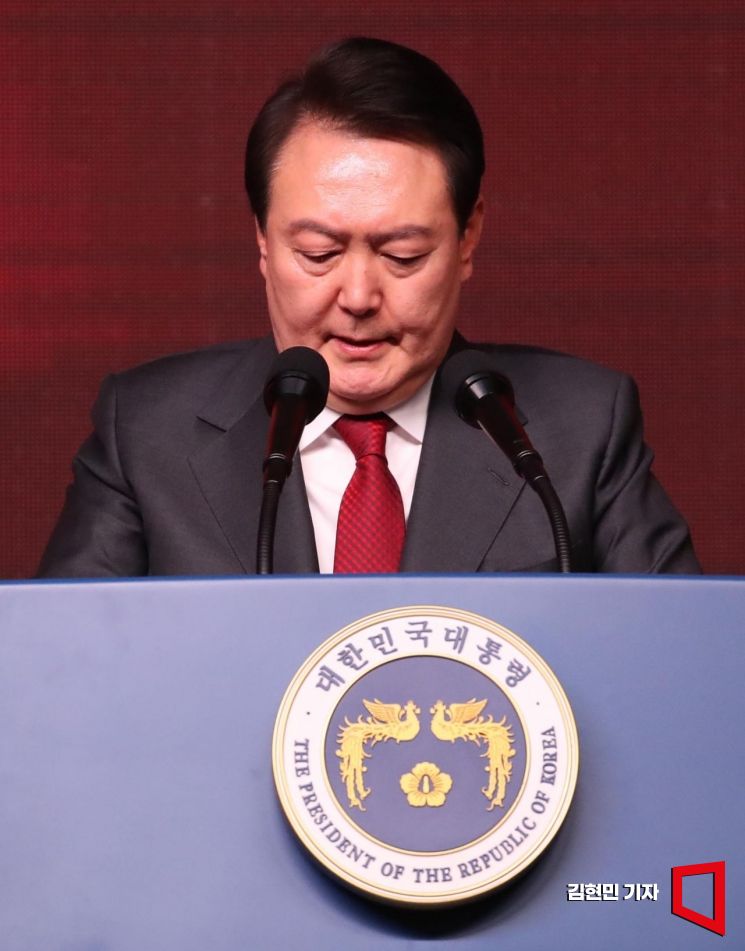 President Yoon Suk-yeol is delivering a congratulatory speech at the People Power Party's 3rd National Convention held on the afternoon of the 8th at KINTEX in Ilsan, Gyeonggi Province. Photo by Hyunmin Kim kimhyun81@
Relaxing the 52-Hour Limit Is Inevitable... Full Effort to Persuade the MZ Generation
Although the presidential office and the Ministry of Employment and Labor have announced that they will review the reform plan from scratch, major revisions are expected to be difficult because relaxing the "52-hour workweek" limit is a presidential campaign pledge. President Yoon's criticism of the lack of policy promotion rather than the increase in maximum working hours supports this analysis. As alternatives, there are opinions that the scope of adjustments could include slightly lowering the 69-hour limit, mandating 11 hours of rest between working days, strengthening guarantees for long vacations, and expanding penalties for misuse of the comprehensive wage system.
Minister Lee is expected to focus on persuading younger generations, such as the MZ generation (Millennials + Generation Z), about the necessity of the working hours reform. He first met with the MZ labor union to hear their opinions the day before and planned to hold a meeting with the "2030 Advisory Group" in the afternoon. Im Mu-song, a visiting professor at Inha University and former chair of the Seoul Regional Labor Relations Commission, said at a job solidarity forum the day before, "There is an impression that the reform plan proposed by President Yoon and the reform tasks put forward by the cabinet are not organically connected," adding, "The rationality and persuasiveness of the content and a meticulous implementation strategy are key to success."
© The Asia Business Daily(www.asiae.co.kr). All rights reserved.


















