Criticism Continues on Second Day with Message "Careful Listening to Vulnerable Workers"
No "Target" for Potential Reduction in Weekly Maximum Working Hours
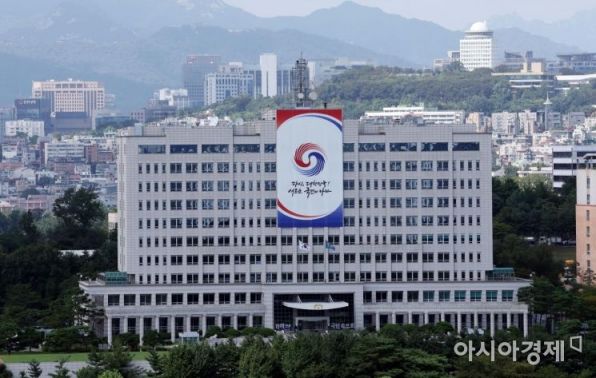
The Presidential Office stated on the 15th that it will "carefully listen to the opinions of labor-vulnerable groups before setting the direction" regarding the Ministry of Employment and Labor's proposal to reform the working hours system, which centers on a maximum of 69 working hours per week. This means that the policy direction will be decided after thoroughly listening to public opinion, including that of the MZ generation. As critical opinions continued mainly from the MZ generation, the Presidential Office mentioned public opinion listening for the second day in a row and began efforts to ease concerns.
Kim Eun-hye, Chief of Public Relations, said during a briefing at the Yongsan Presidential Office on the morning of the same day, "President Yoon Seok-yeol's core labor market policy is the protection of the rights and interests of labor-vulnerable groups such as MZ workers, non-unionized workers, and small and medium-sized enterprise workers." Kim’s briefing was held without prior notice.
Chief Kim emphasized, "The policy of flexible working hours allows labor and management to freely negotiate working hours not only on a weekly basis but also monthly, quarterly, semi-annually, and annually. However, the maximum weekly working hours will be set after more detailed listening to the opinions of labor-vulnerable groups." Since the core of this reform was mentioned as "expanding the choice of working hours through free negotiation," it is expected that while maintaining the direction of flexibilizing the current 52-hour workweek system, there will be revisions regarding the part that sets the maximum weekly working hours at 69 hours.
The Presidential Office also issued a separate message in the afternoon. A Presidential Office official said during the afternoon briefing, "Until now, it has been reported as if the 69-hour workweek was being pushed forward without workers' consent, and there was a limitation in the discussion focused on the number '69'." He added, "We want to conduct opinion polls and focus group interviews to determine how much it is reasonable to increase from 52 hours and what is most suitable for the rights and interests of labor-vulnerable groups."
When asked whether there is a possibility that the maximum weekly working hours could be reduced from 69 hours, the official replied, "There is no set goal; we plan to present standards that labor-vulnerable groups want and consider reasonable through opinion polls and surveys." He also added that "all possibilities will be kept open and thoroughly reviewed" to ensure that in workplaces where workers have weak bargaining power and there is a shortage of manpower, the flexibilization of working hours does not inadvertently lead to "long-hour forced labor."
Earlier, on the 6th, the Ministry of Employment and Labor announced a legislative notice for a labor law amendment that changes the current system limiting workers to 52 hours per week, allowing them to work up to 69 hours during busy periods. The government explained, "The intention is to reflect the opinions of the MZ generation so that workers can concentrate their labor when work is heavy and take long vacations when there is leisure."
However, the MZ labor union, Saerogochim Workers' Council, publicly opposed the expansion of the "extended working hours management unit," stating that it "goes against the efforts and historical progress of the international community to raise the minimum standards of working conditions." They also pointed out, "Despite South Korea having relatively many public holidays, the reason why the average working hours are higher compared to major advanced countries is because the upper limit on extended working hours is high and extended working hours frequently occur in industrial sites," adding that "the intended stabilization of the 52-hour workweek system has not been achieved."
© The Asia Business Daily(www.asiae.co.kr). All rights reserved.
![Clutching a Stolen Dior Bag, Saying "I Hate Being Poor but Real"... The Grotesque Con of a "Human Knockoff" [Slate]](https://cwcontent.asiae.co.kr/asiaresize/183/2026021902243444107_1771435474.jpg)
















