'Anseong St. Kim Daegeon Andrea Priest Memorial Cathedral' Designated as Cultural Heritage
On the 15th, the Cultural Heritage Administration announced its intention to register the 'Min Young-hwan Western-style Military Uniform' as a cultural heritage. Opinions from various sectors will be collected for one month, and the final registration decision will be made after a review by the Cultural Heritage Committee.
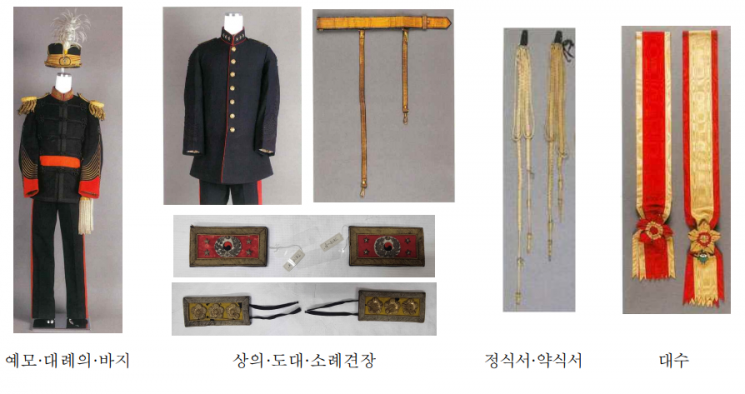
Min Young-hwan (1861-1905) was a late Joseon Dynasty official and a reformist bureaucrat of the Korean Empire. He protested the signing of the Eulsa Treaty by choosing death. The Western-style military uniform system was implemented in 1895 according to the 'Army Uniform Regulations (regulations concerning types of army uniforms and items for each uniform).' The uniform Min Young-hwan wore was made according to the 'Army Soldier Uniform Regulations (regulations defining the form of each item),' revised in 1897 and 1900. The Cultural Heritage Administration explained, "It possesses most of the components such as ceremonial attire, formal dress, small ceremony epaulets, and grand sash, thus holding significant value in the history of costume."
Meanwhile, on the same day, the Cultural Heritage Administration decided to manage the 'Anseong St. Kim Dae-geon Andrea Memorial Cathedral,' owned by the Catholic Diocese of Suwon Foundation, as a cultural heritage. This cathedral and its burial ground were built to commemorate Father Kim Dae-geon (1821?1846). It is located in Misan-ri, Yangseong-myeon, Anseong-si, Gyeonggi-do. It is the resting place of Father Kim Dae-geon’s remains and is known as the 'Mirinae Holy Ground.'
Father Kim Dae-geon was declared a Gagyeongja (可敬者, a title given posthumously to those with outstanding faith and virtue) in 1857, beatified in 1925, becoming a Blessed (福者品, a status recognized by the Church allowing veneration before sainthood). In April 1984, he was canonized and elevated to sainthood by Pope John Paul II during his visit to Korea. The 'Anseong St. Kim Dae-geon Andrea Memorial Cathedral' was built in the Gothic style to commemorate his beatified status. The Cultural Heritage Administration evaluated, "This building allows us to confirm the development history of Korean Catholicism," adding, "Its original form is very well preserved, and the burial grounds in front of the cathedral clearly demonstrate symbolic and locational characteristics."
© The Asia Business Daily(www.asiae.co.kr). All rights reserved.

















