U.S. President Joe Biden welcomed the slowdown in the rise of the U.S. Consumer Price Index (CPI) for February on the 14th (local time) and stated that he will continue efforts to reduce costs for American households.
In a statement on the day, President Biden said, "Today's (CPI) report shows that annual inflation has decreased by one-third compared to last summer when the unemployment rate was at its lowest in nearly 50 years." He added, "This is the slowest annual increase since September 2021," emphasizing, "We will continue to work to lower costs so hardworking Americans have a bit more breathing room at the end of the month."
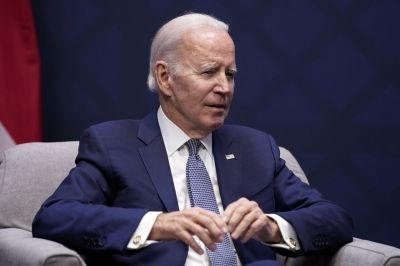
The February CPI released by the U.S. Department of Labor that morning rose 6.0% year-on-year, marking the smallest increase since September 2021. The CPI inflation rate, which peaked at 9.1% in June last year, slowed to 6%. This figure not only fell below the previous month's increase of 6.4% in January but also matched or slightly undershot experts' forecasts of 6.0?6.1% compiled by Dow Jones and The Wall Street Journal (WSJ). The month-on-month CPI also rose by 0.4%, slowing compared to January's 0.5% increase, which was in line with expectations (0.4%).
However, underlying inflationary pressures were confirmed to have slightly strengthened. The core CPI, which excludes volatile energy and food prices, rose 5.5% year-on-year and 0.5% month-on-month. In particular, as the market feared, the month-on-month increase was slightly larger than January's 0.4%. Since the core CPI, a key indicator monitored by the Federal Reserve (Fed), remains high, concerns about prolonged high inflation and extended tightening persist.
Regarding this, President Biden said, "As I have long said, just as the challenges in the banking sector remind us, there will be setbacks in the transition to steady and stable growth," adding, "But we face these challenges from a position of strength." This statement is interpreted as referring to the recent consecutive collapses of small and medium-sized banks such as Silicon Valley Bank (SVB). Experts have pointed to the Fed's rapid interest rate hikes and the resulting decline in bond prices as the background for SVB's sudden bankruptcy. This is also recognized as a setback that can occur during the transition to stable growth.
He emphasized, "Since I took office, more than 12 million jobs have been created, and the proportion of working-age adults who are employed or seeking employment is the highest in 15 years," adding, "We will continue to make progress in the fight to build a middle-class economy that grows from the bottom up, not the top down." He continued, "At the same time, we will do our best to ensure that the progress we have made does not backslide," including "standing up to the Republican House, which threatens economic disaster over the debt ceiling to secure tax cuts for the wealthy and big corporations."
On the same day, President Biden also welcomed pharmaceutical company Novo Nordisk's decision to lower insulin prices. He said, "I welcome today's announcement that Novo Nordisk will reduce insulin prices by up to 75%, following Eli Lilly," adding, "This builds on the important progress made last year when I signed a bill capping insulin prices at $35 for seniors. I urge all other pharmaceutical companies to follow suit, and I call on Republicans to join us in limiting insulin prices to under $35 for Americans."
© The Asia Business Daily(www.asiae.co.kr). All rights reserved.

















