Polar Research Institute, Study Results of Cases from 10,000 Years Ago
Based on past patterns, it is predicted that Arctic ice will melt faster due to global warming.
The Korea Polar Research Institute announced on the 14th that it has, for the first time, reconstructed and analyzed the accelerated retreat pattern of the massive ice sheet that once covered the northern part of the Norwegian territory of the Svalbard Archipelago, located at the gateway to the Arctic Ocean during the Holocene Thermal Maximum (11,000-5,000 years ago). The results indicate that glacier melting due to current global warming is expected to proceed irreversibly and rapidly.
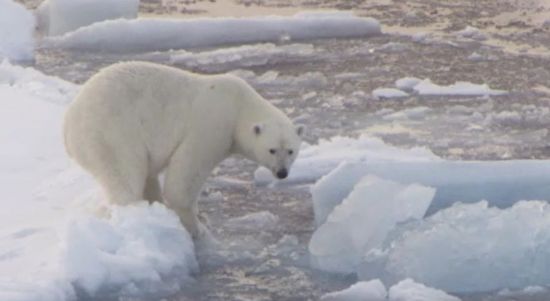
Global warming caused by the recent rapid increase in greenhouse gas emissions is rapidly reducing the area and volume of the cryosphere. This leads to issues directly related to human survival, such as sea level rise, coastal erosion, and threats to marine ecosystems. The Intergovernmental Panel on Climate Change (IPCC), in its Sixth Assessment Report published in 2021, predicted that "sea level rise due to glacier loss caused by global warming will gradually increase," and emphasized that "continuous acquisition of observational data on glacier behavior directly affected by global warming, along with reconstruction of past climate change records, is necessary for more accurate predictions and policy responses."
The research team analyzed the mineral composition of multiple core sediments obtained from the northern Svalbard fjord area during the 2017 Korea-Norway international joint expedition. As a result, they were able to reconstruct for the first time the behavior and retreat pattern of glaciers that existed in northern Svalbard 16,000 years ago.
By focusing on the property that a large amount of iron released during glacier retreat is rapidly deposited near the glacier, the team tracked the glacier's position over time based on changes in the iron oxide mineral content in the sediments and calculated the glacier retreat rate. The team revealed for the first time that the glaciers in northern Svalbard retreated rapidly 18,000 years ago.
Dr. Jang Gwang-cheol, the first author of the paper from the Korea Polar Research Institute, stated, "Considering the gradual increase in atmospheric and ocean temperatures during the Holocene Thermal Maximum, glacier melting does not respond linearly to temperature changes," and added, "Given that the summer atmospheric temperatures in 2000, when accelerated retreat of Greenland marine-based glaciers was observed, are very similar to those 18,000 years ago, the accelerated glacier retreat phenomenon in northern Svalbard in the past can be interpreted as nonlinear melting of glaciers that have surpassed a temperature threshold or tipping point."
Dr. Nam Seung-il explained, "The temperature threshold hypothesis, which indicates rapid glacier melting above a certain temperature today, has gained credibility from a long-term perspective through the environmental reconstruction case of past glacier behavior conducted in this study."
The results of this study were published on the 1st of this month in the international journal of Earth and planetary sciences, Earth and Planetary Science Letters.
© The Asia Business Daily(www.asiae.co.kr). All rights reserved.
![Clutching a Stolen Dior Bag, Saying "I Hate Being Poor but Real"... The Grotesque Con of a "Human Knockoff" [Slate]](https://cwcontent.asiae.co.kr/asiaresize/183/2026021902243444107_1771435474.jpg)















