Foreigners and Institutions Net Sell Amid SVB Aftershocks
Domestic Bank Stocks Fall on Liquidity Concerns
As the aftershocks of the bankruptcy of Silicon Valley Bank (SVB) in the United States continue, the KOSPI and KOSDAQ indices are showing a sharp decline on the 14th.
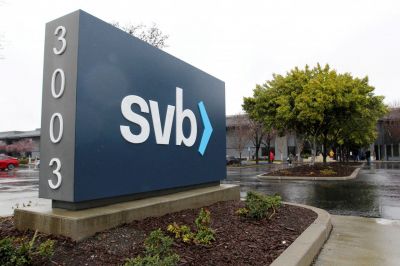
At 10:59 a.m. on the day, the KOSPI was pointing to 2358.00, plunging 2.18% (52.60 points) compared to the previous trading day. The index started the session with a decline of around 0.8%, but as net selling by foreigners and institutions intensified, the drop widened. At the same time, the KOSDAQ index also traded at 765.83, down 2.92% (23.06 points) from the previous trading day. Despite the U.S. government's active intervention to manage the SVB situation, the continuation of bank runs (massive withdrawals) has heightened investors' anxiety.
Currently, foreigners and institutions are releasing a large volume of net sell orders in the KOSPI market. Foreigners sold stocks worth 315.3 billion KRW, and institutions sold 61 billion KRW worth of stocks, while individual investors alone purchased stocks worth 358.8 billion KRW. The KOSDAQ market showed a similar pattern, with foreigners and institutions selling stocks worth 274.2 billion KRW and 132.3 billion KRW respectively, while individual investors alone net bought stocks worth 413.8 billion KRW.
Top market capitalization stocks are also uniformly declining. Major domestic semiconductor and secondary battery companies such as Samsung Electronics (-1.17%), SK Hynix (-3.08%), LG Energy Solution (-2.31%), LG Chem (-2.23%), and Samsung SDI (-3.12%) are all continuing their downward trend. In the KOSDAQ market, EcoPro BM (-2.5%) and EcoPro (1.94%), which showed an early rise, also either turned to decline or reduced their gains.
Concerns over liquidity in financial companies are growing, causing domestic bank stocks to continue their downward trend. KB Financial fell more than 3%, and Shinhan Financial Group (-1.94%), Hana Financial Group (-3.4%), and Woori Financial Group (-2.46%) also remained weak.
The won-dollar exchange rate, which started at 1298.1 KRW, has been fluctuating around the 1305 KRW level. The previous day’s exchange rate fell by 22.4 KRW in one day, reflecting the possibility of easing Fed tightening, and this influence was also seen in the early trading session. However, concerns that the U.S. Consumer Price Index (CPI) for February, to be announced at 9:30 p.m. that day, might exceed market expectations, along with growing credit risk concerns for regional banks following the SVB bankruptcy, caused the exchange rate to rise slightly.
Meanwhile, market insiders are presenting a more moderate outlook on interest rate hikes. Earlier this month, due to inflation concerns, it was expected that the Federal Reserve (Fed) might raise rates by 50 basis points (a big step) at the March FOMC (Federal Open Market Committee) meeting, but now the possibility of a rate freeze is gaining more support. According to Fed Watch’s probability for a rate hike at the March FOMC meeting, the chance of a rate freeze has increased from 0% just before the SVB incident to 38%.
Stock market experts say it is necessary to observe further whether the credit crisis triggered by the SVB incident will spread. Accordingly, they expect that risk appetite for risky assets may remain subdued for some time. Sanghyun Park, a researcher at Hi Investment & Securities, said, “Despite emergency measures by the U.S. government and the Fed, the bank run phenomenon continues, so it is necessary to watch over time,” adding, “Ultimately, for this situation to calm down, a policy shift such as the Fed stopping rate hikes and cutting rates is needed.” Park also explained, “The sentiment to confirm the easing of credit risk, such as calming the bank run phenomenon through the Fed’s policy shift, is expected to continue for the time being.”
© The Asia Business Daily(www.asiae.co.kr). All rights reserved.

















