Flour Milling Industry Meeting
The Ministry of Agriculture, Food and Rural Affairs held a meeting on the 13th to gather opinions from the milling industry regarding the stabilization of the domestic flour market this year.
At the meeting, representatives from nine milling companies participating in the flour price stabilization support project, including CJ CheilJedang, Daehan Flour Mills, Sajo Dongawon, Samyang Corporation, SPC Samlip, Daesun Flour Mills, Samhwa Flour Mills, Hantop, and Samyang Foods, as well as executive-level officials from the Korea Flour Mills Association, attended.
At the meeting, Kim Jeong-hee, Director of the Food Policy Office at the Ministry of Agriculture, Food and Rural Affairs, stated, "Although the import price of wheat rose significantly last year due to factors such as the increase in international grain prices and exchange rates, the milling industry’s active participation in the government’s flour price stabilization project resulted in the stabilization of domestic flour prices from the second half of the year and minimized the ripple effects on flour products and dining-out prices." He expressed gratitude to the domestic milling industry for their cooperation in stabilizing flour prices.
As a result of checking the wheat supply and demand situation, the milling industry holds more than 3 to 4 months’ worth of domestic wheat stock. Considering contracted volumes, they have secured about six months’ worth, indicating that there is currently no problem with the domestic wheat supply.
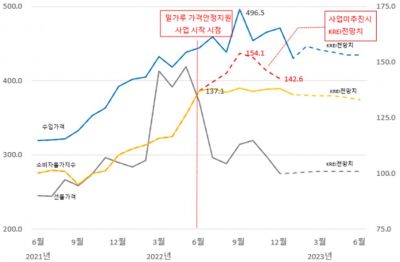
International wheat futures prices began to stabilize after the Black Sea grain export agreement between Russia and Ukraine was reached in June 2022. In December of the same year, prices were $275 per ton, below the pre-war price of $293 per ton, and in February this year, the price was $276.
The import price of wheat brought into the country peaked at $496 per ton (694,000 KRW) in September 2022 but has gradually declined since then. The Ministry of Agriculture, Food and Rural Affairs reports that the average wheat import price in February 2023 stabilized at around $449 per ton (575,000 KRW).
Director Kim forecasted, "Considering that wheat futures prices are reflected in wheat import prices 4 to 6 months later, unless there are special variables such as a sharp rise in exchange rates, wheat import prices in the second half of the year are expected to remain stable."
According to the Ministry of Agriculture, Food and Rural Affairs, the milling industry attending the meeting evaluated that the flour price stabilization support project greatly contributed to stabilizing domestic flour prices. Despite difficult conditions such as rising expenses, exchange rates, and interest rate hikes, they expressed their intention to continue cooperating with the government for price stabilization and requested government support for raw material purchase funding and other assistance.
In response, Director Kim said, "Although uncertainties in import prices remain due to international situations, exchange rates, and global grain harvests throughout this year, close public-private cooperation is essential to stabilize the supply of wheat, a strategic item important to the national diet." He added, "We plan to gather opinions from the milling industry and develop and implement necessary policies."
© The Asia Business Daily(www.asiae.co.kr). All rights reserved.

















