Will the Silicon Valley Bank (SVB) crisis in the United States lead to an early halt in the European Central Bank's (ECB) tightening? As market attention shifts from 'inflation' to 'financial stability' due to the SVB-triggered financial market turmoil, there is keen interest in whether the ECB will proceed with the anticipated big step (a 0.5 percentage point increase in the benchmark interest rate) this week.
On the 13th (local time), the US Wall Street Journal (WSJ) forecasted that, in the aftermath of SVB's bankruptcy, the ECB might slow down the pace of rate hikes or reverse direction at the monetary policy meeting scheduled for the 16th.
This is based on the judgment that it has become urgent to prevent the ripple effects of SVB's collapse from triggering a chain of failures among US banks and escalating into a global financial crisis. Although the US government's intervention has for now prevented the SVB incident from expanding into a 2008-style financial crisis, maintaining a tightening stance amid assessing additional damage is expected to be burdensome.
Germany's Bundesbank, the central bank of Europe's largest economy, also held an emergency meeting on the same day to discuss the impact of SVB's bankruptcy on banks and markets, indicating that policymakers are acting urgently. A source familiar with the matter said, "The SVB crisis will be a key agenda item in monetary policy discussions over the coming weeks, including the meeting on the 16th."
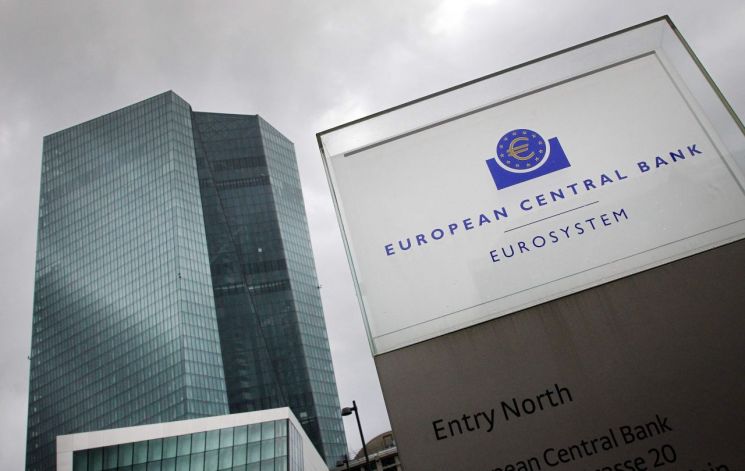
The market is focusing on the possibility that this crisis could be the beginning of another problem caused by excessive tightening side effects. Even if the SVB incident ends as a one-off event, the confirmed financial vulnerabilities due to rapid rate hikes suggest that the ECB now faces the dual challenge of overcoming both financial stability and inflation.
The WSJ predicted that central banks worldwide, including the ECB, which have been implementing aggressive tightening to combat inflation, may switch to a 'firefighting mode' to protect financial markets. This means the ECB could shift its role to a firefighter blocking the spread of financial sector risks caused by aggressive tightening, potentially reversing the rate hike trend.
Among some central bank policymakers, there are even warnings that the SVB-triggered market panic could push more banks and financial firms into crisis, becoming a chain leading to economic collapse. Stefan Gerlach, former Deputy Governor of the Central Bank of Ireland, said, "There is a clear risk that something in the economy could break if rates are raised this much," adding, "There needs to be a consideration of how much inflation must be tolerated to ensure financial stability."

The European Commission, the EU's executive body, holds the view that there is currently no significant risk to European financial markets from the SVB bankruptcy, but the WSJ reported that the ECB is likely to maintain a cautious stance. The WSJ added, "It does not seem likely that the ECB will completely change its rate hike path, but there could be opposition to the big step at this meeting."
Since entering tightening mode in July last year, the ECB has raised its benchmark interest rate to 3.0%, the highest level since 2008, and has signaled an additional 0.5 percentage point increase this month following last month. ECB President Christine Lagarde announced at last month's meeting, "It is still too early to declare victory in the fight against inflation," signaling the implementation of the big step.
© The Asia Business Daily(www.asiae.co.kr). All rights reserved.
![Clutching a Stolen Dior Bag, Saying "I Hate Being Poor but Real"... The Grotesque Con of a "Human Knockoff" [Slate]](https://cwcontent.asiae.co.kr/asiaresize/183/2026021902243444107_1771435474.jpg)












