Unusually High Temperatures Over 20 Degrees in March... Concerns Over Global Warming
Regional Festivals Lively for the First Time in 4 Years Since COVID-19
The Japan Meteorological Agency announced that it plans to declare the cherry blossom blooming as early as the 14th, and by the latest, by the 15th. Accordingly, following 2020 and 2021, this year’s cherry blossom season is expected to start at a record-breaking early time. Concerns about abnormal weather phenomena are also emerging due to the continuously earlier cherry blossom blooming caused by global warming.
Some expect that with the mask mandate being lifted across Japan at the same time and the easing of quarantine measures, large-scale cherry blossom festivals will be held for the first time in four years since COVID-19, bringing vitality to local businesses.
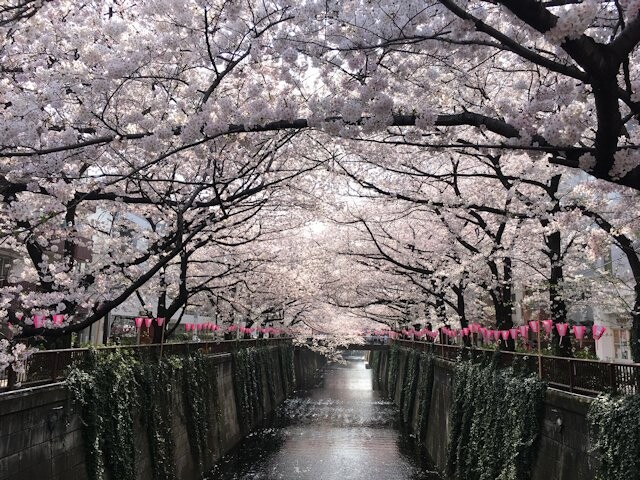
According to the Nihon Keizai Shimbun (Nikkei) on the 14th, the Japan Meteorological Agency is in the final countdown to announcing the cherry blossom blooming. Although the media predicted blooming the previous day, the agency announced that after observing the sample cherry tree at Yasukuni Shrine in Tokyo around 2 p.m. the previous day, only one flower had bloomed, which did not meet the blooming criteria. The Japan Meteorological Agency considers the first day when five to six or more flowers bloom on the sample tree as the official blooming day.
However, even if the agency announces blooming on that day, it is expected to be a record comparable to the earliest blooming years of 2020 and 2021 since observations began in 1953. Japanese media expect the announcement to be made by the 15th at the latest. According to the Japan Meteorological Agency, cherry blossoms will bloom in full swing in Tokyo on the 14th to 15th, Fukuoka on the 16th, Nagoya on the 19th, and Osaka on the 22nd. All these dates are about a week earlier than usual, attributed to the recent continuous warm weather. For example, in Tokyo, the originally expected blooming date was the 18th, but with rising temperatures, the schedule was adjusted to be eight days earlier than average.
With the lifting of indoor and outdoor mask mandates, various places in Japan are already bustling with crowds enjoying spring outings. Ueno Park, a famous cherry blossom spot that attracted 3 million visitors before COVID-19, has decided to resume flower viewing after four years. The Meguro River in Tokyo, another popular spot where cherry blossoms line both sides of the river, is already drawing crowds. The nearby Nakameguro Station is expected to see 100,000 more passengers compared to the same period last year. Other regions such as Osaka and Yokohama are also preparing events and easing entry restrictions to capitalize on the early cherry blossom viewing season.
However, the early blooming does not bring only excitement. There are concerns that it is evidence of climate change caused by global warming. Recently, Japan has recorded temperatures above 20 degrees Celsius for three consecutive days. This means March weather resembling mid-May conditions. This is an abnormal temperature event not seen in a decade, and scholars predict that the time from the start of blooming to full bloom will also accelerate.
Data analysis company Shimadzu Business Systems, using artificial intelligence (AI) to analyze weather data, reported, “If temperatures rise by 4 degrees following the current trend, some regions in Japan such as Kyushu may never see cherry blossoms bloom again,” adding, “Blooming nationwide will occur about 16 days earlier.”
In fact, the average nationwide cherry blossom blooming date has been advancing by 1.1 days every 10 years since 1953. The average date for cherry blossoms to bloom in Tokyo in March was originally the 29th, but in 2020 and 2021, they bloomed on the 14th, marking the earliest dates on record. The Japan Meteorological Agency’s climate change monitoring report pointed out that the long-term rise in temperature is the cause of the early blooming.
© The Asia Business Daily(www.asiae.co.kr). All rights reserved.
![Clutching a Stolen Dior Bag, Saying "I Hate Being Poor but Real"... The Grotesque Con of a "Human Knockoff" [Slate]](https://cwcontent.asiae.co.kr/asiaresize/183/2026021902243444107_1771435474.jpg)
















