Ministries of Education, Environment, Agriculture, Oceans and Fisheries, Korea Forest Service, and Korea Meteorological Administration Selected
4 Kindergartens, 10 Elementary, 8 Middle, 7 High, 1 Special School
The Ministry of Education, Ministry of Environment, Ministry of Agriculture, Food and Rural Affairs, Ministry of Oceans and Fisheries, Korea Forest Service, and Korea Meteorological Administration announced on the 13th the selection of 40 schools as the ‘2023 Carbon Neutral Priority Schools.’
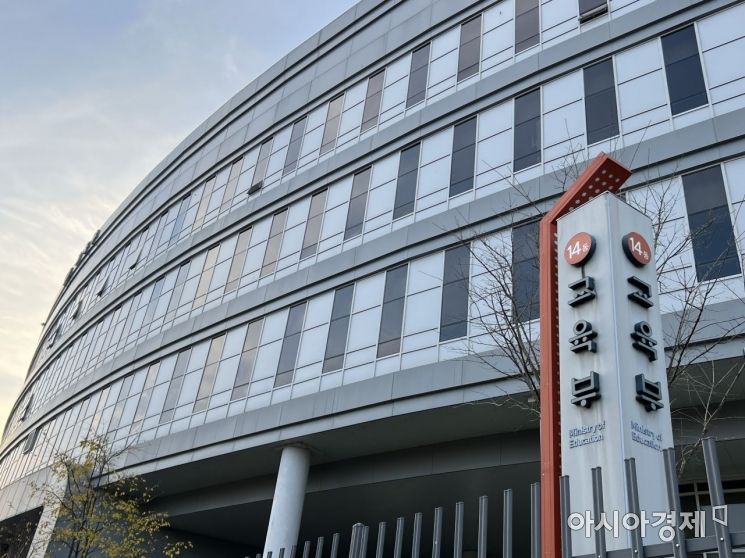
This year, 30 new schools were selected, and 10 existing priority schools were designated as leading model types. Notably, Daejeon Haedeun School was selected for the first time among special schools, where systematic climate and environmental crisis response carbon-neutral practice education will be provided for students with disabilities.
The government recognizes that practical efforts to cultivate the future generation’s capacity to respond to climate and environmental crises must start at schools. Accordingly, in 2021, six related ministries signed a memorandum of understanding to realize carbon neutrality in schools and have expanded support to schools annually.
Starting this year, priority schools will receive multifaceted support centered on each ministry’s area of expertise, including △funding for curriculum and program operation for carbon-neutral practice, facility and space creation △climate and environmental education communication channels (help desk), mobile environmental classrooms called Pureumi, environmental teaching aids and books support △mobile marine environment classrooms, national marine environment online education support △linkage and experiential support with rural character schools △woodworking classrooms, forest education experts and forest education support △climate change science instructor lectures and experiential learning, and climate change science education at the National Meteorological Science Museum.
Additionally, through counseling by the dedicated agency (Korea Educational Development Institute), schools are expected to become hub schools for realizing carbon neutrality by operating carbon-neutral curricula and programs, strengthening the capabilities of school members, and fostering and spreading a culture of practice.
Furthermore, through councils and workshops among priority schools, excellent cases from each school will be discovered, and a collection of best practices will be published and distributed to spread exemplary cases of carbon neutrality nationwide.
Ko Young-jong, the Ministry of Education’s Chief Education Support Officer, stated, “To realize carbon neutrality, it is important to engage in practical activities together through the empathy and cooperation of all members of society. Especially, schools must take the lead in ensuring that children properly recognize and actively respond to the climate and environmental crisis from an early age.” He added, “The Ministry of Education will continue to cooperate with related ministries and metropolitan and provincial offices of education to activate climate and environmental education in schools for a sustainable future.”
© The Asia Business Daily(www.asiae.co.kr). All rights reserved.
![Clutching a Stolen Dior Bag, Saying "I Hate Being Poor but Real"... The Grotesque Con of a "Human Knockoff" [Slate]](https://cwcontent.asiae.co.kr/asiaresize/183/2026021902243444107_1771435474.jpg)
















