Cultural Heritage Administration: "Later-produced Gyehoedo is the earliest in production period"
'Anseong Cheongryongsa Gilt-bronze Seated Avalokitesvara' and 'Yi Hang-bok's Haeseo Thousand Character Classic' also included
The Foundation for Cultural Heritage Abroad's 'Dokseodang Gyehoe-do (讀書堂契會圖)', repatriated from the United States last year, will be designated as a Treasure. On the 13th, the Cultural Heritage Administration announced the preliminary designation of 'Anseong Cheongryongsa Gilt-bronze Seated Avalokitesvara Bodhisattva (安城 靑龍寺 金銅觀音菩薩坐像)', 'Suneung Eomgyeong-uihae Volumes 9?15 (首楞嚴經義海 卷9~15)', and 'Yi Hangbok's Regular Script Thousand Character Classic (李恒福 楷書 千字文)' as Treasures. After collecting and reviewing opinions from various sectors for a month and undergoing deliberation by the Cultural Heritage Committee, the final designation will be confirmed.
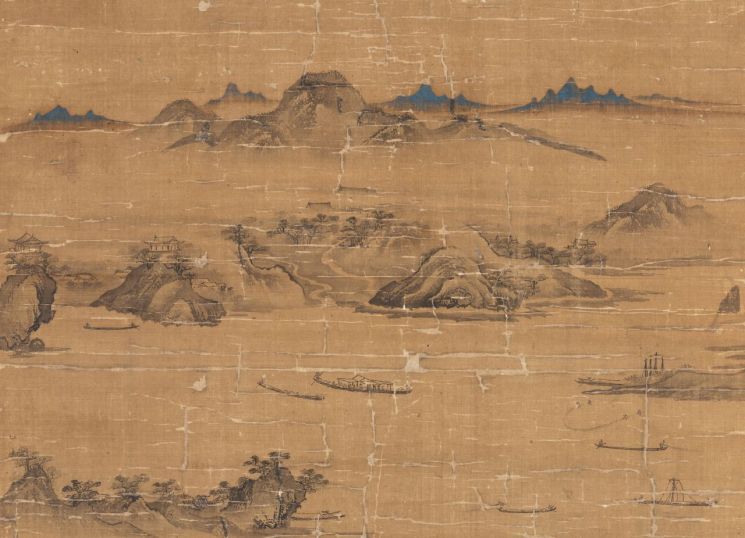
Dokseodang Gyehoe-do is a painting depicting a gathering of officials who studied at home, known as a gyehoe. It is estimated to date from the mid-Joseon period, 1516?1530. The Cultural Heritage Administration explained, "Based on the official positions of the individuals mentioned in the lower section’s seating list (座目), confirmed through the Annals of the Joseon Dynasty and various literary collections, it is believed that the gyehoe took place around 1531 (26th year of King Jungjong’s reign). The painting was likely created at that time." Sagadokseo (賜暇讀書) was a talent cultivation policy that selected young and capable civil officials and granted them leave to devote themselves to study.
Dokseodang Gyehoe-do is in the form of a single hanging scroll. At the top of the painting, the title 'Dokseodang Gyehoe-do' is written in seal script. The central image depicts the natural scenery around Dumopo (豆毛浦, present-day area along the Han River in Oksu-dong, Seoul), Dokseodang, and the main figures of Sagadokseo enjoying a boat ride on the Han River. The ink-painted landscape follows the style of the An Gyeon school (安堅派), a landscape painting tradition inspired by An Gyeon. Distant mountains are depicted in deep blue using azurite pigment. The seating list at the bottom records the twelve participants’ pen names, names, courtesy names, clans, birth years, years of Sagadokseo, and years of passing the state examination in regular script. The Cultural Heritage Administration stated, "Among gyehoe paintings with a top title, central image, and bottom seating list made in later periods, this is the earliest in terms of production date. Unlike the conceptual landscapes popular in the early Joseon period, it is a true-view landscape painting depicting actual scenery around the Han River, which gives it high historical and art-historical value."
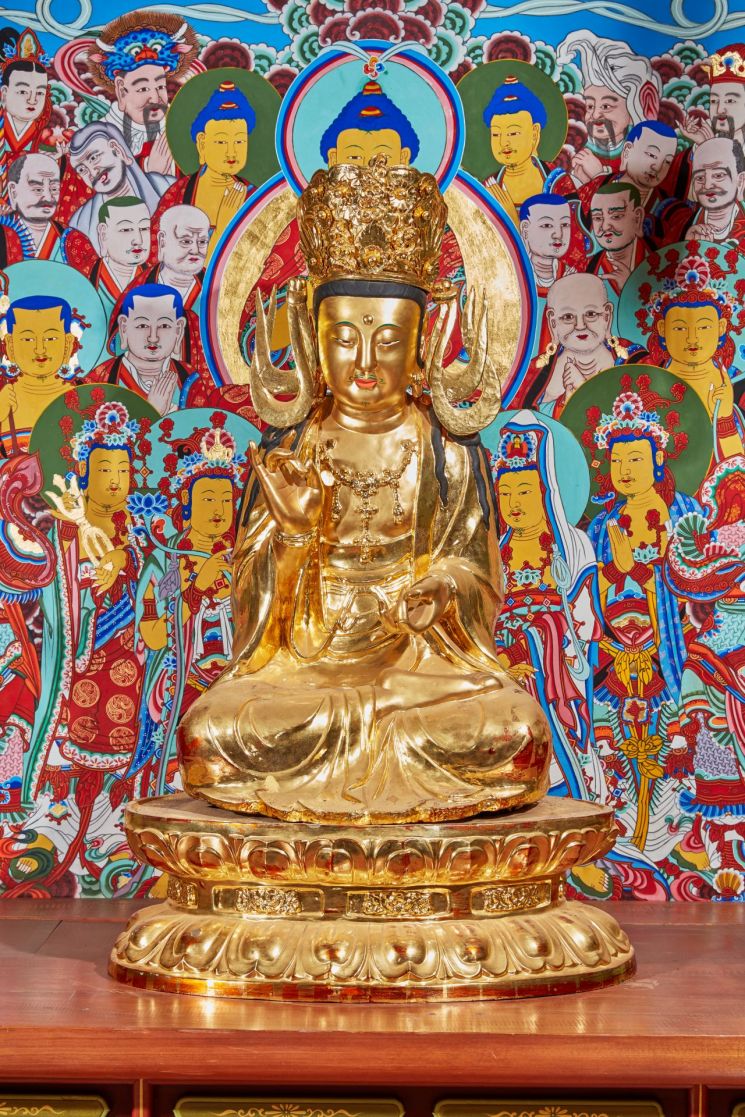
The Anseong Cheongryongsa Gilt-bronze Seated Avalokitesvara Bodhisattva is a bodhisattva statue in the lotus position made in the late Goryeo period (14th century). It wears an ornate crown and a long robe. The right hand is raised and the left lowered, each forming the preaching mudra (?法印) with the index and middle fingers touching. The slender face, serene expression, necklace and earrings, and the slightly stooped posture with the head tilted forward resemble a group of bodhisattva statues understood as traditional late Goryeo style. The somewhat narrow and small shoulders, long torso, and high knees reflect transitional changes from the late Goryeo to early Joseon period. The Cultural Heritage Administration evaluated, "Unlike most bodhisattva statues of the same style made of wood, this one is made of gilt bronze. The inscription found inside the robe confirms its provenance, which adds to its high historical and art-historical value."
Suneung Eomgyeong-uihae Volumes 9?15 correspond to volumes 9 to 15 of the thirty-volume annotated commentary on the 'Great Buddha’s Crown Sutra of the Tathagata’s Secret Cause for Cultivating and Realizing the Meaning of the Bodhisattvas’ Myriad Practices Suneung Sutra (大佛頂如來密因修證了義諸菩薩萬行首楞嚴經)', originally translated into Chinese by the Indian monk Banramilja and compiled into thirty volumes by Han Hui during the Southern Song dynasty in China. The colophons at the end of each volume record the publication date, place, and publisher, confirming that the woodblocks were made and published by the Ganggyeongdogam in the 8th year of King Sejo’s reign (1462) in Joseon. The Ganggyeongdogam was a temporary government office responsible for translating and publishing Buddhist scriptures from 1461 to 1471. The Cultural Heritage Administration explained, "This set preserves about one-quarter of the entire thirty-volume edition of the Great Buddha’s Crown Sutra. The printing quality is excellent, and the preservation state is good."
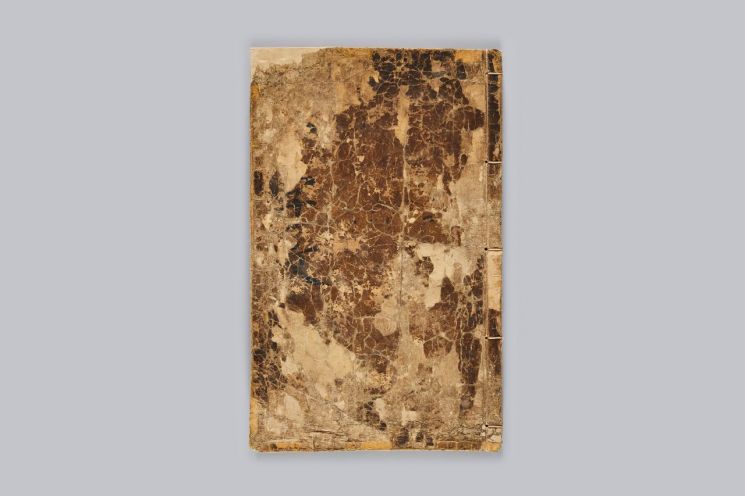
Yi Hangbok’s Regular Script Thousand Character Classic was written by Yi Hangbok (1556?1618) in 1607 (the 40th year of King Seonjo’s reign) and given to his grandson Yi Sijung (1602?1657) for teaching purposes. It consists of 125 pages of main text and one page of postscript. On the reverse side of the front endpaper, two white seal stamps (白文方印), ‘Cheongheon (聽軒)’ and ‘Wolseongsega (月城世家)’, are stamped. The former is the pen name of Yi Gyeongil (1734?1820), the sixth-generation descendant of Yi Hangbok. The main text contains 1,000 characters written in regular script. Below each character, the Korean pronunciation and meaning are written in Hangul.
At the end of the book is a postscript written by Yi Hangbok in semi-cursive script: "In the early summer of the year Jeongmi (1607), I write this for my grandson Yi Sijung. The fifty-year-old elder sweated and endured hardship while writing; do not throw away this intention into the valley [丁未首夏, 書與孫兒時中. 五十老人, 揮汗忍苦, 毋擲牝以孤是意]." This passage reveals not only the creator and production date but also Yi Hangbok’s dedication and affection for educating his descendants. The Cultural Heritage Administration evaluated, "Each character is about 8 cm, making it the largest and earliest handwritten Thousand Character Classic. The Hangul pronunciation and meaning below the Chinese characters are important linguistic historical materials for studying the evolution of Hangul during this period."
© The Asia Business Daily(www.asiae.co.kr). All rights reserved.



















