With Just a Few Smartphone Taps, Hundreds of Billions Withdrawn
Fake News Spread on SNS Fuels Bankruptcy
Analysis suggests that the background behind Silicon Valley Bank (SVB) rapidly going bankrupt in less than two days after its funding crisis emerged is due to the current era where easy deposit withdrawals via smartphones are possible.
According to the Wall Street Journal (WSJ) on the 12th (local time), SVB’s main customers, Silicon Valley startup entrepreneurs, began massively withdrawing deposits through their smartphones as soon as they heard about SVB’s crisis, causing SVB to go bankrupt in an instant.
It took about 40 years for SVB, which opened in 1983, and its parent company SVB Financial Group to rise as a major financial institution in the Silicon Valley startup industry, but it took only 36 hours for it to collapse.
WSJ shared an anecdote from Max Jo, co-founder of the insurance startup company Coverage Cat. Jo said that when he got off at the airport and boarded a bus to attend a founders’ event held on the 9th in Big Sky, Montana, USA, he witnessed fellow founders “furiously tapping on their phones” to withdraw deposits.
He said, observing this phenomenon, “a bank run was actually happening.”
WSJ reported that SVB depositors attempted to withdraw $42 billion (approximately 55.6 trillion KRW) by the close of business on the 9th.
In response, the California Department of Financial Protection and Innovation closed SVB before it opened on the morning of the 10th and appointed the Federal Deposit Insurance Corporation (FDIC) as the bankruptcy manager.
'Slack' and SNS Rapidly Spread Facts and 'Fake News'
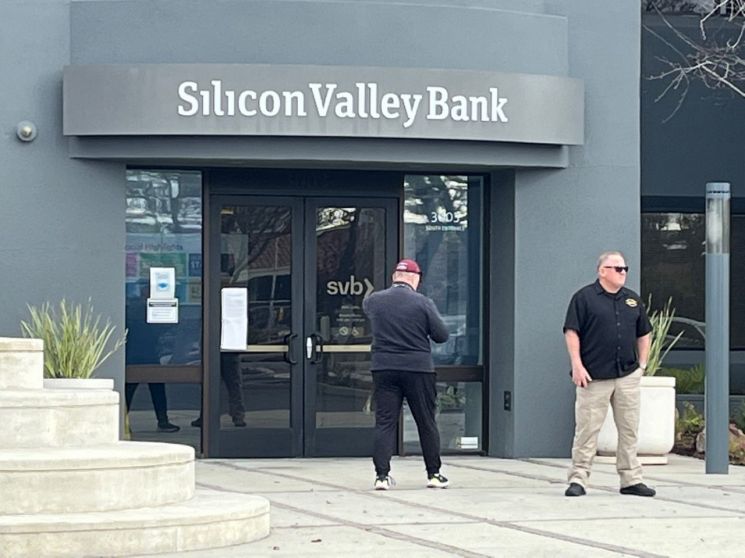
On the 8th, SVB announced that due to a recent decrease in deposits, it sold available-for-sale securities (AFS?bonds and stocks purchased with the intent to sell before maturity) to raise cash, resulting in a loss of $1.8 billion, which became the spark for the bank run.
SVB’s stock price plummeted immediately upon opening on the 9th. As a result, on social media platforms widely used in the startup industry such as Slack and social networking services (SNS), a mixture of facts and fiction spread, stirring customers’ anxiety, leading them to withdraw large amounts of deposits using their smartphones.
WSJ analyzed that the spread of news on SNS and the immediate responses of startup executives were factors that were not considered during the 2008 financial crisis but worsened the situation in this SVB bankruptcy.
WSJ added that SVB’s bankruptcy, combined with recent adverse events such as the liquidation of Silvergate, a cryptocurrency transaction bank, triggered a more “convulsive” reaction in Silicon Valley.
Frantically Working on Countermeasures... But Analysis Says "Not an Overreaction"
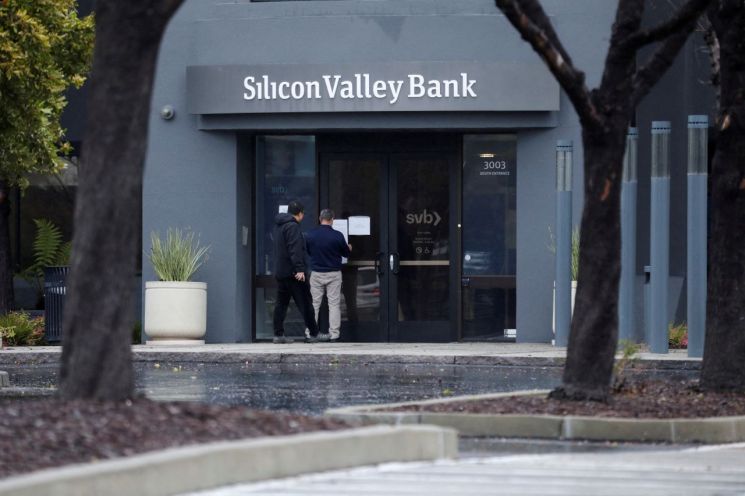
The SVB bankruptcy threw the startup industry into chaos. Customers who could not withdraw their money in time are now uncertain whether they will be able to recover the funds they had deposited. Some startup officials are frantically working to secure funding by paying expenses with personal credit cards, while others are asking customers to deposit funds into new bank accounts.
Meanwhile, Burun Bardwar, CEO of the startup Endor Labs, said, “Although this phenomenon may seem like an overreaction, unprofitable startups have no choice but to rely on deposits to operate their companies, so a quick response is crucial.”
© The Asia Business Daily(www.asiae.co.kr). All rights reserved.


















