Include 'Transaction Area' and 'Type of Conduct' in Investigation Documents
Principled Ban on Compliance Department's Priority Investigation Practice
New Procedure Established for Statement of Opinion During Investigation Stage
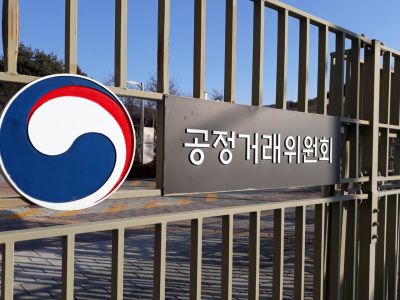
The Fair Trade Commission will specify the alleged legal violations in on-site investigation notices and make the investigation and deliberation procedures more transparent. It will also strengthen the rights of the investigated parties by expanding opportunities for companies under investigation to express their opinions. However, since the existing 'omission' provisions remain unchanged and there are exceptions in the improvement plan, the effectiveness of these measures is questionable.
According to the Fair Trade Commission on the 13th, employees conducting on-site investigations will now be required to additionally specify the scope of the investigation period, transaction fields, and types of conduct in the official notice. Until now, only the violated articles were written, but from now on, it will be possible to know specifically which acts the Fair Trade Commission intends to investigate.
There have been many criticisms inside and outside the Fair Trade Commission that the purpose, relevant legal provisions, and allegations should be stated in the investigation notice, but the allegations of legal violations were not specific, causing great uncertainty about the scope of the investigation. In particular, controversy arose when the allegations of legal violations were omitted in the notice at the start of the Cargo Solidarity investigation at the end of last year. Last month, the National Assembly's Political Affairs Committee also criticized that there are too many cases not subject to the specification of investigation notices.
Investigation standards for compliance support departments will also be established. This is to activate corporate compliance management activities and to practically guarantee the right to counsel introduced in the Fair Trade Act. The practice of investigating compliance support departments first for the convenience of investigation is prohibited. The procedure of notifying only the investigation period when extending the on-site investigation period will be changed to include the reason for the extension.
However, due to the exception and omission provisions, it is uncertain how well the improvement plan will be reflected in the actual investigation process. Article 10 of the Investigation Procedure Rules states that "investigations of unfair joint acts may omit the specification and explanation of allegations of legal violations." Although the rules have been improved to specify the allegations of legal violations in detail, the omission provision remains, meaning that the new rules may not apply and the allegations may not be written at all as before. The act of investigating compliance support departments first also has an exception clause allowing it if "strict investigation is necessary," despite the prohibition.
Regarding these criticisms, Song Sang-min, Director of the Economic Policy Bureau of the Fair Trade Commission, explained, "In the case of collusion, key evidence can disappear in a short period after entering the site, so the exception clause to omit the specification of allegations of legal violations was inevitably retained." He added, "If exceptions are unnecessary, of course, collusion cases will also be operated to specify the allegations of legal violations in detail." He also mentioned, "The exception clauses are specific and explicit, so there is no room for arbitrary interpretation."
Procedures for internal and external review will be established for materials collected and submitted during on-site investigations. The investigated party can review whether the submitted materials are appropriate for the investigation purpose and can officially request the return or destruction of materials that fall outside the scope. If the decision of the examiner in charge of the first review is deemed unfair, an objection can be raised to a separate internal committee. Also, after the on-site investigation ends, the investigating official will re-examine the on-site investigation materials to select materials unrelated to the investigation purpose and return or destroy them for the investigated party.
An opportunity for face-to-face statements, which was only guaranteed at the deliberation stage and not during the investigation stage, will also be created. When it is necessary to clarify basic facts and issues related to allegations of legal violations for strict case handling, the responsible bureau or division chief will hold an official face-to-face meeting to directly hear the opinions of the investigated party. During the deliberation process, to ensure thorough argumentation, it is stipulated that if the respondent requests, the case should be deliberated at least twice whenever possible.
© The Asia Business Daily(www.asiae.co.kr). All rights reserved.
![Clutching a Stolen Dior Bag, Saying "I Hate Being Poor but Real"... The Grotesque Con of a "Human Knockoff" [Slate]](https://cwcontent.asiae.co.kr/asiaresize/183/2026021902243444107_1771435474.jpg)











