From the 13th, Indoor and Outdoor Mask Removal Based on Personal Judgment
Concerns Persist Over Industry Confusion and Changes in Daily Life
The Japanese government will implement a policy from the 13th that leaves mask-wearing for COVID-19 prevention to individual discretion. Although this essentially means lifting mask mandates both indoors and outdoors, the announcement that "individual judgment will be the basis" has raised concerns that confusion among industries and citizens will intensify.
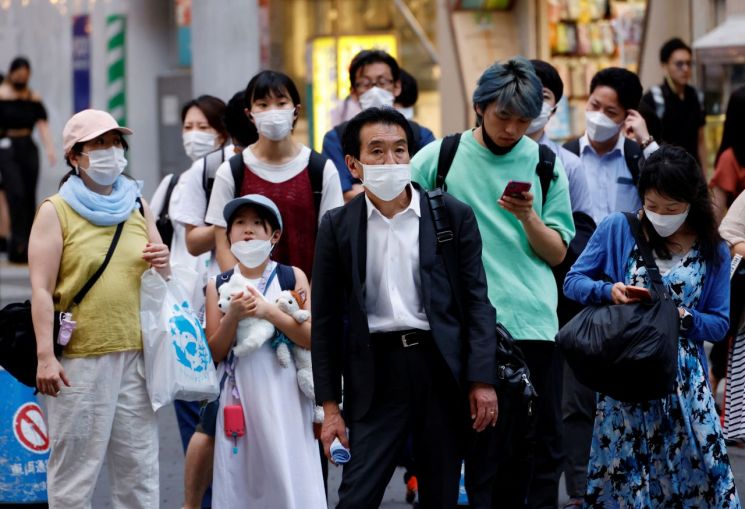
According to the Asahi Shimbun on the 13th, from that day forward, mask-wearing in Japan will fundamentally respect individual judgment regardless of whether indoors or outdoors. However, mask-wearing will still be recommended when receiving medical treatment at healthcare facilities, visiting medical institutions or elderly care facilities, and when riding crowded trains or buses during commuting hours.
Nonetheless, since the decision is ultimately left to individual judgment, concerns have arisen that confusion among industries and citizens will increase. First, industry groups such as restaurants, public transportation, and entertainment facilities will need to revise about 200 guidelines they have been implementing individually. However, revising these guidelines is not simple. In the case of privatized Japanese railways, the level of congestion and seat arrangements vary by region, so it is necessary to classify from which sections mask-wearing should be recommended. For concerts, the necessity of masks varies depending on whether the main age group of attendees is in their 20s and 30s or elderly.
Service industries that interact directly with customers are also concerned about potential conflicts if store policies requesting mask-wearing differ from customers' opinions, and they are demanding follow-up measures from the government, such as establishing new guidelines. A senior official from the Ministry of Health, Labour and Welfare told the Asahi Shimbun, "I think it will be difficult to avoid confusion," adding, "The revision process is expected to take about a month."
As mask-wearing has continued for over three years, voices expressing concern about changes in daily life due to lifting mask mandates have also emerged. Japanese media reported that among students and young women, a mood of worry about revealing their appearance after removing masks has formed. The so-called facial complex known as "face phobia" has increased significantly during the pandemic. Those who experience extreme fear of showing their faces, such as only briefly lowering masks while eating, fear being criticized with comments like "Why don't you take off your mask?" after the mask mandate is lifted, the Asahi Shimbun reported. Additionally, since lifting mask mandates increases the risk of infection, many people, including those unvaccinated, feel anxious.
In fact, in a real-time online poll on the Japanese portal site Yahoo Japan on the same day, when asked "How will you wear masks going forward?" out of 3,948 respondents, 1,446 (36.6%) answered "I will continue wearing them." "I will wear them depending on the location" received 1,297 votes (32.9%), ranking second, and "I will not wear them" received 1,194 votes (30.2%), the lowest.
There is also an opinion that this confusion arises due to Japan's unique social atmosphere. First, it is analyzed that Japan is particularly conservative about removing masks due to its aging society. Takashi Matono, head of the Infectious Diseases Department at Izuka Hospital, said in an interview with the Nishinippon Shimbun, "Compared to overseas, Japan is cautious about 'mask removal' because of its aging population," and analyzed, "Japan is a country with a rapidly aging population and tends to naturally accept mask-wearing as one of the measures against community infections."
Furthermore, the fact that policies in Japan have been implemented in a "group conformity" manner, where individuals comply with decisions made by groups such as the government, has also been cited as a cause. Takaji Wakida, director of the National Institute of Infectious Diseases, emphasized, "Consensus through dialogue is necessary for group decisions such as lifting mask mandates," adding, "There was a pressure to conform in Japan's mask-wearing. The rights of both those who want to wear masks and those who do not should be respected."
© The Asia Business Daily(www.asiae.co.kr). All rights reserved.
![Clutching a Stolen Dior Bag, Saying "I Hate Being Poor but Real"... The Grotesque Con of a "Human Knockoff" [Slate]](https://cwcontent.asiae.co.kr/asiaresize/183/2026021902243444107_1771435474.jpg)
















