Large Banks Show Strong Soundness and Liquidity
Concerns Remain Over Aftershocks on Small Banks
"SVB Bankruptcy Should Be Seen as Fed Tightening Effect"
Although the bankruptcy of Silicon Valley Bank (SVB) may trigger bank run risks for small banks, an analysis suggests that the risk of it spreading into a crisis of the banking system is low. Additionally, while the Federal Reserve (Fed) is unlikely to suddenly adopt a dovish stance in response to the SVB bankruptcy, the risk of excessive tightening (50bp) has decreased.
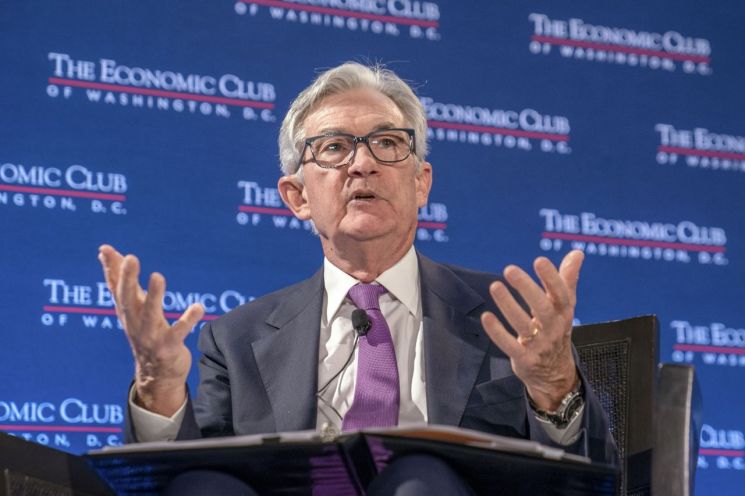
Junwoo Park, a researcher at KB Securities, stated, "The SVB incident should be interpreted as a signal that the Fed’s financial environment tightening → real economy slowdown → inflation stabilization process is manifesting across various parts of the economy."
SVB is a bank based in Silicon Valley that primarily serves tech and healthcare companies, venture capital (VC), and private equity (PE) firms. As of the end of 2022, it was the 16th largest bank in the United States by total assets. On the 10th (local time), the state of California decided to close SVB due to insufficient liquidity and insolvency, appointing the Federal Deposit Insurance Corporation (FDIC) as the receiver.
Researcher Park cited the Fed’s high-intensity tightening as the background for SVB’s bankruptcy. SVB’s soundness was not significantly problematic in terms of regulatory ratios even when compared to large U.S. banks.
However, unlike large banks subject to strict regulations, SVB was not subject to liquidity regulations such as the Liquidity Coverage Ratio (LCR) and Net Stable Funding Ratio (NSFR). SVB had been using funds raised from deposits by its main customers to finance loans to tech companies, VCs, and PEs in its traditional business model. But due to a rapid increase in liquidity, investment opportunities began to dwindle. SVB decided to invest its surplus funds in U.S. Treasury securities (UST) and agency mortgage-backed securities (MBS). As a result, the proportion of held-to-maturity securities (bonds) in total assets surged from 14.4% to 46.5%.
Park pointed out, "Under normal circumstances, held-to-maturity securities appear to be 'safe assets' because even if interest rates rise, accounting losses do not occur, and interest income is steadily generated, making them resilient to external shocks. However, when liquidity tightens, assets must be sold, revealing the actual value of held-to-maturity securities."
Available-for-sale securities are evaluated at book value rather than market price. Concerns that potential losses on nearly half of the assets held as held-to-maturity securities would be larger than expected led to bank runs by customers and investors.
Researcher Park assessed that while the SVB bankruptcy increased risks for small banks, it is unlikely to escalate into a risk for the entire financial system. This is due to the significantly strengthened soundness and liquidity of large banks compared to the time of the financial crisis.
Park stated, "The interbank short-term funding market is very stable," adding, "The U.S. short-term funding market is dominated not by small and medium-sized banks but by large banks and foreign banks." He also predicted, "If bank runs occur at other banks, policymakers are highly likely to intervene actively (= bail out)."
Considering this, Park emphasized that it is appropriate to interpret the current situation as the Fed’s tightening effects manifesting. Specifically, tightening causes difficulties for companies, which then reduce employment, lowering household consumption (demand) and thereby reducing inflation.
Park analyzed, "The likelihood of the Fed suddenly turning dovish due to this incident is low. However, the SVB incident is a clear event showing the real economy impact of tightening, which will ultimately raise disinflation expectations."
He added, "This will contribute to arguments that the possibility of a 50bp rate hike or a final policy rate of 6% is decreasing, and that long-term interest rates will eventually stabilize downward."
© The Asia Business Daily(www.asiae.co.kr). All rights reserved.
![Clutching a Stolen Dior Bag, Saying "I Hate Being Poor but Real"... The Grotesque Con of a "Human Knockoff" [Slate]](https://cwcontent.asiae.co.kr/asiaresize/183/2026021902243444107_1771435474.jpg)











