"Trust in US Authorities' Response"
The International Monetary Fund (IMF) stated that it is closely monitoring the impact of the U.S. Silicon Valley Bank (SVB) collapse on international financial stability.
On the 12th (local time), an IMF spokesperson said in a statement regarding the SVB incident, "The IMF is closely watching the developments and the potential impact on financial stability, and we have full confidence that U.S. policymakers are taking appropriate measures to respond to the situation."
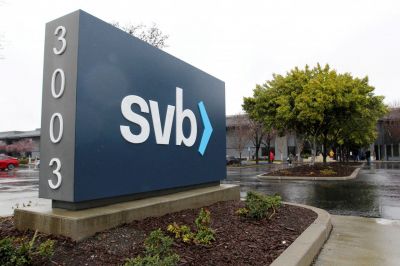
SVB, a U.S. bank whose main clients are startups, filed for bankruptcy on the 10th, just two days after a bank run caused a liquidity crisis, sending shockwaves through global financial markets.
During the prolonged low-interest-rate era, the bank invested the large deposits it attracted from the IT boom into U.S. Treasury securities and other assets. However, due to aggressive tightening, sharp interest rate hikes, and a plunge in bond prices, it suffered significant losses. This sense of crisis spread to deposit withdrawals, leading to a liquidity crunch.
As calls emerged for the U.S. federal government to intervene to mitigate the global financial market shock caused by the SVB collapse, U.S. authorities stated that they are not considering federal government bailouts.
U.S. Treasury Secretary Janet Yellen appeared on CBS that day and said, "During the financial crisis 15 years ago, large bank investors and owners were bailed out. Since then, several reforms have been implemented, which means there will be no more bailouts."
Yellen dismissed calls for federal government intervention to minimize the negative fallout from the SVB collapse, which shocked not only the U.S. but also global financial markets. She emphasized, "The U.S. banking system is really safe and well-capitalized," adding, "It is resilient."
Meanwhile, the Wall Street Journal (WSJ) reported that political factions in the U.S. are clashing over responsibility and response measures regarding the incident.
The Republican Party opposes government intervention such as bailouts, while within the Democratic Party, there are calls to strengthen financial supervision to protect depositors and prevent second and third SVB incidents.
Nikki Haley, former U.S. Ambassador to the United Nations and a Republican presidential candidate, issued a statement saying, "Taxpayers should never bail out SVB," adding, "Private investors can buy the bank and its assets; there is no responsibility for U.S. taxpayers to intervene. The era of big government and corporate bailouts must end."
Florida Governor Ron DeSantis criticized regulators in a Fox News interview, saying, "We have a massive federal bureaucracy, but when we need them to prevent incidents like this, they never show up."
The Democratic Party is divided. Representative Ro Khanna from Northern California, where SVB is headquartered, argued in a CBS 'Face the Nation' interview that the government should, in principle, protect all depositors' funds in full.
He cited the precedent from 1991 when Jerome Powell, then at the Treasury Department, guaranteed all deposits of the New England Bank.
Senator Robert Menendez, a Democrat on the Senate Banking Committee, stated in an NBC interview that he does not support bailouts.
There are also claims that the Republican Party's deregulation led to this incident and that government oversight of banks should be strengthened.
Democratic Senator Elizabeth Warren tweeted, "The collapse of SVB proves the need for strong regulations to protect the financial system," urging, "Regulators must not waver under pressure."
© The Asia Business Daily(www.asiae.co.kr). All rights reserved.

















