13 Days After Bankruptcy Ruling... 'Black Monday' Could Become a Reality
The fear surrounding the collapse of Silicon Valley Bank (SVB), which was a major funding source for U.S. startups, is weighing heavily on global financial markets. The sudden bankruptcy proceedings of the bank, with total assets amounting to $209 billion (277 trillion won), inevitably trigger a chain reaction of shocks. There is a high possibility that the 'Black Monday' shock, where stock prices plummet on the first trading day after the bankruptcy decision?March 13 (local time)?will materialize. As this incident confirmed that rapid interest rate hikes can impact not only the real economy but also the financial system, it is expected that the upcoming Federal Reserve (Fed) monetary policy decisions will become even more complicated. The U.S. federal government is working urgently throughout the weekend to prevent this incident from spreading into a systemic financial crisis. However, it has clearly drawn a line against bailout demands.
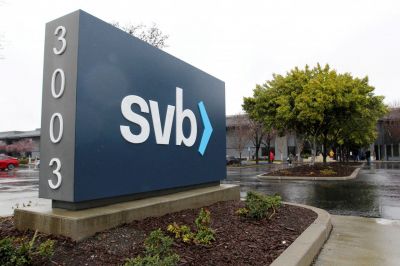
◆'Monday the 13th' Fear Spreads...SVB Asset Sales Underway
SVB's bankruptcy is the largest in the U.S. banking sector since Washington Mutual Bank collapsed during the 2008 global financial crisis. The market fears that if bank trading resumes on Monday the 13th, SVB’s major clients?startups in Silicon Valley?will face greater chaos as they may be unable to access their cash. In financial markets, warnings abound that 'Monday the 13th' will arrive, echoing the superstition of 'Friday the 13th.'
SVB branches will open that day and pay depositors up to the insured limit of $250,000. However, 85% of total deposits, amounting to $151.5 billion, are identified as uninsured deposits exceeding this limit. Since amounts above the limit are not protected, depositors face significant losses. Billionaire investor Bill Ackman, founder of Pershing Square hedge fund, warned, "Without system-wide (FDIC) deposit guarantees, more bank runs will start from Monday morning."
Accordingly, the Federal Deposit Insurance Corporation (FDIC), SVB’s bankruptcy receiver, is transferring all existing SVB deposits to a newly created entity, Santa Clara Deposit Insurance National Bank (DINB), and has been pushing for asset sales since the previous day. Rapid asset sales are necessary to return as many deposits as possible to customers. The final bidding deadline is this afternoon. However, there is also a possibility that no deal will be reached. A source who requested anonymity told Bloomberg News, "The FDIC aims for a swift transaction," but added, "No final decision has been made yet, and there is a possibility that no agreement will be reached." The Associated Press reported that several auction participants have shown interest in SVB’s assets.
Currently, many tech companies are known to have large deposits at SVB. Streaming device manufacturer Roku confirmed that about a quarter of its cash and cash equivalents, approximately $487 million, are deposited at SVB. Roblox disclosed deposits of $150 million. Bloomberg News noted, "Besides tech companies, SVB operates a branch in Napa Valley, California, lending $4 billion solely to the wine industry, so the impact could extend to wine production." Startups facing a liquidity cliff are increasingly fearful that failure to recover deposits could lead to mass bankruptcies. Reports indicate thousands of companies lack funds even to pay next week’s salaries. Parker Conrad, CEO of Rippling, confirmed on Twitter, "We have not completed some payroll payments." Failure to pay wages constitutes a violation of labor laws.
The sudden collapse of SVB is rooted in the Fed’s rapid interest rate hikes. SVB, which grew to become the 16th largest U.S. bank by leveraging the 'Silicon Valley boom' with venture capital and startups as its main clients, invested heavily in safe assets such as U.S. Treasury bonds and government-guaranteed securities during the pandemic period when assets and deposits surged. However, due to the Fed’s aggressive tightening since last year, bond prices plummeted, causing significant losses. Moreover, on the afternoon of March 8, SVB Financial Group, the parent company, announced a large-scale fundraising plan, triggering a bank run. Combined with the tech sector’s slowdown and market fears, customers withdrew $42 billion in a single day on March 9. Ultimately, on the morning of March 10, the California Department of Financial Protection and Innovation closed SVB due to liquidity shortages.
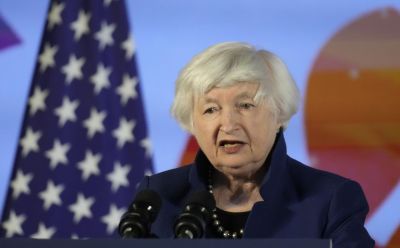
◆U.S. Moves to Contain Crisis...Yellen Says "No Bailout Considered"
The U.S. government says the likelihood of the SVB incident escalating into a systemic financial crisis is low but has been working intensively throughout the weekend to contain the situation. A chain of bankruptcies could sharply increase market volatility.
Currently, the U.S. government views the best-case scenario as a company acquiring SVB in its entirety. However, CNBC reported that the Treasury Department, Fed, and FDIC are reviewing alternatives to manage the fallout if no buyer emerges. One option is to create protections for uninsured deposits exceeding $250,000 based on the Federal Deposit Insurance Act, which would apply if a bank failure leads to widespread systemic risk. To meet this condition, at least two-thirds of the Fed and FDIC boards must determine there is systemic risk. Additionally, discussions are underway about establishing an institution to support other financial sectors exposed to SVB.
However, the U.S. government has confirmed it is not considering a large-scale bailout for SVB. Treasury Secretary Janet Yellen, in a morning interview with CBS's Face the Nation, referenced the large-scale bailouts during the 2008 global financial crisis aimed at protecting industries, stating, "The reforms implemented since then mean we will not do that again." She made this statement to directly dismiss calls for government intervention amid concerns that the SVB collapse could have broader repercussions.
Secretary Yellen emphasized, "The U.S. banking system is very safe and well-capitalized," assuring that this incident will not escalate into a systemic U.S. crisis. While this was intended to calm public anxiety as the nation’s top economic official, it also reflects confidence in the strengthened U.S. financial safety measures since the financial crisis. She confirmed that policies to minimize the impact of SVB’s collapse are under discussion, saying, "We are concerned about depositors and focused on meeting their needs."
For now, Wall Street largely agrees that the SVB collapse will not escalate into a full-blown financial crisis. SVB is a specialized bank concentrated in specific sectors and companies such as Silicon Valley tech firms, limiting its broader market impact. Moreover, financial regulations have been strengthened since the global financial crisis. Morgan Stanley described the SVB incident as "very unique." The Treasury Department also appears to believe that government support measures like large-scale bailouts could worsen market perceptions of the crisis and trigger bank runs at other institutions.
However, some market participants remain cautious, noting that the core issue of the SVB incident is high interest rates, which could affect other banks in similar situations. Most U.S. banks hold significant bond assets, including U.S. Treasuries. Secretary Yellen also indicated in the interview that "the problem is not the tech sector" but rather the Fed’s rapid interest rate hikes.
As a result, there are assessments that the Fed’s interest rate hike path has become uncertain. Initially, due to strong recent economic indicators such as inflation and employment, the market widely expected the Fed to return to a 'big step' (a 0.5 percentage point increase in the benchmark rate) at the March 21-22 Federal Open Market Committee (FOMC) meeting. However, with growing market fears following the SVB incident, if the Fed intensifies tightening, it could worsen the financial health of banks already struggling due to falling bond prices. Mohamed El-Erian, senior advisor at Allianz, described the incident as "showing that even small banks can pose systemic risks in a narrow sense," and "in a broader sense, it represents the trilemma of the ongoing monetary policy shift."
© The Asia Business Daily(www.asiae.co.kr). All rights reserved.
![Clutching a Stolen Dior Bag, Saying "I Hate Being Poor but Real"... The Grotesque Con of a "Human Knockoff" [Slate]](https://cwcontent.asiae.co.kr/asiaresize/183/2026021902243444107_1771435474.jpg)












