Ministry of Agriculture, Food and Rural Affairs Establishes Guidelines for Caring for Stray Cats and Neutering Surgery
The government plans to expand the group neutering project to allow intensive neutering efforts in areas where cats live in colonies.
The Ministry of Agriculture, Food and Rural Affairs announced on the 12th an improvement plan for the stray cat neutering (TNR) project, which has been implemented since 2018 to control the population of stray cats.
Stray cat neutering (TNR) is known as the most humane and effective method for controlling the stray cat population. It is a method commonly implemented in advanced countries. Through the neutering project, the government has neutered approximately 358,000 stray cats from 2018 to 2022. A survey of stray cat populations (number per km²) in seven metropolitan cities and special cities (excluding Sejong) showed that the number of stray cats decreased from 273 in 2020 to 233 in 2022, and the proportion of kittens decreased from 29.7% in 2020 to 19.6% in 2022.
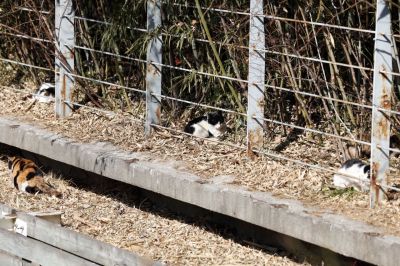 A stray cat is resting in Seoul Forest, Seongdong-gu, Seoul, on the afternoon of the 17th, two days before the solar term "Usu," when snow melts and turns into rain. Photo by Mun Ho-nam munonam@
Meanwhile, the number of households raising cats has increased, and many citizens have become more active in protecting stray cats, leading to a significant rise in interest in stray cat neutering. In response, the government held comprehensive discussions with animal protection organizations, veterinarians, cat protection activists, and local governments to address social concerns and suggestions raised about stray cat neutering, and formulated an improvement plan for the stray cat neutering project.
First, to make population control of stray cats more effective, the timing and methods of neutering will be improved. Currently, hospitals selected to perform stray cat neutering at the beginning of each year start neutering from March, which causes a problem of not being able to neuter cats during the year-end and early-year periods when cats are not pregnant, giving birth, or nursing. To address this, the contract period for local governments’ neutering project operators will be allowed up to three years.
Additionally, the group neutering project will be expanded. Furthermore, to improve issues where excessive feeding and other protective activities increase stray cats’ reproductive capacity and limit population control effectiveness, a 'Stray Cat Care Guideline' will be established within the year. Countries such as Japan and the United Kingdom have social standards for stray cat care that are utilized.
Problems where some operators (trappers, animal hospitals, etc.) participating in stray cat neutering lack proper trapping methods and facilities will be actively addressed. Procedures for trapping and releasing stray cats will be specified to prevent inhumane trapping, and education will be provided. The method for selecting animal hospitals will shift from the existing lowest-bid system to a qualitative and quantitative evaluation system, ensuring that animal hospitals with appropriate facilities, equipment, and personnel participate in neutering surgeries.
Moreover, excellent cases of stray cat neutering will be discovered and disseminated, and to improve the quality of the entire process from trapping to surgery to post-treatment, a comprehensive survey of local governments will be conducted this year to rationally improve project guidelines.
The professionalism of the stray cat neutering surgery process will also be enhanced. In cooperation with the Korean Veterinary Medical Association, neutering surgery training (once a year) for veterinarians participating in the stray cat neutering project will be made mandatory, and excellent hospitals for stray cat neutering surgery will be designated to promote the spread of high-quality neutering surgeries.
The Korean Veterinary Medical Association will lead the establishment of 'Neutering Surgery Guidelines' and standards for post-surgery care. To ensure proper inspections of animal hospitals participating in neutering surgeries by local government officials, new training for local government officials will be implemented this year.
A governance system will be established to form unified opinions on stray cat protection and welfare improvement. A 'Stray Cat Welfare Improvement Council' will be formed in the first half of the year, including animal protection organizations, veterinarians, experts, and local governments, to narrow differences on issues related to stray cat protection. Alongside this, research and basic statistical work on stray cats will be expanded. Furthermore, cooperation will be strengthened to activate voluntary stray cat neutering surgeries, promotion, and education by the Korean Veterinary Medical Association and animal protection organizations.
© The Asia Business Daily(www.asiae.co.kr). All rights reserved.

















