240,000 Hikikomori Youth in Korea
"Expand Disability Concept to Support 'Social Disabilities' as Well"
Statistics show that there are approximately 240,000 reclusive young people in South Korea, and government-level support for them is expected. As the issue of reclusive youth becomes prolonged, there are calls to develop support measures based on Japan’s case, where reclusive individuals and their caregiving families have become socially isolated and face difficulties in making a living.
Reclusive youth refer to people who refuse social interaction or activities and stay only inside their homes. Causes vary, including accumulated stress from excessive competition in entrance exams and employment, psychiatric symptoms such as depression and social phobia, and frustrations in interpersonal relationships. In the past, the Japanese term 'hikikomori' was sometimes used, but expressions like reclusive youth or isolated youth are now more common. The National Institute of the Korean Language has proposed the refined term 'closed reclusive group' (폐쇄은둔족).
The number of reclusive young people in South Korea who distance themselves from society is estimated at 244,000, about 2.4% of the total. This is based on the “Youth Life Survey” conducted by the Office for Government Policy Coordination from July to August last year, targeting 15,000 households with youth aged 19 to 34, in accordance with the Youth Basic Act.
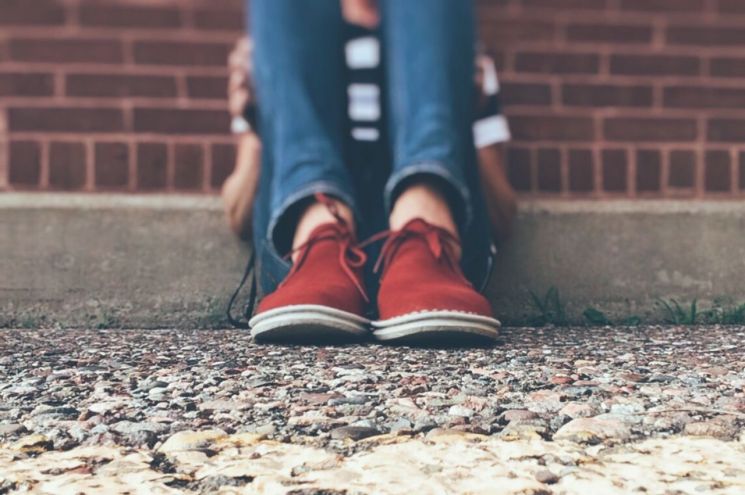
According to a survey by Seoul City, the scale of reclusive youth is even larger. The January survey found that 4.5% of Seoul’s youth, up to 129,000 individuals, are in a state of isolation or reclusion.
Experts have pointed out the need to devise measures to prevent the long-term persistence of the reclusive youth problem. In Japan, where hikikomori became a social issue from the 1990s, the problem accumulated and led to the emergence of the “8050 problem.” Those who became reclusive youth in their 20s and 30s during the so-called “employment ice age” over 20 years ago are now in their 50s but still supported by their parents in their 80s. There are even discussions that this should now be called the “9060 problem” as time passes.
These individuals began their reclusion after experiencing setbacks in social advancement during their youth. Even now, as middle-aged adults without special career experience and despite improvements in the job market, they still face difficulties finding employment. Having stayed indoors for a long time, they often feel fearful about restarting social life and forming interpersonal relationships.
The Korea Institute for Health and Social Affairs’ 2021 study, “Research on the Scope and Support of Vulnerable Youth,” suggested, “The existence of isolated youth in the current generation implies not only isolation problems among middle-aged and elderly populations but also a worsening of the isolated population problem in future Korea, making government support urgent.” Especially given the nature of reclusive youth who are cut off from interpersonal relationships and isolated in their rooms, their situation is not well known to others except family members, making active government identification and prevention essential.
The report explains, “Social isolation and reclusion among youth are increasing, leading to decreased productivity and socioeconomic costs due to public assistance intervention,” and estimates that “the social cost per individual choosing reclusion in Japan is about 1.6 billion KRW in financial terms.”
Accordingly, the government plans to expand the concept of disability beyond medical criteria to include social disabilities such as reclusive youth. This is included in the “6th Comprehensive Plan for Disability Policy” (2023?2027) announced by the Ministry of Health and Welfare on the 9th.
Related bills are pending in the National Assembly. If passed, social disabilities like reclusive youth will be recognized as “disabilities” and eligible for necessary support. Independent lawmaker Kim Hong-gul proposed the “Reclusive Youth Support Act” in October last year. The bill clearly defines reclusive youth, mandates a reclusive youth status survey every three years, and requires the establishment of a basic support plan for reclusive youth every five years based on the survey results.
In August last year, People Power Party lawmaker Cho Eun-hee also introduced a revision to the “Act on Support for Out-of-School Youth” that includes support measures for reclusive youth who have difficulty with academic performance or social adaptation.
© The Asia Business Daily(www.asiae.co.kr). All rights reserved.
![Clutching a Stolen Dior Bag, Saying "I Hate Being Poor but Real"... The Grotesque Con of a "Human Knockoff" [Slate]](https://cwcontent.asiae.co.kr/asiaresize/183/2026021902243444107_1771435474.jpg)
















