385 Billion KRW Invested in Construction and Saemaeul Sectors to Improve Residential Conditions
Cheongsong-gun, Gyeongbuk Province, designated as a population decline area due to low birth rates and aging population, will invest 38.5 billion KRW this year in construction and Saemaeul sectors to overcome the risk of local extinction by creating a stable residential environment.
To this end, the county has established detailed strategies including ▲ enhancing satisfaction with construction administrative services and balanced development around dams and power plants ▲ creating a pleasant street environment and building road infrastructure ▲ expanding agricultural infrastructure for stable water supply ▲ eco-friendly river maintenance harmonizing nature and environment ▲ expanding resident convenience facilities to build a livable and happy Cheongsong. These are expected to greatly contribute to realizing “United Cheongsong, a leap beyond!”
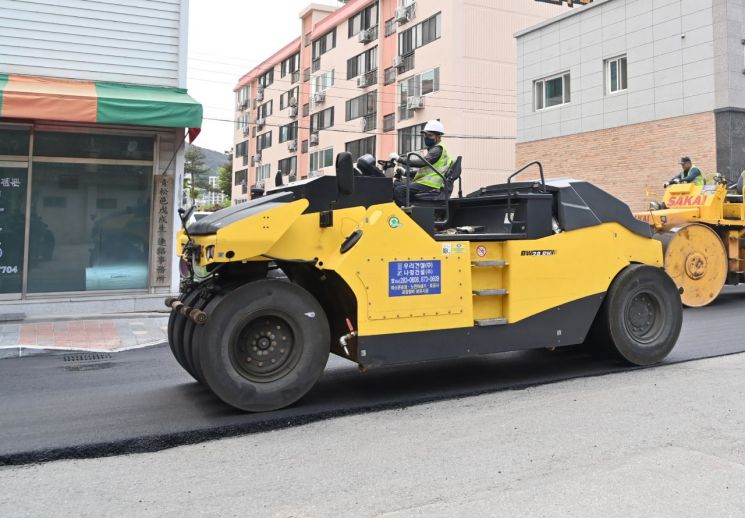 Cheongsong-gun is maintaining roads to create a stable residential environment as part of efforts to overcome the risk of local extinction.
First, the county will invest 700 million KRW in dam area support projects and 280 million KRW in power plant area support projects to promote balanced development around dams and power plants.
With this budget, projects to increase income and establish living infrastructure will be promoted for local residents suffering indirect damages from dam and power plant construction, leading efforts to improve residents’ welfare.
Additionally, by promptly handling construction administrative complaints, the county will enhance complaint satisfaction and create a stable construction environment to accelerate the development of the local construction industry.
Secondly, the county plans to improve roads within the jurisdiction to enhance residents’ safety and convenience in road use. By expanding and paving county roads and rural roads, improving road alignment, and overlaying asphalt, a safe and pleasant road environment will be provided. Traffic signals and unmanned enforcement cameras will be installed in school zones to prevent traffic accidents and create safe school routes.
Also, with a budget of 245 million KRW, detailed safety inspections will be conducted on Class 2 facilities (bridges longer than 100m) such as Cheongsonggyo and Wolmakgyo (Cheongsong-eup), Deokcheongyo, Songgang 2-gyo, and Jungpyeonggyo (Pacheon-myeon). Other bridge facilities will be continuously managed and maintained through regular safety inspections to prevent safety accidents.
Third, to address habitual drought damage due to insufficient agricultural water in the Ijeon and Geodoo districts, 14.5 billion KRW (7.1 billion KRW for Ijeon district, 7.4 billion KRW for Geodoo district) will be invested in small-scale rural water development projects to install hydraulic facilities such as reservoirs and water channels, securing and supplying agricultural water to alleviate drought damage on 67.3 hectares of farmland.
Along with this, with a budget of 1.8 billion KRW, intake facilities and water supply pipelines will be installed in field infrastructure in Hwanggok district (35 hectares) in Sejang-ri, Jinbo-myeon, Gudeok district (18 hectares) in Jisori, Andeok-myeon, and Durugol district (26 hectares) in Mogye-ri, Hyeonseo-myeon. Additionally, 2.4 billion KRW will be spent to repair and maintain 46 aging reservoirs and agricultural infrastructure sites, which is expected to improve agricultural productivity and farming conditions significantly.
Fourth, 3.6 billion KRW will be invested in disaster risk improvement district maintenance projects, 4.7 billion KRW in small stream maintenance projects (Silmulcheon), 400 million KRW in river facility maintenance and general river repair projects, and 1 billion KRW in river and small stream maintenance projects to proactively maintain areas at risk of natural disasters, preventing disasters and focusing on protecting residents’ lives and property.
In particular, to restore damage caused by Typhoons Maysak and Haishen and prevent repeated future damage, 9.6 billion KRW of national and provincial funds will be invested in the Gupyeongcheon disaster restoration project. Furthermore, with a budget of 680 million KRW, the county plans to continuously maintain river flow control trees and sediment in local rivers to preserve an eco-friendly river ecosystem harmonizing nature and environment and contribute to water quality improvement.
Lastly, focusing on areas with inconveniences in daily life, 4.3 billion KRW will be invested in 197 small-scale resident-requested projects such as village road paving, farm road paving, stream maintenance, and small bridge construction to expand resident convenience facilities. Long-standing local demands will be boldly resolved and completed without delay to ensure residents experience no inconvenience.
Additionally, the county plans to build the Geumgok 1-ri village hall in Cheongsong-eup as a space where residents can communicate while enjoying various leisure activities in a pleasant environment, aiming to create a happy and healthy Cheongsong for all residents.
In 2022, a budget of 300 million KRW was supported for the Jinbo-myeon central area, completing signboard improvements for 67 stores. Sequential signboard improvement projects will be implemented for the Jinbo-ro section to create a bright and pleasant urban street space.
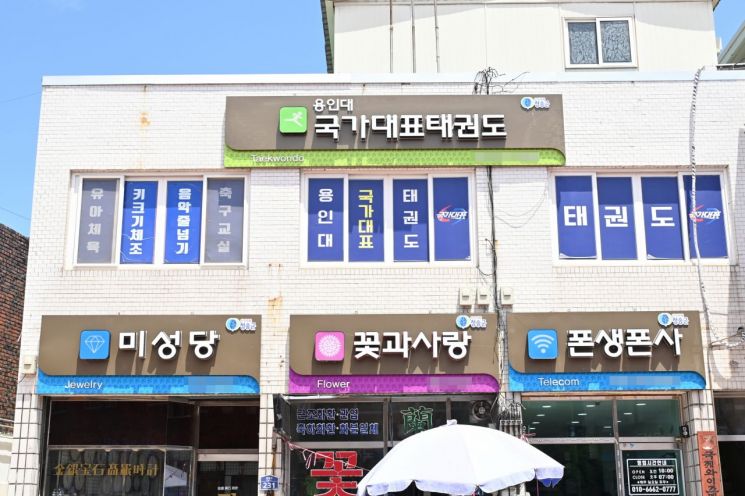
Moreover, by securing 600 million KRW from the local extinction response fund, signboard improvement projects will be conducted in six townships excluding Cheongsong-eup and Jinbo-myeon, aiming to create a beautiful street environment.
County Governor Yoon Kyung-hee stated, “We will actively respond to the risk of local extinction by creating a stable residential environment and make every effort to ensure migration and settlement, striving to build a livable ‘Oxygen Cafe Cheongsong-gun’ that residents can directly feel.”
© The Asia Business Daily(www.asiae.co.kr). All rights reserved.


















