Ministry of Education's Regional Innovation-Centered University Support System
2 Trillion KRW Budget Execution Authority Shifted to Regional Leadership
Support Provided to All 14 Regional Cities and Provinces Except Sejong
Seven cities and provinces, including Gyeongnam, Gyeongbuk, Daegu, Busan, Jeonnam, Jeonbuk, and Chungbuk, have been selected as pilot areas for the Regional Innovation-Centered University Support System.
On the 8th, the Ministry of Education announced the results of the selection of pilot areas for the Regional Innovation-Centered University Support System, known as RISE (Regional Innovation System & Education).
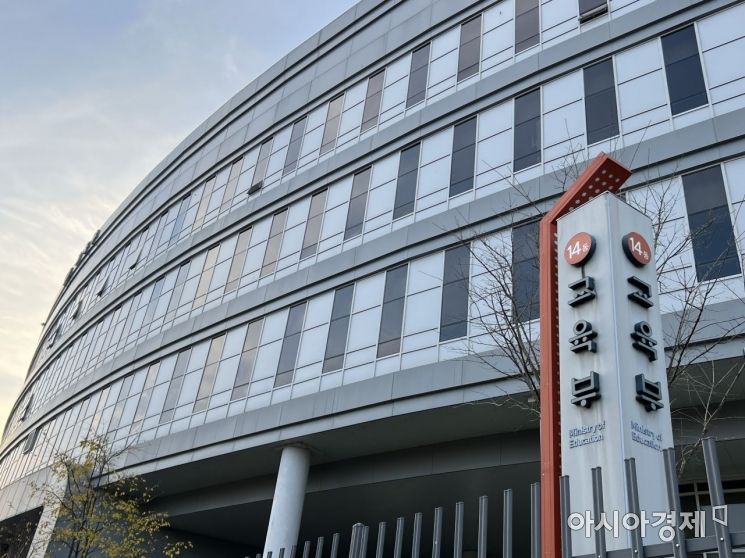
'RISE' is a system that promotes the co-growth of regions and universities by expanding local governments' authority to support universities and easing regulations, allowing local governments to lead university support. After operating pilot areas from 2023 to 2024, it is planned to be introduced nationwide in 2025.
Among 14 non-metropolitan cities and provinces, 13 applied for the pilot area contest, demonstrating high interest and enthusiasm for supporting regional universities. The RISE Pilot Area Selection Committee focused on evaluating local governments' willingness for pilot operation and their capacity to support universities, while considering regional balance and ensuring that various models such as dedicated departments and agencies could be established through the pilot operation.
The seven cities and provinces selected as pilot areas will prepare a promotion system and establish RISE plans based on their applications to introduce RISE in 2025.
First, they must reorganize scattered university-related tasks and establish a dedicated university support department responsible for planning and overseeing RISE promotion and regional university support within this year.
Additionally, a RISE Center will be designated and operated as an institution responsible for managing, selecting, and evaluating university support projects led by the region.
Furthermore, a five-year RISE plan (2025?2029) for regional university support linked to regional development strategies will be established by the first half of this year, and an agreement with the Ministry of Education is expected to be signed around July.
Finally, if there are any higher education-related regulatory special cases necessary for executing the RISE plan in each region, the pilot areas will apply to be designated as Higher Education Innovation Special Zones, which the Ministry of Education will review and designate accordingly.
The Ministry of Education will support effective implementation of pilot area tasks through consulting and training for staff, and to enhance understanding of RISE as a system for co-growth of regions and universities and to explore continuous development directions, regional RISE forums will be held next month.
RISE is a system in which local governments support regional universities focusing on regional innovation, industry-academia cooperation, and vocational and lifelong education linked to regional development, thereby promoting the establishment of a regional development ecosystem of ‘local talent cultivation - employment/entrepreneurship - settlement.’ It was reported at the Talent Cultivation Strategy Meeting last month, and related plans were announced.
Lee Ju-ho, Deputy Prime Minister for Social Affairs and Minister of Education, said, “From 2023 to 2024, we will create a region-led university support model centered on pilot areas for the co-growth of regions and universities, and do our best to prepare related budgets and institutional arrangements for the introduction of RISE.”
© The Asia Business Daily(www.asiae.co.kr). All rights reserved.

















