Intel to Build Semiconductor Plant Worth 42 Trillion KRW in Germany
Requests Total Subsidies of 17 Trillion KRW from Local Government
U.S. semiconductor company Intel has requested an additional subsidy of 5 billion euros (approximately 6.9 trillion won) from the German government for the establishment of a local semiconductor factory. This is due to the economic recession and increased raw material costs, and the German government is expected to expand subsidy support once it receives approval from the European Union (EU). Analysts say this reflects the desperation of countries around the world that are putting their lives on the line to attract semiconductor companies.
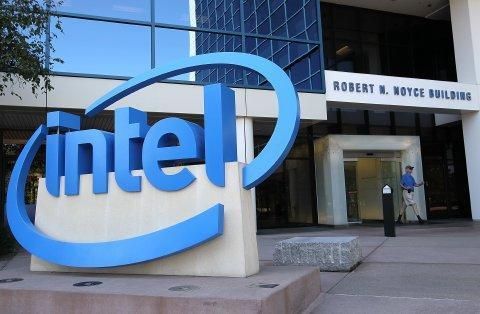
According to Bloomberg on the 8th (local time), Intel requested an additional subsidy of 4 billion to 5 billion euros (approximately 5.6 trillion to 6.9 trillion won) for the establishment of a semiconductor factory in Magdeburg, eastern Germany.
Intel has already received a subsidy of 6.9 billion euros (approximately 9.6 trillion won) from the German government. However, due to the economic recession and increased construction costs, the groundbreaking was postponed at the end of last year. Intel stated, "The collapse of the global economy has raised all costs from construction materials to energy," and added, "We appreciate the constructive dialogue with the federal government to close the cost gap with factory construction in other regions (such as Asia) and to secure the global competitiveness of this project."
Intel is promoting the diversification of semiconductor production bases concentrated in East Asia. This aligns with Samsung Electronics, Taiwan's TSMC, and others investing heavily in semiconductor factories in the U.S. Other semiconductor companies such as Infineon and Wolfspeed are also building new semiconductor factories in Germany.
The reason semiconductor companies are making proactive investments despite the recession is that governments around the world, including the U.S., which aims to curb China's "semiconductor rise," are pouring out large-scale support measures to seize semiconductor leadership. In particular, a trend of global supply chains being reorganized from Asia to the U.S. and Europe has begun to emerge. The U.S. is providing subsidies of 50 billion dollars (approximately 65.8 trillion won) to companies expanding domestic production facilities through the Semiconductor Act, and Europe has decided to pour in 43 billion euros (approximately 59.7 trillion won) in subsidies. Since countries are desperate to attract semiconductor companies, the German government is also expected to accept Intel's request for increased subsidies.
The German Ministry of Economic Affairs avoided commenting on Intel's subsidies but emphasized the EU's plan to raise regional semiconductor production to 20% of the global total by 2030. The ministry stated, "The federal government is keeping this plan in mind and is prepared to support the semiconductor industry in Germany," adding, "Any additional support will require approval from the European Commission."
Intel expects that the cost of building the semiconductor factory in Germany will be 30 billion euros (approximately 41.6 trillion won), more than the initially anticipated 17 billion euros (approximately 23.6 trillion won). It is reported that Intel expects to receive 40% of this amount from the German government in the form of tax reductions, energy subsidies, and other support.
© The Asia Business Daily(www.asiae.co.kr). All rights reserved.
![Clutching a Stolen Dior Bag, Saying "I Hate Being Poor but Real"... The Grotesque Con of a "Human Knockoff" [Slate]](https://cwcontent.asiae.co.kr/asiaresize/183/2026021902243444107_1771435474.jpg)















