Cold Wave and Heating Costs... Vegetable Prices Soar
Cheongyang Chili Peppers Jump 100,000 Won Compared to Last Year
Small Business Owners 'Worried'... "Nothing Hasn't Gone Up"
The soaring prices of vegetables that began last year continue to rise sharply this year. In particular, the price of chili peppers, an essential ingredient in cooking, has nearly doubled, deepening the worries of self-employed restaurant owners.
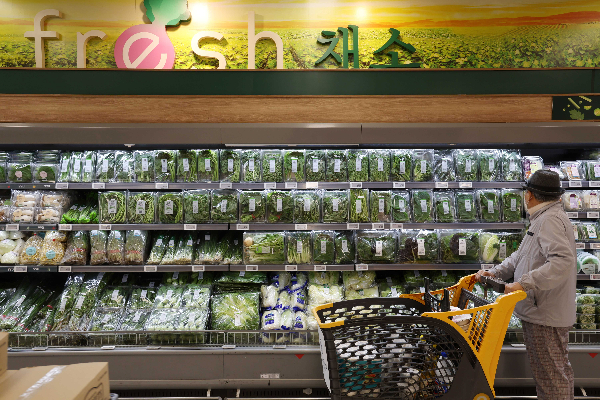
According to the Korea Agro-Fisheries & Food Trade Corporation on the 8th, as of the 6th, the average wholesale price of 10kg of premium Cheongyang chili peppers was 129,400 won, a 78% increase compared to 72,550 won a year ago. This is actually a decrease in price compared to earlier. About two weeks ago, on the 23rd of last month, the average price reached 199,000 won, with the highest transaction price exceeding 220,000 won, well over 200,000 won. One box became 50,000 to over 100,000 won more expensive than the average price. During the same period, premium Kkwarigo chili peppers surged 44% to 42,740 won for 4kg, compared to 29,515 won a year ago. Premium green chili peppers also rose more than 33% to 120,600 won for 10kg, compared to 94,320 won a year ago.
The sharp rise in chili pepper prices was largely influenced by climate factors such as the early onset of cold weather at the end of last year and continued cold spells. The number of cloudy days increased, reducing sunlight, and pest infestations occurred, compounding the problems. The surge in heating costs also fueled the price increase. To maintain the proper temperature in greenhouses, heating devices must be operated continuously, but with heating costs rising sharply, many farmers gave up harvesting altogether. Demand increased due to the spicy flavor trend, but supply decreased, worsening the supply-demand imbalance.
For similar reasons, prices of other winter and greenhouse vegetables also show no signs of falling. As of the 6th, the average wholesale price of unwashed carrots at 20kg was 58,240 won, a 144% increase from 23,790 won a year ago. Onions also rose 219%, from 8,794 won to 28,060 won for 15kg. Ginger was 95,640 won for 10kg, up 184% from 33,640 won the previous year, and red leaf lettuce surged 74% to 26,960 won for 4kg, compared to 15,435 won a year ago.
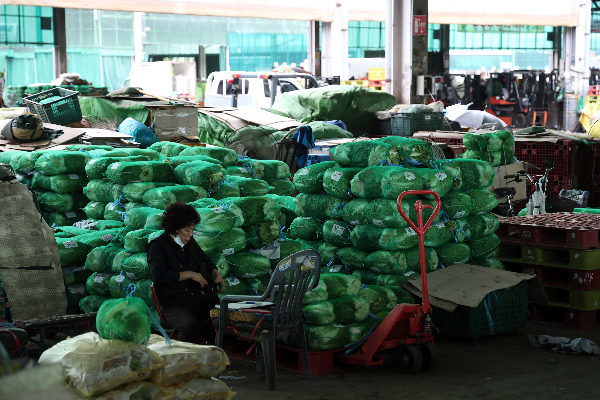
Given this situation, self-employed restaurant owners are having a hard time. The cost burden has increased as the prices of vegetables widely used in Korean cuisine have almost all risen. Italian restaurants and other Western cuisine establishments that use a lot of onions and Cheongyang chili peppers are no exception. Online communities for self-employed people are flooded with complaints like these, along with requests to introduce cheaper suppliers.
Kim Jun-hee (38, pseudonym), who runs a restaurant in Seodaemun-gu, Seoul, said, "Gas bills and other ingredient costs have all gone up, and now the prices of essential vegetables have also surged, so I don't know how to cope. I can't even think about closing down; I'm running the business reluctantly, barely covering labor costs."
Meanwhile, the Ministry of Agriculture, Food and Rural Affairs expects prices to stabilize sequentially from early to mid-this month as spring production volumes increase. For vegetables experiencing supply instability from mid-this month to mid-next month, the plan is to stabilize supply and demand by releasing stockpiled quantities.
© The Asia Business Daily(www.asiae.co.kr). All rights reserved.
![Clutching a Stolen Dior Bag, Saying "I Hate Being Poor but Real"... The Grotesque Con of a "Human Knockoff" [Slate]](https://cwcontent.asiae.co.kr/asiaresize/183/2026021902243444107_1771435474.jpg)

















