Tokyo Population Concentration Emerges as Cause of Low Birthrate
Abundant Infrastructure but High Living Costs... Marriage and Childcare Impossible
As population concentration in the Tokyo metropolitan area intensifies, especially among Japan's young people in their 20s, concerns are rising that this is driving up housing costs and inflation. The Japanese government has announced plans to address this issue, stating that such urban overcrowding is exacerbating the low birthrate problem.
Since the COVID-19 pandemic, many people in their 20s have been moving to Tokyo in search of jobs and infrastructure, but the high cost of living and housing conditions are preventing them from having and raising children. The government sees the concentration in the metropolitan area as linked to the low birthrate and has decided to tackle the overcrowding issue.
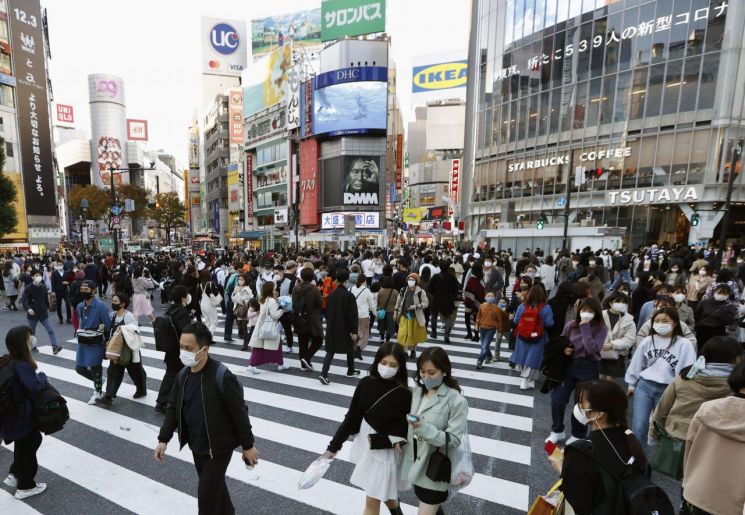
According to a survey by the Ministry of Internal Affairs and Communications on the 7th, last year Tokyo experienced a 47% increase in net in-migration compared to ten years ago, with more people moving in than moving out. The Nihon Keizai Shimbun (Nikkei) analyzed that "although the increase slowed temporarily due to the COVID-19 pandemic, the population inflow into Tokyo continues to grow."
By age group, migration among people in their 20s was the most pronounced. Those aged 20 to 24 accounted for the highest number at 57,153, a 15% increase from the previous year. Next were those aged 25 to 29 with 19,235, and those aged 15 to 19 with 13,795.
Notably, except for those in their teens and twenties, all other age groups are leaving the metropolitan area. The Ministry's survey showed that people aged 14 and under and those 30 and older recorded net out-migration from Tokyo, meaning families with children and couples are leaving Tokyo. They tend to move to nearby rural areas.
Professor Masayuki Nakagawa of Nihon University, who specializes in urban policy, commented on this trend: "If you get a job and marry in Tokyo, there is no need to stay in Tokyo itself. People tend to move to suburbs where commuting to Tokyo is possible." However, the reason Tokyo's population continues to grow is that the number of migrants in their teens and twenties far exceeds the outflow of other age groups.
Nikkei analyzed that this is because all infrastructure is concentrated in Tokyo. The "Tokyo area," which includes Tokyo, Kanagawa, Chiba, and Saitama, has 200 national, public, and private universities. Graduates from these universities look for jobs in Tokyo. According to the Japanese employment information portal Mirai Research Institute, 89% of graduates from Tokyo area universities found jobs in Tokyo-based companies last year, slightly down from over 90% previously.
High-quality jobs preferred by people in their 20s are also concentrated in Tokyo. According to Nikkei, half of the listed companies and three-quarters of foreign-affiliated companies have their headquarters in Tokyo. These companies did not relocate to regional areas even during the COVID-19 crisis, and as the pandemic subsided, the trend of moving back to Tokyo increased.
However, the Japanese government views the concentration of population in Tokyo as ultimately linked to the low birthrate. This is due to Tokyo's high cost of living. As housing costs and prices continue to rise, even those working in Tokyo cannot realistically dream of marriage and child-rearing. According to the Japan Real Estate Economic Institute, the average price of newly built apartments in the Tokyo area last year was 62.88 million yen (about 600 million KRW), marking a record high for the second consecutive year.
According to estimates by the Ministry of Land, Infrastructure, Transport and Tourism, Tokyo's average disposable income per household ranked third nationwide, but when comparing the amount left after deducting basic expenses such as food and rent for middle-class households, Tokyo dropped sharply to 42nd among local governments nationwide. This means there is little money left after living expenses. Nikkei analyzed, "If the inflow to Tokyo continues, the rise in prices and housing costs will accelerate even further."
© The Asia Business Daily(www.asiae.co.kr). All rights reserved.
![Clutching a Stolen Dior Bag, Saying "I Hate Being Poor but Real"... The Grotesque Con of a "Human Knockoff" [Slate]](https://cwcontent.asiae.co.kr/asiaresize/183/2026021902243444107_1771435474.jpg)
















