Presidential Office: "Japan Reaffirms Past Reflection and Apology... Will Strive for Pursuing Shared Interests"
Improvements in Semiconductor and Other Industries... "Will Lead to Strengthening Korea-US-Japan Economic and Security Cooperation"
President Yoon Suk-yeol stated on the 6th that the announcement of the solution to the forced labor compensation issue is a "decision to move toward a future-oriented Korea-Japan relationship." President Yoon's judgment is that "a decision for the future and national interest is necessary," and the government's interpretation of the Japanese government's response on the day was that it "reconfirmed the stance of reflection and apology for the past while expressing a commitment to strive for the development of a future-oriented bilateral relationship." The two countries plan to establish channels for economic cooperation and are expected to take steps toward normalization starting with areas that can generate mutual benefits.
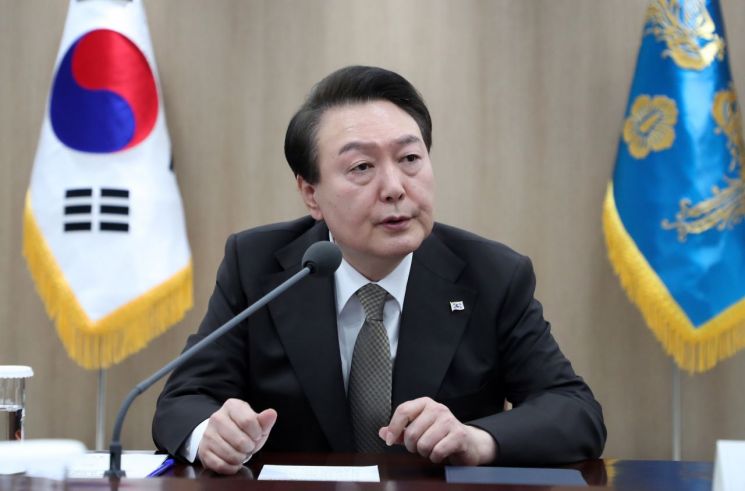
◆ Announcement of the 'Third-Party Compensation Plan,' Yoon: "A New Era in Korea-Japan Relations"= On the morning of the same day, the government announced the 'third-party compensation plan,' in which Korean companies' donations would be used to compensate victims of forced labor during Japanese colonial rule. Instead of Japanese companies, the 'Foundation for Supporting Victims of Forced Mobilization under Japanese Colonial Rule,' under the Korean government, will pay an amount equivalent to the compensation to the plaintiffs. The plan prioritizes contributions from domestic companies that benefited from the 1965 Korea-Japan Claims Agreement funds to the foundation.
President Yoon said during a regular meeting with Prime Minister Han Duck-soo, "For Korea-Japan relations to enter a new era, the governments of both countries must make efforts centered on future generations," adding, "Despite various difficulties, announcing the solution to the forced labor judgment issue today is a decision to move toward a future-oriented Korea-Japan relationship."
The presidential office also expressed its position. Regarding the Korean government's announcement of the forced labor compensation solution, when the Japanese government stated it would "inherit the historical awareness of past cabinets," the office said, "It is evaluated that the Japanese government reaffirmed its stance of reflection and apology for the past and expressed a commitment to make multifaceted efforts for the development of a future-oriented bilateral relationship."
In particular, Kim Tae-hyo, the first deputy director of the National Security Office, emphasized at a briefing at the Yongsan Presidential Office in the afternoon, "Since its inauguration, the Yoon Suk-yeol administration has been striving to resolve forced labor issues, normalize Korea-Japan relations, and promote future-oriented development," adding, "The government recognized resolving forced labor as the starting point for normalizing Korea-Japan relations and sought solutions. We have continuously communicated with the victims and consulted with Japan to devise a solution that aligns with the mutual interests of both countries, and today we announced the solution."
He continued, "Compensation will be provided to the victims through the Foundation for Supporting Victims of Forced Mobilization under Japanese Colonial Rule, and discussions and implementation will proceed with Japan to overcome past pain and suffering together and promote exchanges between future generations of both countries." He added, "The Yoon Suk-yeol administration will pursue mutual interests with Japan, which shares values of liberal democracy, the rule of law, and market economy, and work together for regional and global peace."
◆ Establishing Economic Cooperation Channels Including Semiconductors, Untangling the Knots= With the confirmed willingness for intergovernmental cooperation, the government decided to begin discussions on economic cooperation plans centered on relevant ministries, aligned with Japan's moves to lift semiconductor export restrictions. A presidential office official explained, "Since both countries have chosen a diplomatic solution to improve relations, efforts to maximize economic and security benefits will follow immediately," adding, "Primarily, the tangled issues surrounding semiconductors are expected to be resolved first."
In July 2019, Japan strengthened export controls on three semiconductor-related items to South Korea. In August, South Korea was removed from Japan's 'white list' of preferential export control countries. These retaliatory measures were in response to the South Korean Supreme Court ruling ordering Japanese companies to compensate for forced labor. The Japanese government maintained that these measures were for 'security-related responses.' Some analysts suggest that South Korea should first withdraw its World Trade Organization (WTO) complaint regarding Japan's semiconductor material export restrictions, but there is growing support for the view that both countries will lift restrictions and withdraw complaints around the same time.
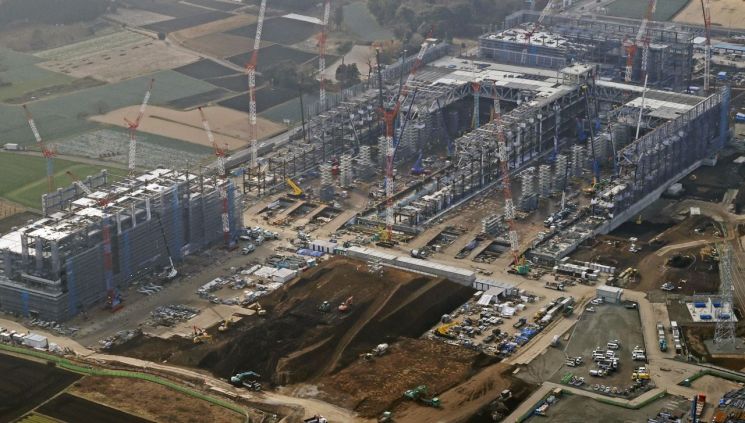
The government expects that lifting Japan's semiconductor material export restrictions will be a positive signal not only for the industry but also for the domestic economic recovery. Although the previous administration avoided large-scale damage through diversification of import sources and promotion of localization, it failed to establish a long-term solution. In fact, the previous administration pursued a so-called 'SoBuJang (materials, parts, and equipment)' self-reliance policy in response to Japan's export restrictions, but dependency on intermediate materials was not easily resolved. The process of finding alternatives to SoBuJang items previously dependent on Japan resulted in additional expenditures and extended research and development periods. According to last month's statistics from the Ministry of Trade, Industry and Energy's SoBuJang comprehensive portal 'SoBuJangNet,' the proportion of Japanese SoBuJang imports last year fell to a record low of the 15% range, but the import volume actually increased.
A government official said, "It will be difficult to expect an immediate recovery in the industry due to the lifting of Japan's (semiconductor export) restrictions, but in the mid-to-long term, Korea will have secured time to prepare for diversification of supply sources and localization," adding, "In the long term, Korea's competitiveness in various fields, including semiconductors, will continue to improve."
The intensifying power struggle between China and the United States, which has also destabilized the Northeast Asian situation, appears to have influenced the final solution to the forced labor issue. With the North Korean nuclear threat growing, Korea-Japan cooperation inevitably leads to strengthening the 'trilateral security system' among Korea, the United States, and Japan. Kim Sung-han, director of the National Security Office, currently visiting the United States, remarked on the connection between his visit and the improvement of Korea-Japan relations, saying, "The U.S. side is closely watching the improvement of Korea-Japan relations," and "Through improving Korea-Japan relations, we will discuss the roles the U.S. can play for Korea-U.S.-Japan security cooperation and the overall development of Korea-U.S.-Japan relations, as well as measures that can be managed within the Korea-U.S. alliance."
The scope of cooperation between the two countries is expected to expand further. Emerging and core technology fields such as quantum, bio, and space, as well as expanded exchanges of specialized personnel and stabilization of supply chains for semiconductors, batteries, and critical minerals, are representative areas. At the Korea-U.S.-Japan summit held last year in Phnom Penh, Cambodia, the three leaders already agreed to establish a trilateral economic security dialogue. A senior government official stated, "The government's judgment is for national interest and future generations, and it is a measure to build competitiveness amid the complex and diversified global situation," adding, "The restoration of Korea-Japan relations will lead to strengthened cooperation among allies and partners following Korea-U.S.-Japan."
© The Asia Business Daily(www.asiae.co.kr). All rights reserved.


















