'Eulsa Treaty'-Equivalent 'Waiver of Diplomatic Protection' Measure... Civic Groups Protest
Solution Without Victim Apology or Compensation... Must Be Withdrawn
Apology at the Level of Statement Succession Is Insufficient... No Concrete Accountability Acknowledged
On the 6th, the government formalized the 'third-party compensation' plan, which involves compensating victims of forced labor during Japanese colonial rule through donations made by Korean companies, prompting strong opposition from victim support groups.
Civil society organizations criticized the government's compensation plan as a "secondary harm that further supports Japan's claim that 'colonial rule was legal'." They also viewed Japan's response to Korea's demand for a 'sincere apology' as remaining at the level of past statements, indicating a weak acknowledgment of responsibility.
The Forced Labor Citizens' Group and 23 other civil society organizations held a press conference on the 6th at the 5·18 Democracy Square in Dong-gu, Gwangju, calling it a "renunciation of judicial sovereignty and an anti-national act of betrayal."
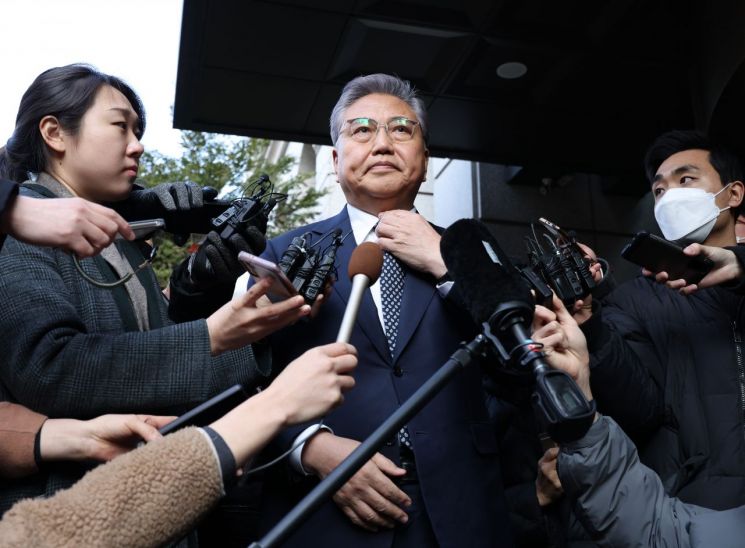
A measure equivalent to the Eulsa Treaty’s 'renunciation of diplomatic protection'... Civil groups oppose
These organizations emphasized, "If the Eulsa Treaty 118 years ago was the forcible seizure of diplomatic rights by Japan, this time the government itself has abandoned its 'diplomatic protection' of its own citizens." They added that the government's announcement to assume compensation responsibility for Japanese defendant companies represents a complete diplomatic victory for Japan.
They stated, "The government's forced labor solution effectively enforces Japan's claim that 'everything was settled by the 1965 Korea-Japan Agreement,'" and raised their voices saying, "This solution further strengthens Japan's assertion that its colonial rule was legal."
They also evaluated it as a secondary harm that inflicted an irreparable sense of humiliation on the victims. The groups questioned, "Japan has not uttered a single apology, and Nippon Steel and Mitsubishi have not paid a single won in compensation, so why should Korean companies suddenly bear the compensation responsibility?"
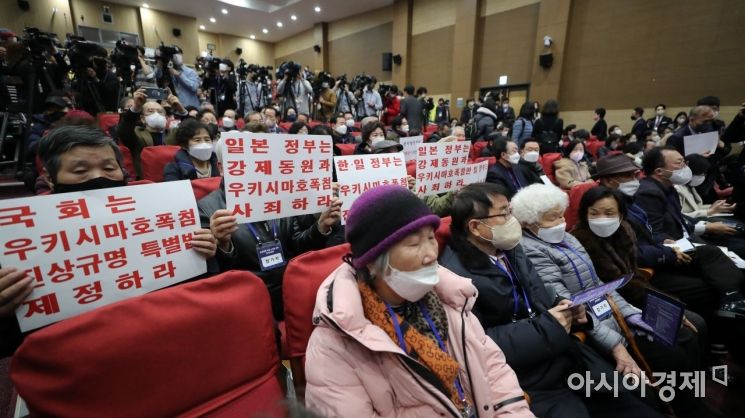 Participants attending the public debate on solutions for forced labor held at the National Assembly on the 12th are holding placards. Photo by Yoon Dong-joo doso7@
Solution without apology or compensation for victims... must be withdrawn
They demanded withdrawal, stating that no solution can be accepted without apology and compensation for the victims. The Korea-Japan Historical Justice and Peace Action, composed of 611 civil society organizations including the Institute for Korean Historical Issues and the Korean Confederation of Trade Unions, held an emergency press conference in front of the Ministry of Foreign Affairs building in Jongno-gu, Seoul, urging the government to withdraw the forced labor compensation solution.
Park Seok-woon, representative of the National People's Action, said, "The Yoon Seok-yeol government trampled on the confirmed legal rights of the people and pushed forward a pro-Japanese, traitorous negotiation that exempts Japanese war crime companies from responsibility." He added, "President Yoon Seok-yeol and Foreign Minister Park Jin violated the Supreme Court's rulings, which hold the final authority on the interpretation of our domestic laws. It is devastating."
Choi Dae-geun, unification committee chairman of the National Democratic Labor Union Service Federation, also condemned, "We must thoroughly remember today's history. The Yoon Seok-yeol government should kneel and apologize." Kim Jae-ha, co-representative of the National People's Action, said, "This is no different from the declaration of the Eulsa Treaty by Lee Wan-yong and the Five Eulsa Traitors with the Japanese Governor-General 104 years ago," adding, "It is absurd that domestic companies should pay because they benefited. It is utterly shameful as citizens."
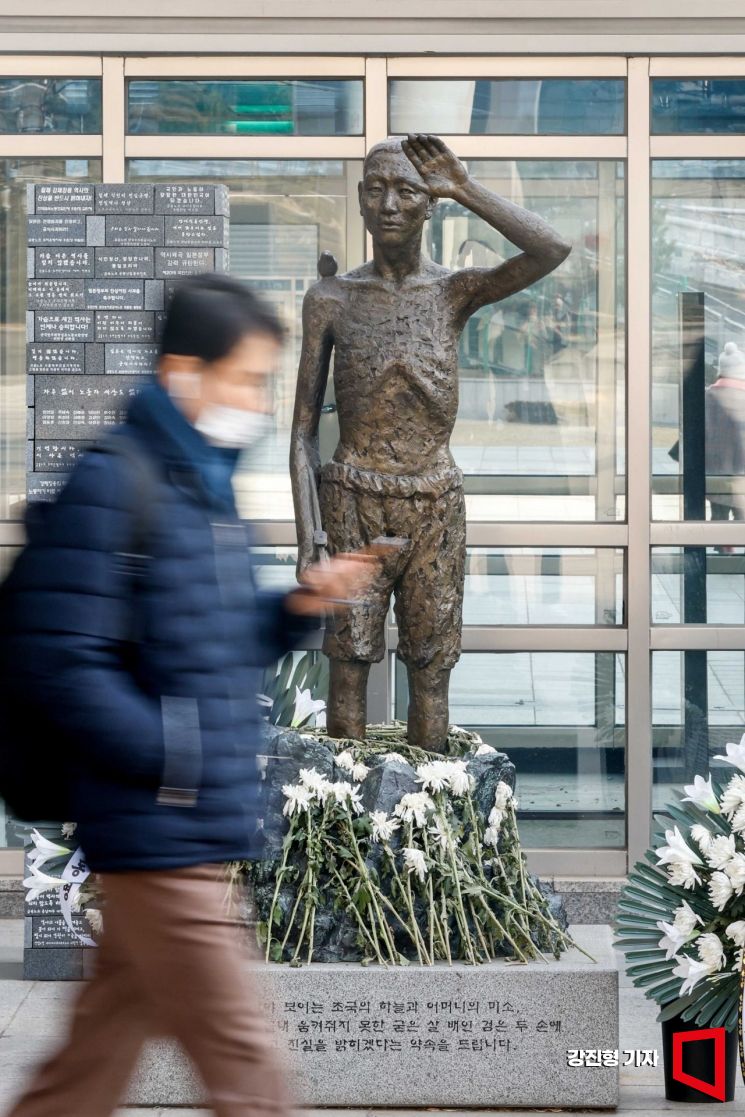 Citizens are passing by the Statue of Forced Laborers installed at Yongsan Station Plaza in Seoul on the 6th, as the government is about to officially announce a solution for compensation for forced labor victims during the Japanese colonial period. Photo by Jinhyung Kang aymsdream@
Apology at the level of statement succession is insufficient... no concrete acknowledgment of responsibility
The Justice Memory Solidarity also issued a statement on the same day, criticizing that "it granted immunity to the war criminal state and war criminal companies," and said, "Based on a tragic historical awareness, it committed a serious historical regression that once again hinders future generations."
They viewed Japan's apology, which was limited to the level of inheriting the 'Kim Dae-jung-Obuchi Declaration,' as close to a fatal mistake. The Justice Memory Solidarity stated, "It is far from a concrete acknowledgment of responsibility for Japan's inhumane illegal acts and an apology for forced labor," and added, "(This government's compensation plan) fully accepts the claims of Japanese right-wing and government, making it a worse blunder than the 2015 Korea-Japan comfort women agreement."
Justice Memory Solidarity said the 'third-party compensation plan' "fundamentally denies the history of national dignity, liberation, and democracy that the Korean people have arduously achieved, undermining the foundation of the Republic of Korea's existence and constitutional order," and declared, "Today, March 6, 2023, will be recorded as the worst day in the history of the Korean constitution, a second national humiliation day." They added, "The 'give-and-take' negotiations between states, conducted while erasing the people's blood and lives and abandoning judicial sovereignty, will remain a future lesson."
© The Asia Business Daily(www.asiae.co.kr). All rights reserved.
![Clutching a Stolen Dior Bag, Saying "I Hate Being Poor but Real"... The Grotesque Con of a "Human Knockoff" [Slate]](https://cwcontent.asiae.co.kr/asiaresize/183/2026021902243444107_1771435474.jpg)


















