Priority Repayment by Domestic Company Foundations
Joint Fund Established with Japan's Keidanren and Others
Victim Groups Hold Consecutive Opposition Press Conferences
Protests Spread in Front of the Ministry of Foreign Affairs
The government announced a ‘third-party compensation’ plan in which Korean companies pay compensation on behalf of Japanese companies for victims of forced labor during the Japanese colonial period. Some victim groups held consecutive press conferences and rallies on the same day to oppose the plan. Victim support organizations strongly condemned the payment of support funds in the form of a ‘joint fund’ without compensation from the perpetrator companies and the method of ‘succession of statements’ instead of an apology.
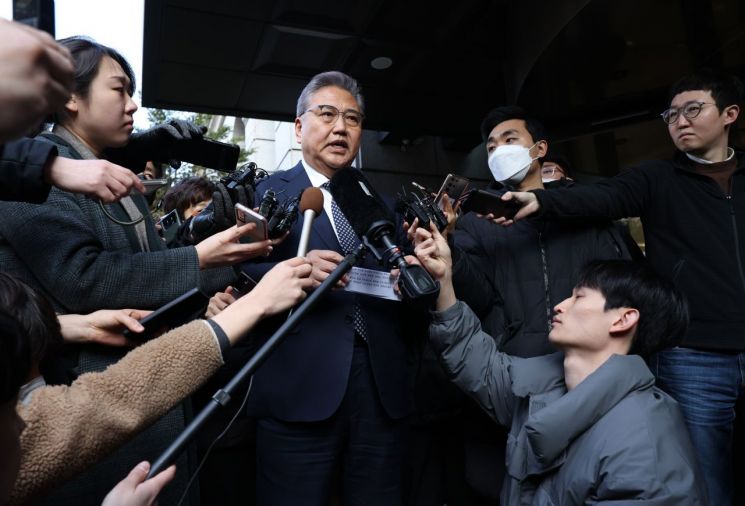
On the morning of the 6th, Park Jin, Minister of Foreign Affairs, announced the ‘third-party compensation’ plan at a briefing held at the Ministry of Foreign Affairs in Gwanghwamun, Seoul, under which the ‘Foundation for the Support of Victims of Forced Mobilization during the Japanese Colonial Period,’ affiliated with the Korean government, will pay an amount equivalent to the compensation to the plaintiffs instead of Japanese companies.
There are 15 victims who received a final compensation ruling from the Supreme Court in 2018, and the total amount to be paid to them, including delayed interest, is known to be about 4 billion KRW. To secure funding, the government plans to prioritize a method in which domestic companies that benefited from the 1965 Korea-Japan Claims Agreement funds contribute to the foundation. There is also a prospect that Japanese companies will participate in jointly raising a youth fund through the Federation of Korean Industries and Keidanren (Japan Business Federation).
The Ministry of Foreign Affairs explained, “In the severe international situation, we will no longer leave the long-stagnant Korea-Japan relations unattended and see this as a new opportunity to move beyond conflict and confrontation between Korea and Japan toward the future.” It also evaluated the measure as “a responsible action by the government to actively embrace our pain caused by past history for the elderly victims.”
However, this solution by the Ministry of Foreign Affairs differs significantly from the demands of the victims. The ‘fund’ is not intended for compensation to the victims but rather has a strong character of promoting exchange between the youth of the two countries, such as scholarships for international students, and is not directly related to the forced labor issue. The participation of the wartime perpetrator companies in compensation payments and a sincere apology from the Japanese side, which the victims originally demanded, are still missing.
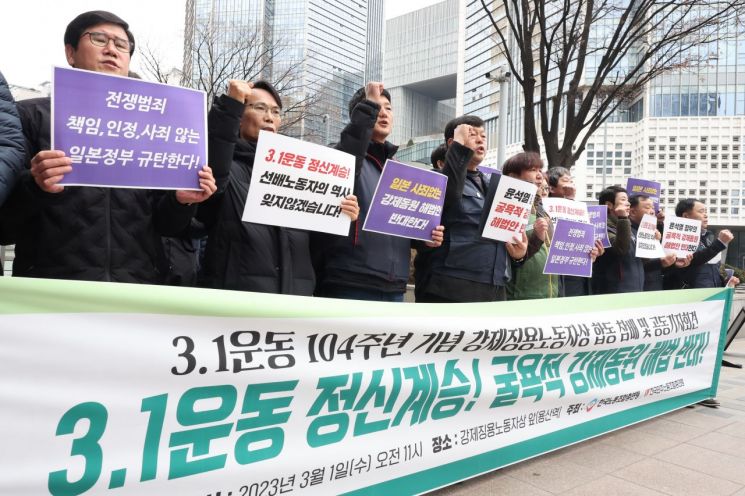
On the same day, organizations supporting the victims held press conferences to express their opposition. The Korea-Japan Historical Justice and Peace Action held a rally in front of the Ministry of Foreign Affairs in the morning under the theme of “Condemning the enforcement of the humiliating forced mobilization solution that is anti-human rights, anti-constitutional, and anti-historical.” An emergency candlelight vigil is also scheduled in Seoul Plaza in the afternoon. The Forced Mobilization Citizens’ Group and Gwangju Jeonnam Historical Justice and Peace Action will also make statements in front of the May 18 Democratic Square in the afternoon. The statements are expected to strongly condemn the government’s solution plan. Grandmother Yang Geum-deok, a victim of forced mobilization, will also attend. The Institute for Korean Historical Issues plans to issue a protest statement at the same time.
Im Jae-sung, a lawyer from the Lawyers for a Democratic Society representing victims of forced labor during the Japanese colonial period, said in a phone interview with this paper, “This is a diplomatic failure, and the youth fund is nothing more than a kind of window dressing.” Professor Hosaka Yuji of Sejong University pointed out, “The 2018 ruling clearly recognized the ‘responsibility of the perpetrators’ and ordered compensation, but this third-party compensation plan does not include any recognition of the perpetrators’ responsibility.”
The opposition party also strongly opposed the plan. Lee Jae-myung, leader of the Democratic Party of Korea, criticized at the National Assembly expanded executive meeting on the same day, saying, “It seems that the Yoon Seok-yeol administration has ultimately chosen a path that betrays historical justice,” and added, “This is arguably the greatest diplomatic disgrace and blot in history, comparable to the ‘Samjeondo humiliation.’” The Samjeondo humiliation refers to the humiliating surrender declaration made by King Injo to the Qing Emperor during the Byeongja Horan (Second Manchu invasion) of Joseon.
Although the Korea-Japan relationship is expected to improve with this negotiation settlement, there are also predictions that domestic public opinion toward the Yoon Seok-yeol government will worsen. According to a survey conducted by Embrain Public, commissioned by News1, from the 3rd to 4th among 1,007 men and women aged 18 and over nationwide on the ‘awareness of the forced labor victim compensation issue,’ 64.2% of respondents answered that “Japan’s apology and clarification of past history must be a prerequisite.” In contrast, only 30.9% answered that “improving Korea-Japan relations should come first.” “Don’t know/no response” accounted for 4.9%.
© The Asia Business Daily(www.asiae.co.kr). All rights reserved.
![Clutching a Stolen Dior Bag, Saying "I Hate Being Poor but Real"... The Grotesque Con of a "Human Knockoff" [Slate]](https://cwcontent.asiae.co.kr/asiaresize/183/2026021902243444107_1771435474.jpg)

















