42 Stray Cats Transferred to Jeju Main Island
"Will Be Safely Protected Under Jeju City Management"
Some feral cats on Marado Island, Jeju, were transferred to the main island of Jeju on the 3rd following concerns that they threaten the endangered natural monument, the horned grebe.
According to Yonhap News and others on the 3rd, the Jeju World Heritage Headquarters and related organizations loaded 42 feral cats rescued from Marado onto a barge and moved them to Moseulpo Port. The World Heritage Headquarters will take overall responsibility for managing the protection facilities, while animal organizations will be in charge of caring for the cats.
The cats will be brought to the World Heritage Headquarters in Jocheon-eup, Jeju City, for health checkups. Healthy cats will live in a protection facility next to the World Heritage Headquarters. Cats showing health issues or requiring neutering will be treated at the Jeju National University Wildlife Rescue Center.
The feral cats are generally reported to be in good health.
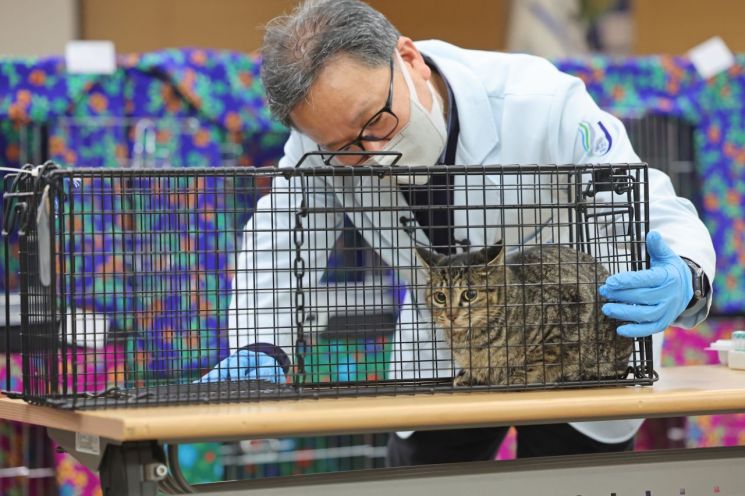
This transfer operation was carried out following concerns that feral cats living on Marado prey on the horned grebe, a natural monument.
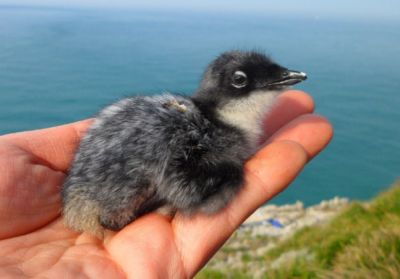
Marado, a natural protected area, serves as an intermediate stopover and breeding ground for key migratory birds such as the horned grebe and the black-faced spoonbill.
However, every year, carcasses of horned grebes have been found on Marado, including four carcasses discovered on the 24th of last month. Although the exact cause of death has not been determined, experts believe it is highly likely that the horned grebes were attacked by cats based on the condition of the carcasses.
In fact, during a survey conducted from 2018 to 2018, it was found that over 5% of the horned grebe population had been harmed by cats.
Accordingly, the World Heritage Headquarters conducted preliminary work on Marado from the 27th to 28th of last month and carried out a feral cat rescue operation on the 1st and 2nd of this month. The World Heritage Headquarters plans to conduct additional rescues of feral cats remaining on Marado in cooperation with animal organizations around the end of this month.
This transfer operation was conducted excluding about 10 cats that residents wished to adopt. Guidelines will be established to keep the remaining cats on Marado indoors from late February to early June, the period when horned grebes visit.
Meanwhile, some opposition has arisen questioning whether removing cats from Marado is the solution. Representatives from the National Feral Cat Protection Association stated, "The place where the four horned grebe carcasses were found is an area where dogs chase cats, so it is not a place where cats can establish territorial activity," and argued, "It cannot be concluded that the cats killed the horned grebes."
They also said, "There is an opinion that Marado cats should have been divided into 'feral cats' living in the village with residents and 'wild cats' living around the cliffs threatening birds, and only the wild cats should have been removed," but added, "Since the removal has been decided, we will do our best to ensure the cats can live safely."
© The Asia Business Daily(www.asiae.co.kr). All rights reserved.
![Clutching a Stolen Dior Bag, Saying "I Hate Being Poor but Real"... The Grotesque Con of a "Human Knockoff" [Slate]](https://cwcontent.asiae.co.kr/asiaresize/183/2026021902243444107_1771435474.jpg)

















