High-Performance Memory Semiconductor Demand↑
Accelerating AI Response Technology Development
Insufficient to Lead Semiconductor Market Recovery
[Asia Economy Reporter Han Ye-ju] The domestic semiconductor industry is focusing on 'AI semiconductors' as a savior to revive the frozen semiconductor market due to demand stagnation. Although AI semiconductors currently account for a negligible share of total semiconductor demand, there is great anticipation as they are creating new memory demand. Samsung Electronics and SK Hynix are putting their all into developing high-performance, high-capacity memory in line with the increasing AI demand.
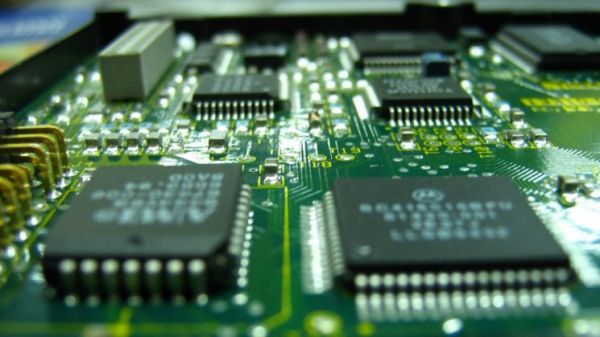
AI semiconductors began to gain attention with the ChatGPT craze. High-performance memory semiconductors are essential for conversational AI like ChatGPT. In the case of ChatGPT, about 10,000 of NVIDIA's GPU (Graphics Processing Unit) 'A100' are used. The GPU fetches commands stored in DRAM and processes data through computation. Since large volumes of data must be processed quickly, high-performance wide-bandwidth DRAM products called High Bandwidth Memory (HBM) are essential. HBM is memory that can send large amounts of data at once and is used for AI servers. As demand for ChatGPT, i.e., GPUs, increases, the demand for memory semiconductors grows accordingly.
Market research firm Gartner forecasted that the AI semiconductor market will grow sharply from $22 billion in 2020 to $55.3 billion this year and $86.1 billion by 2026.
Global IT companies are actively investing in AI infrastructure despite the economic downturn. Representative examples include Microsoft (MS) and Google.
Domestic semiconductor companies are also placing their hopes on the new memory demand that ChatGPT will create. This is because SK Hynix and Samsung Electronics hold the majority of the market share for high-performance server memory such as HBM.
In fact, NVIDIA's A100 uses SK Hynix's 3rd generation HBM DRAM. The newer product than A100, the 'H100,' also uses SK Hynix's 4th generation HBM product. It is known that NVIDIA continues to request SK Hynix to supply the new HBM3. Intel, the world's number one server CPU company, is also reportedly focusing on SK Hynix's HBM3.
Samsung Electronics is also accelerating the development of next-generation memory specialized for AI. Earlier this year, Samsung began developing various next-generation memory solutions for AI applications, led by 'PIM' (Processing in Memory) technology. PIM implements data computation functions performed by the processor inside the memory itself. It is characterized by being designed so that the memory directly performs computation processing.
Samsung Electronics also developed the world's first 'HBM-PIM,' which combines memory semiconductors and artificial intelligence processors into one, in collaboration with AMD. Samsung explained that using HBM-PIM increases average performance by two times compared to existing GPU accelerators and reduces energy consumption by 50%. Samsung Electronics Chairman Lee Jae-yong visited semiconductor packaging plants in Cheonan and Onyang last month to personally check the development status of next-generation technologies such as HBM, essential for ChatGPT.
Samsung Electronics has signed an agreement with Naver and has officially started developing AI semiconductor solutions. Samsung Electronics is responsible for the hardware part, while Naver is developing new semiconductor solutions based on its accumulated know-how in operating large-scale AI.
However, there is an assessment that AI-related demand accounts for only 5% of total server demand, which is insufficient to lead a recovery in the semiconductor industry. Due to the deep slump in memory caused by broad-based demand weakness, even if AI semiconductor sales surge, it is pointed out that the overall semiconductor industry is unlikely to recover within this year.
© The Asia Business Daily(www.asiae.co.kr). All rights reserved.
![Clutching a Stolen Dior Bag, Saying "I Hate Being Poor but Real"... The Grotesque Con of a "Human Knockoff" [Slate]](https://cwcontent.asiae.co.kr/asiaresize/183/2026021902243444107_1771435474.jpg)
















