65% of Economists Expect Changes by June
High Possibility of Monetary Policy Meeting Changes in June
Adjust YCC Policy but Maintain Quantitative Easing
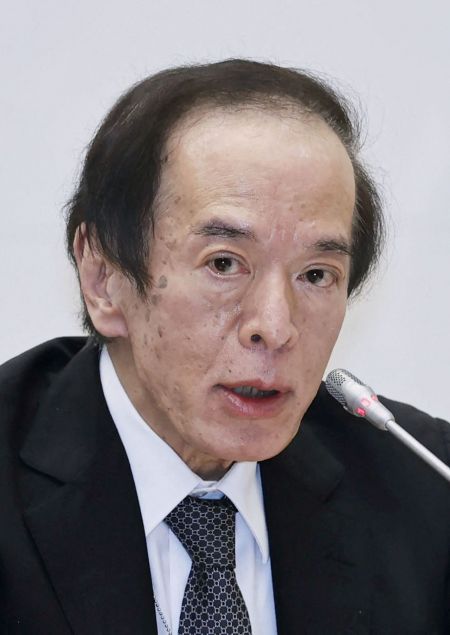
The Bank of Japan (BOJ) is highly likely to shift its large-scale monetary easing policy, maintained for 10 years, around June this year, according to an analysis. Although Kazuo Ueda, the appointed BOJ Governor, reiterated his commitment to continue monetary easing, the market predominantly expects Japan to return to a tightening stance.
On the 2nd (local time), Bloomberg reported that in a survey of 49 economists, 65% of respondents predicted that the BOJ's monetary policy would turn to a tightening stance by June. The June monetary policy meeting was identified as the likely timing for this policy shift. Forty-one percent of the respondents analyzed that it would be less burdensome for Governor Ueda to make a policy change in June, rather than at the April monetary policy meeting, which would be his first after taking office.
In the market, the dominant view is that Ueda will first scrap or readjust the Yield Curve Control (YCC) policy, which involves unlimited purchases of government bonds to keep long-term interest rates at a certain level. Marcel Thieliant, Chief Economist at Capital Economics, stated, "Governor Haruhiko Kuroda will not reverse the policy before his retirement," and added, "The BOJ is expected to abandon the YCC policy at the upcoming monetary policy meeting to avoid an unavoidable situation."
The upcoming March monetary policy meeting is expected to create an atmosphere of closely monitoring market changes that have occurred since the December monetary policy meeting last year. Governor Kuroda will step down on April 8, after the monetary policy meeting scheduled for the 10th of this month. Bloomberg analyzed that since the BOJ raised the fluctuation band for long-term interest rates from ±0.25% to ±0.5% in December, causing significant market volatility, it is unlikely that Governor Kuroda will make major policy changes at this month's meeting.
However, major foreign media outlets, including the Nihon Keizai Shimbun, predict that Ueda will not implement a strong tightening that completely abandons the quantitative easing stance. The BOJ maintains the position that, since Japan's inflation rate has not stably and continuously reached the 2% level, quantitative easing is necessary to support economic growth.
Recently, Governor Ueda stated, "Although various side effects are occurring, considering the economic and price situation, the current large-scale easing is necessary and appropriate," and added, "We will continue monetary easing while carefully considering the situation going forward."
© The Asia Business Daily(www.asiae.co.kr). All rights reserved.

















