Domestic LPG Suppliers SK Gas and E1 Freeze LPG Supply Prices
Reducing Consumer Burden... Government Also Expects to Contribute to Price Stability
LPG Industry Boosting New Businesses Like Hydrogen, Also Choosing to Align with 'Policy Support'
Last month, liquefied petroleum gas (LPG) prices surged, but SK Gas and E1, the largest domestic suppliers, froze prices this month. Gas companies set this month's supply prices by reflecting international prices from one month prior. Analysts interpret this as a strategic move by LPG companies to forgo hundreds of billions of won in profits, share the burden with consumers amid the energy crisis, and support the promotion of new businesses.
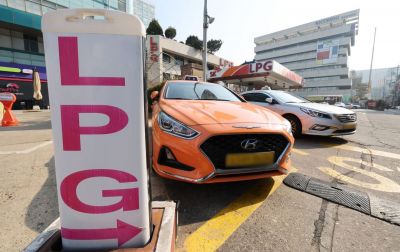
SK Gas decided to freeze the March propane price at 1,274.81 KRW per kg and the butane price at 1,541.68 KRW per kg. E1 also joined the ranks of LPG price freezes. E1's March propane price remains the same as last month at 1,275.25 KRW per kg for residential and commercial use and 1,281.85 KRW per kg for industrial use.
The LPG price freeze is an unusual measure. LPG prices fluctuate based on international prices. Typically, there is a one-month lag, corresponding to transportation time, before international prices are reflected in domestic prices. Last month, the international LPG price was 790 USD per ton for both propane and butane, rising by 200 USD and 185 USD respectively within a month, an increase of over 30%. This was due to a combination of a cold wave in the Asia region and the recovery of China's oil demand. Therefore, the prevailing expectation was that domestic supply prices would also rise, but LPG companies decided to freeze prices.
The price freeze by the two companies can be explained as a form of 'sharing the pain.' Recently, energy prices have surged, causing heating costs to skyrocket. If LPG prices, considered a representative 'fuel for the common people,' were to rise as well, energy-vulnerable groups could become even more precarious. Both companies stated, "We froze prices to participate in the government's efforts to stabilize energy prices."
Last year, amid high oil prices and high exchange rates, LPG companies recorded near-record earnings. They gained significant profits from industrial demand and trading. While demand for transportation and residential/commercial use decreased due to the COVID-19 pandemic, LPG replaced LNG (liquefied natural gas) in industrial sites. The Korea Gas Corporation mixed LPG with LNG to reduce supply costs. LPG companies also earned substantial profits from trading. Typically, LPG companies reduce price fluctuation risks through futures trading. Under normal circumstances, selling LPG futures purchased earlier during last year's sharp price increases yields profits. SK Gas recorded sales of 8.0662 trillion KRW (up 24.2% year-on-year) and operating profit of 390.6 billion KRW (up 270.3%). E1 also posted sales of 7.9908 trillion KRW, up 55.1%, and operating profit surged 4,899.4% to 278.7 billion KRW compared to the previous year.
In the context of the heating cost issue, raising prices for residential and commercial LPG, which do not generate large profits, was a choice that could have entailed a 'political burden.' On February 23, the Ministry of Trade, Industry and Energy held a winter LPG price review meeting with SK Gas, E1, and four oil refining companies, urging them to work toward price stabilization.
LPG companies are challenging eco-friendly energy businesses such as hydrogen in line with the carbon-neutral era. These businesses still require institutional and policy support because standardized models or criteria have not yet been established. SK Gas plans to make a fresh start as an LNG business operator responsible for LNG import, storage, and supply starting next year. They will invest 1.2 trillion KRW in Ulsan New Port to build a base with tanks totaling 2.73 million barrels and three fuel transport ships for docking and unloading. The plan is to produce hydrogen cheaply at this site and continue business as a 'hydrogen supplier.' E1 is also strengthening new growth businesses such as renewable energy projects including solar and wind power generation, as well as hydrogen and electric vehicle charging businesses alongside its existing LPG business.
© The Asia Business Daily(www.asiae.co.kr). All rights reserved.

















