Expected Recovery Exceeds Forecasts, Stimulus Measures Likely to Slow Down
Export Rebound Uncertain Due to Global Economic Slowdown
Rising US-China Tensions Also a Concern
China's manufacturing business indicators have soared to their highest level in 11 years, but the market remains reluctant to be optimistic about China's economy this year. This is due to expectations that the central government may actually slow down domestic demand stimulus amid a faster-than-expected real economy recovery. This outlook is reinforced by unfavorable external trade conditions caused by the global economic slowdown and intensified US-China tensions.
According to the National Bureau of Statistics of China on the 1st, the official manufacturing Purchasing Managers' Index (PMI) for February was recorded at 52.6. This is the highest figure in 10 years and 11 months since April 2012 (53.3). It also significantly exceeded the previous month's figure (50.1) and experts' forecast (50.5).
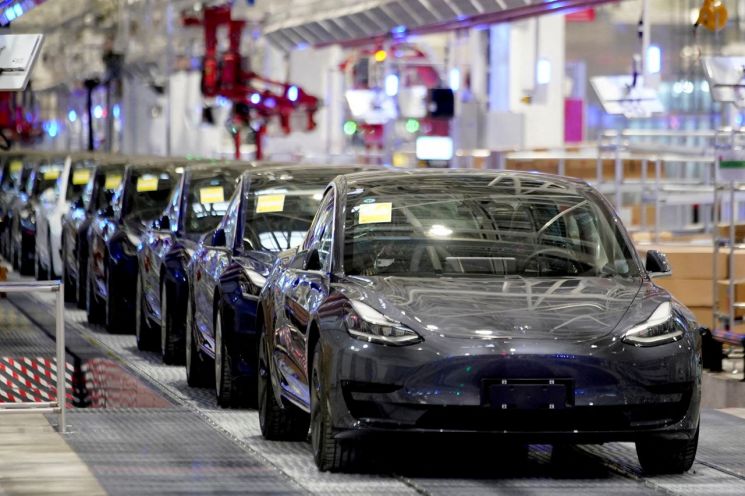
The manufacturing PMI is compiled through surveys of purchasing managers from over 700 manufacturing companies nationwide, covering five sub-indices: new orders, production, shipments, inventory, and employment. A reading above the baseline of 50 indicates an expansion phase in the economy, while below 50 indicates contraction. Due to the impact of the zero-COVID policy, which entailed strict quarantine measures, China's manufacturing PMI showed a sluggish trend last year but surpassed the baseline at 50.1 in January this year, returning to an expansion phase for the first time in four months since September 2022.
The non-manufacturing (service sector) PMI, which is directly influenced by policy, stood at 56.3 last month. This also exceeded the previous month's figure (54.4) and the forecast (55.0). The composite PMI rose further from the previous month's 52.9 to 56.4. The private sector index compiled by Caixin, a Chinese economic media outlet, shows a similar trend. Caixin's manufacturing PMI recorded 51.6 in February, surpassing both the previous month's 49.2 and the forecast of 50.2. This is the first time in six months that the private index has exceeded the baseline (50.0).
However, the market expects that the central government may become more cautious in implementing domestic demand stimulus policies based on the rapid economic recovery confirmed by these indicators. Especially with the increasing likelihood of further US interest rate hikes, macroeconomic measures such as monetary easing are likely to be postponed.
Bloomberg reported on the 1st (local time), citing anonymous sources, that "Chinese senior officials, seeing the economy recover faster than expected, will refrain from implementing new stimulus measures." The official, described as well-versed in internal policies, added, "The government is looking for ways to 'support' the economy rather than provide additional aid."
Exports, which have supported the Chinese economy amid the global economic slowdown, continue to show a sluggish trend. Although China's total exports increased by 7% year-on-year last year, export value in December fell by 9.9% compared to the same month the previous year. This is the largest decline since March 2020 (-17.20%), immediately after the COVID-19 outbreak. Global investment bank Goldman Sachs has predicted that China's export growth rate this year will remain in single digits and will only rebound in the second half of the year.
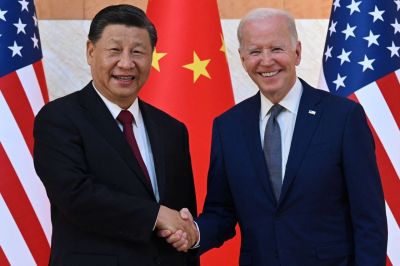
Recent US-China tensions, ranging from the issue of surveillance balloons to the origin of COVID-19, also increase technical and geopolitical risks to the Chinese economy. FBI Director Christopher Wray recently stated that the COVID-19 virus was accidentally leaked from a laboratory in Wuhan, China. In response, the Chinese Ministry of Foreign Affairs immediately condemned the remarks. At a regular briefing on the 1st, spokesperson Mao Ning stated, "The theory that COVID-19 originated from a laboratory has been concluded as unlikely by joint research between the World Health Organization (WHO) and China," and asserted, "We strongly oppose any political manipulation of the origin-tracing issue in any form."
© The Asia Business Daily(www.asiae.co.kr). All rights reserved.
![Clutching a Stolen Dior Bag, Saying "I Hate Being Poor but Real"... The Grotesque Con of a "Human Knockoff" [Slate]](https://cwcontent.asiae.co.kr/asiaresize/183/2026021902243444107_1771435474.jpg)

















