China bans AI chatbot services for major IT companies like Tencent
Wariness over growth potential in the US market
Possibility of using own integrated data
and leveraging the party's propaganda tools
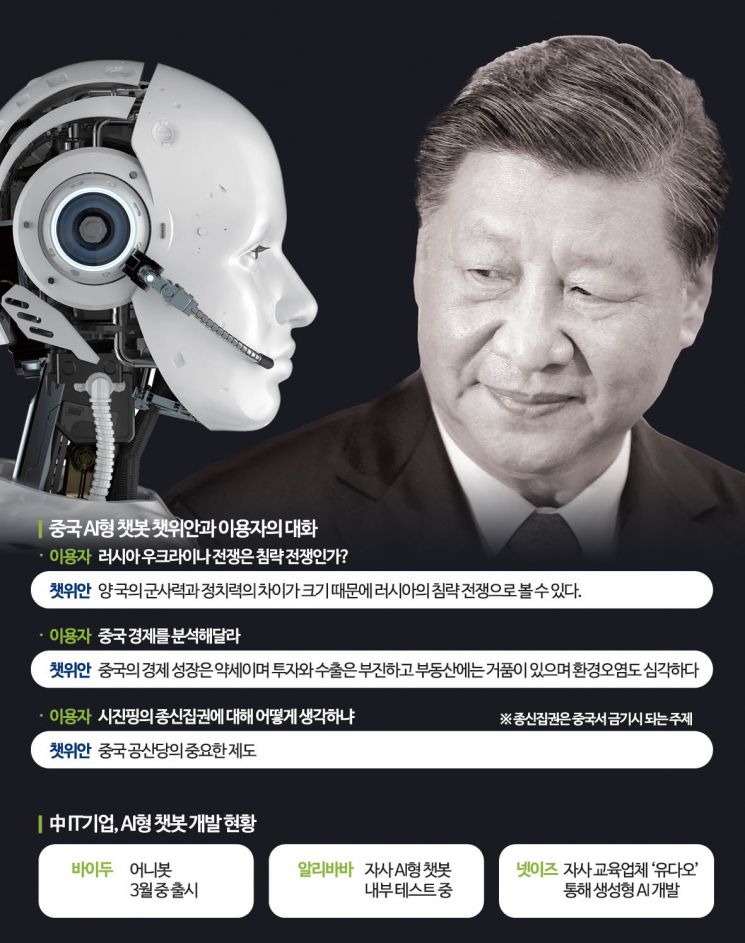
Recently, Chinese authorities have taken regulatory measures against Chinese IT companies venturing into the development of AI-powered chatbots. AI chatbots learn from vast amounts of data to autonomously generate responses tailored to users' questions. This implies that they could potentially deliver information considered taboo by the authorities to users. However, outright regulation is also challenging. If American companies dominate the AI chatbot market, it is inevitable that China will fall behind in the technological competition with major powers. The Chinese government, unwilling to lose both information control and technological prowess, now finds itself in a dilemma.
◆ China Halts AI Chatbot Development... Concerns Over Dissemination of Criticism Against the Communist Party
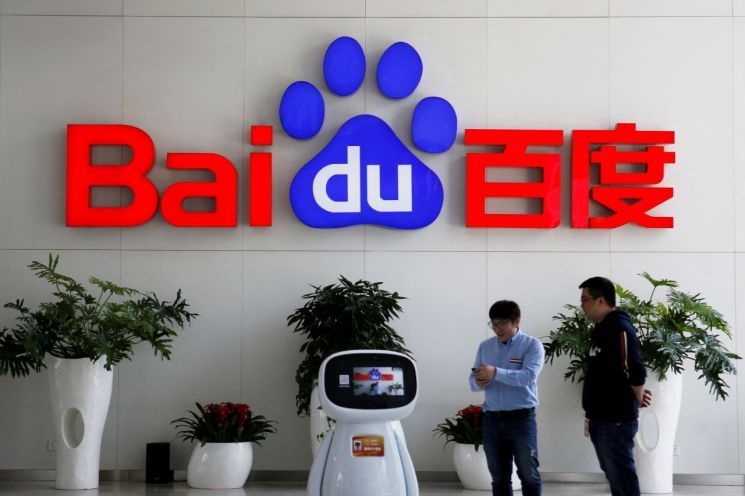
Recently, the Chinese government issued a ban on providing AI chatbot services. On the 23rd, the Nihon Keizai Shimbun reported, citing anonymous sources, that Chinese authorities instructed major IT companies such as Tencent not to connect the OpenAI-provided 'ChatGPT service' to their search engines. ChatGPT is an AI chatbot launched by OpenAI, a company invested in by Microsoft in the United States.
According to sources, Tencent, a major Chinese big tech company, blocked access to ChatGPT on its social media service WeChat last December, following directives from the authorities. Currently, to use ChatGPT in China, one must bypass the government's censorship system, the 'Great Firewall,' using a virtual private network (VPN).
Apparently, these measures were insufficient, as the Chinese government also reportedly requires domestic IT companies to report in advance if they plan to provide services similar to ChatGPT, according to sources.
This sensitive reaction from the Chinese government is aimed at preventing the spread of critical information about the government via ChatGPT. Nihon Keizai explained, "ChatGPT acquires information based on Western academic papers and books, which contain a lot of critical information about China," adding that "there is a high possibility that it will generate responses critical of the current leadership."
In fact, on the 3rd, 'ChatYuan,' an AI chatbot launched by Chinese IT company YuanYi Intelligence, was suspended just three days after its release due to legal violations. When asked about the Russia-Ukraine war, ChatYuan described it as "Russia's aggressive war," which contradicts the Chinese government's stance that denies Russia's invasion and has generally supported Russia. When asked about the Chinese economy, ChatYuan responded that "there are structural problems such as underinvestment, a housing bubble, and environmental pollution, making it difficult to view the situation optimistically."
Following the government's policy, Chinese media also began to flood the public with critical reports about ChatGPT. On the 9th, China's state-run media Securities Times (STCN) published a commentary warning that investing in companies developing AI chatbots is risky. The Securities Times cautioned, "Stocks related to ChatGPT seem excessively overheated," and "some capital is enticing investors only to cause them losses."
Riding the global ChatGPT craze, Chinese AI companies' stock prices, which had been rising earlier this year, plummeted. The stock price of CloudWalk Technology, a Chinese AI-based facial recognition technology company, fell 14% following critical reports by Chinese media, while AI-related stocks such as Beijing Hi-Tech Science & Technology on the Shanghai Stock Exchange dropped 13%.
◆ Difficulty Applying Government Censorship System to AI Chatbots
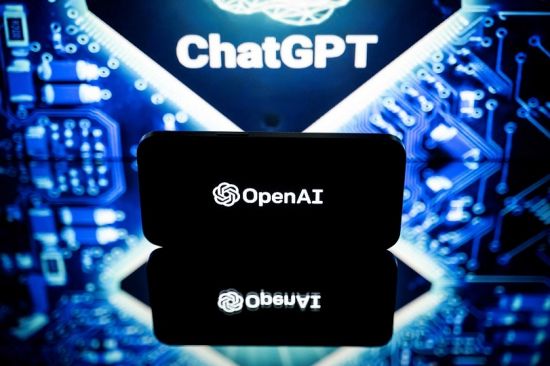
With authorities wielding regulatory measures, the development of AI chatbots by Chinese IT companies faces the risk of being derailed. Baidu, China's largest search engine, announced plans to launch 'Ernie Bot,' a service similar to ChatGPT, next month, but it is uncertain whether the service can be stably provided after launch. Xu Liang, the developer of ChatYuan, told The Washington Post, "Even if Baidu launches Ernie Bot as expected, it is highly likely to be suspended soon."
The key issue is whether the Chinese government will apply censorship to AI chatbot services. Industry insiders analyze that AI chatbots are difficult to subject to the censorship system that the Chinese government has traditionally applied. Chinese regulators censor all online posts by breaking down information into the smallest units of words. Under this system, even if a search engine searches for the word 'Uyghur,' it only shows simple geographical information about the Uyghurs instead of information about China's human rights abuses.
However, AI chatbot models using large language models predict the most appropriate next word based on probability and statistics, then generate complete language to deliver information conversationally to users. Because they organically construct language by calculating numerous probabilities and statistics, it is difficult to apply the traditional censorship methods used by the authorities. The Washington Post explained, "Chinese IT companies, including Baidu, face the challenge of censoring AI chatbots to ensure that forbidden words by the authorities do not appear."
Another major challenge for Chinese companies is determining the types of data their AI chatbots should learn from. The Washington Post noted, "Baidu's AI chatbot 'Ernie Bot' was learning from vast Western information sources, including Wikipedia and the American online community Reddit," adding, "Chinese companies' chatbots will likely have to use only party-approved information as training data."
◆ China Predicts Growth Potential of ChatGPT... May Also Use It as a Party Propaganda Tool
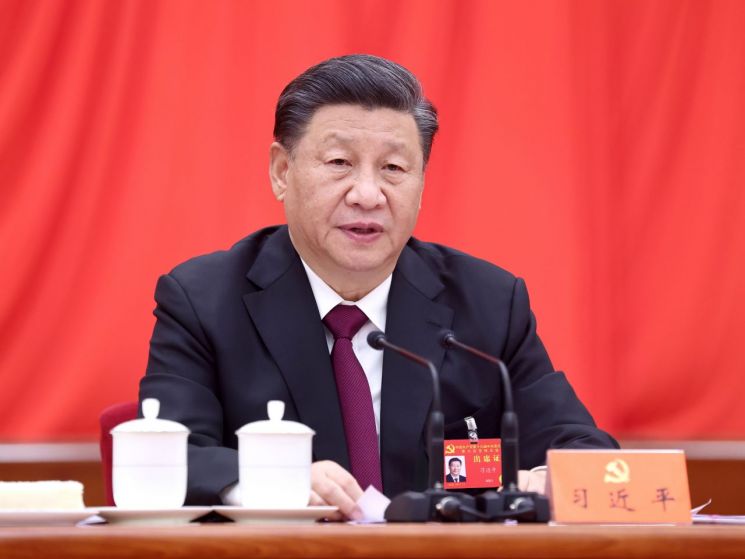
Although China has taken a tough stance, it appears that the government is not entirely comfortable. After suspending services due to the influx of uncensored raw information, the authorities seem to agree with the forecast that the AI chatbot market will grow.
Cheng Jichang, a senior official at China's Ministry of Science and Technology, stated at a press conference on the 24th, "Technologies like ChatGPT can integrate AI with society and the economy and have the potential to be applied across many industries." The Global Times also reported that the Chinese government intends to make AI technology a new growth engine and will provide specific support measures.
Moreover, China cannot silently watch the hegemon, the United States, dominate the AI chatbot market. According to market research firm International Data Corporation, China is expected to invest $26 billion (34.372 trillion KRW) in nurturing the AI industry by 2026, accounting for 9% of global AI-related investments.
If the Chinese government provides AI chatbot services using its own data, it could also use them as a propaganda tool for the Party. For example, if AI chatbots learn information solely based on data controlled by Chinese authorities, the government can provide users only with information that suits its preferences. Mark Natkin, founder of Marbridge Consulting, an IT company headquartered in Beijing, predicted, "If AI chatbots are developed in line with the Chinese government's policy goals, they will serve as a more efficient channel for the government to deliver information it wants people to receive."
© The Asia Business Daily(www.asiae.co.kr). All rights reserved.
![Clutching a Stolen Dior Bag, Saying "I Hate Being Poor but Real"... The Grotesque Con of a "Human Knockoff" [Slate]](https://cwcontent.asiae.co.kr/asiaresize/183/2026021902243444107_1771435474.jpg)













