China Business Drive Amid Rising US-China Tensions
[Asia Economy Reporter Yujin Cho] From fast food to luxury brands, American conglomerates continue to expand into China. They are seeking business expansion in the Chinese market, which is expected to rebound after the "reopening" (economic resumption). Despite escalating geopolitical tensions between the U.S. and China due to incidents such as the "spy balloon" affair and U.S. arms support for Ukraine, the number of American companies betting on the Chinese market is increasing.
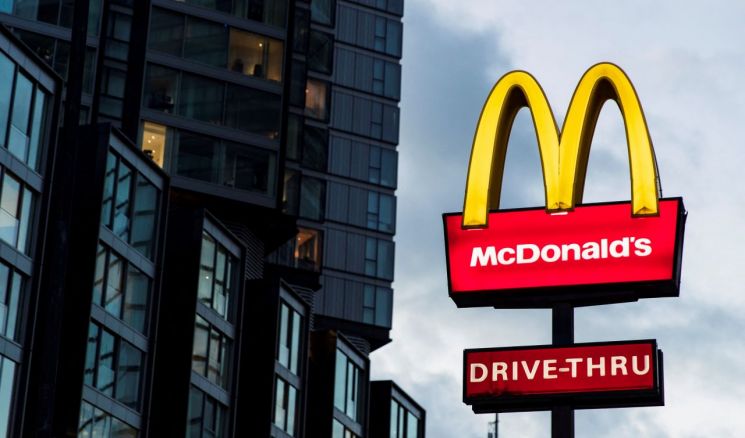
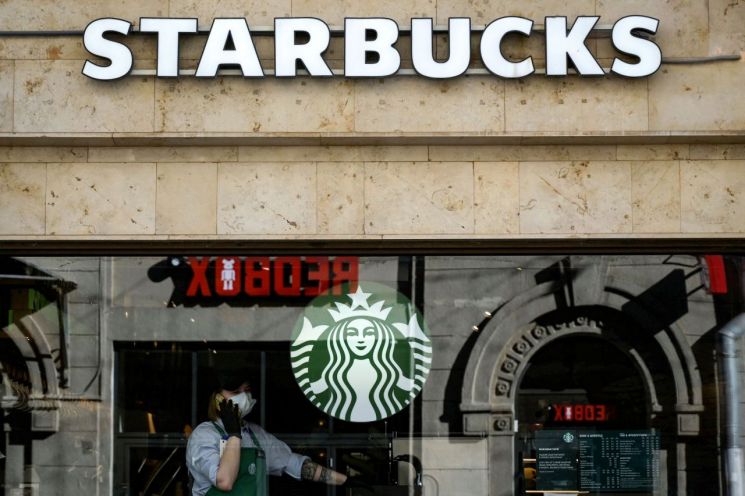
According to the Wall Street Journal (WSJ) on the 26th (local time), McDonald's and Starbucks plan to open hundreds to thousands of new stores in China. Luxury fashion brands such as Ralph Lauren, Coach, and Kate Spade are also expanding their stores in China. Despite changes in the investment environment caused by the recent escalation of U.S.-China conflicts, WSJ reported that the number of American food and apparel companies expecting normalization of the Chinese market after the COVID-19 pandemic is increasing.
Starbucks announced plans to open 3,000 new stores in China by 2025. Although Starbucks' sales in China as of December last year plummeted 42% compared to the same period the previous year, the company explained that it cannot give up on the long-term potential of the Chinese market. Howard Schultz, Starbucks CEO, also revealed plans to visit China for the first time this spring. CEO Schultz said, "Starbucks' growth in China is still in its early stages."
Hamburger specialist McDonald's also announced plans to open 900 new stores in China this year. U.S. meat processor Tyson Foods and Spam manufacturer Hormel are also establishing new facilities. Hormel plans to build a new factory on the outskirts of Shanghai and significantly expand its operations in China.
Apparel companies Tapestry, which owns luxury brands Coach and Kate Spade, and Ralph Lauren are also increasing new stores in China.
This investment atmosphere among American companies appears to be due to expectations for the recovery of the Chinese economy, which has moved away from the "zero-COVID" policy. Recently, major U.S. investment bank Goldman Sachs raised its forecast for China's economic growth rate this year from 5.2% to 5.5%. This is because expectations for economic reopening have increased following the Chinese government's sudden lifting of quarantine measures on December 7 last year.
Economic indicators centered on consumption in the fourth quarter of last year confirmed expectations that the economy would improve significantly. December retail sales, which can confirm the effects of economic reopening, recorded -1.8%, greatly exceeding market expectations (-8.6%), and industrial production also recorded 1.3% year-on-year, surpassing market expectations (0.2%).
The market evaluated that the authorities' reversal of quarantine policies has revitalized the overall economy, leading to a rebound in consumption. China's service industry is rapidly normalizing, and expectations are rising that goods consumption will also recover.
The Chinese government's recent proactive stance toward American companies is also boosting the investment sentiment of U.S. firms. On the 22nd, the Chinese Ministry of Foreign Affairs released photos on its official WeChat account showing a meeting between executives of the American aircraft manufacturer Boeing and senior officials of the Ministry of Foreign Affairs. The Chinese Ministry of Foreign Affairs stated, "We will spare no necessary support for American companies, including Boeing." Additionally, China allowed the release of a Marvel superhero movie produced by Disney's film studio for the first time in three years and seven months since 2019.
However, the external environment remains unfavorable as the rift in U.S.-China conflicts deepens. On the 24th, amid rising tensions due to the U.S. shooting down a Chinese spy balloon that violated U.S. airspace and China's moves to supply lethal weapons to Ukraine, a tense situation unfolded in the South China Sea airspace where a U.S. Navy patrol aircraft and Chinese fighter jets engaged in a standoff. U.S. CNN reported that this incident is a stark example of the tensions between the U.S. and China in the South China Sea.
As geopolitical tensions and technological hegemony competition between the U.S. and China intensify, some analyses suggest that American companies' expansion into China will be limited to the consumer goods sector. WSJ reported that investment expansion in China is centered on consumer goods companies, while technology and manufacturing companies are maintaining a cautious stance toward China.
© The Asia Business Daily(www.asiae.co.kr). All rights reserved.
![Clutching a Stolen Dior Bag, Saying "I Hate Being Poor but Real"... The Grotesque Con of a "Human Knockoff" [Slate]](https://cwcontent.asiae.co.kr/asiaresize/183/2026021902243444107_1771435474.jpg)

















