Overseas Economic Focus "Volatility Expands Following China's Economy"
[Asia Economy Reporter Seo So-jung] Recently, international oil prices have fluctuated within a relatively narrow range due to a mix of demand slowdown and expectations for China's reopening (resumption of economic activities). However, it is analyzed that volatility could increase depending on future Russian oil supply conditions and the pattern of China's economic reopening.
On the 26th, the Bank of Korea stated in its report titled "Review of Major Supply and Demand Factors in the Recent Global Oil Market," published in Overseas Economic Focus, that "the future oil market is expected to fluctuate not only due to economic variables but also various geopolitical factors such as the Russia-Ukraine war, necessitating continuous monitoring and comprehensive analysis."
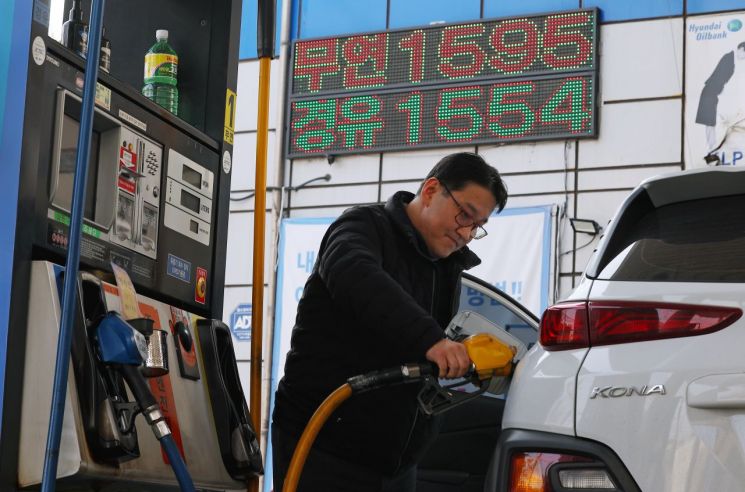
This year, international oil prices have been fluctuating in the $80 range amid mixed concerns over demand reduction due to global economic slowdown and the possibility of further tightening by the U.S. Federal Reserve (Fed), alongside expectations for increased demand from China's reopening.
However, as market participants' expectations for a full-scale recovery of the Chinese economy after the Lunar New Year rise, and the recent reemergence of potential supply disruptions of Russian oil, the possibility of increased volatility in oil prices has been raised. Russia announced on the 10th a plan to cut oil production by 5% of daily output, equivalent to 500,000 barrels, starting in March.
According to the report, Russian oil exports have shown a more robust performance than expected despite Western sanctions such as the price cap, somewhat alleviating concerns over supply disruptions. By securing alternative export destinations such as China and India instead of the European Union (EU), which has banned imports, total exports in January actually increased by 300,000 barrels compared to the previous month.
However, Park Se-jun, Deputy Director of the International Comprehensive Team at the Bank of Korea's Research Department, said, "There are somewhat concerning assessments regarding Russia's future supply conditions," adding, "Since global oil companies like BP and Shell withdrew from Russia after the Ukraine war, and due to Western sanctions making it difficult to introduce the latest equipment and technology, these factors could contribute to future supply disruptions in Russia."
Going forward, Russia's oil supply situation is evaluated to have considerable uncertainty related to whether transportation vessels can be expanded and the impact of sanctions on petroleum products. In fact, since the petroleum product sanctions on the 5th, freight rates for tankers transporting gasoline and other products have surged by more than 400%, indicating increased volatility.
Additionally, despite Russia's production cuts, OPEC member countries such as Saudi Arabia maintaining their existing production cut levels and tacitly supporting Russia is another factor increasing uncertainty in the global oil supply.
Major institutions are continuously revising upward their forecasts for China's oil demand this year based on positive views of the Chinese economy.
During the Chinese Lunar New Year period, mobility indicators such as air travel showed a strong rebound, and with the expansion of travel demand in China, global aviation fuel demand is expected to recover to about 90% of pre-pandemic levels. In January this year, China's imports of Russian crude oil, mainly by private refineries, reached the highest level since April 2020, further raising expectations for industrial activity.
However, factors limiting the reopening effect, such as low household consumption capacity and sluggish real estate market, persist, making the specific recovery pattern highly uncertain. Unlike major countries where consumption surged due to pent-up demand during the pandemic recovery, there is also a view that the consumption stimulus effect from easing quarantine measures in China will not be significant.
Deputy Director Park said, "From the supply side, Russian oil supply has contributed to price stability by showing a more robust trend than expected, but after the recent production cut announcement, concerns over supply disruptions due to sanctions such as the price cap have reemerged," adding, "From the demand side, increased oil demand from China's economic reopening will partially offset demand decreases due to economic slowdowns in the U.S. and Europe, but market expectations may change and volatility may increase depending on the specific recovery pattern of the Chinese economy."
© The Asia Business Daily(www.asiae.co.kr). All rights reserved.
![Clutching a Stolen Dior Bag, Saying "I Hate Being Poor but Real"... The Grotesque Con of a "Human Knockoff" [Slate]](https://cwcontent.asiae.co.kr/asiaresize/183/2026021902243444107_1771435474.jpg)











