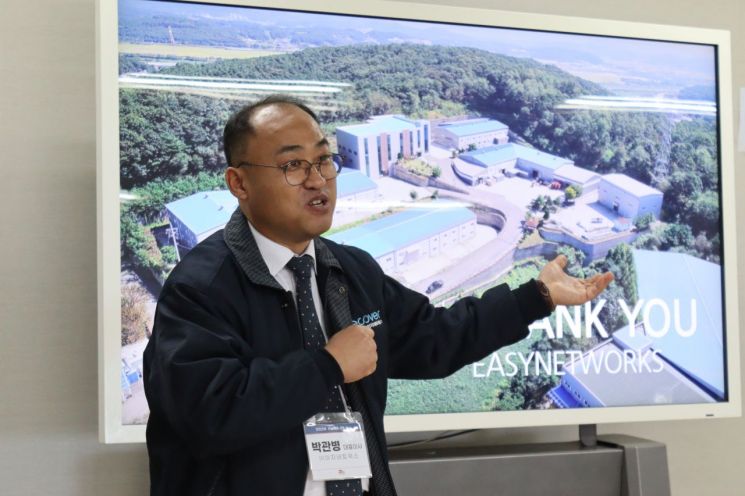
The 'Lubosa Incident' that occurred in 2006 is considered the worst stock manipulation case in South Korea's history. Lubosa, an auto parts manufacturer, was acquired in 2015 by Choi Gyu-seon, the central figure in the 'Choi Gyu-seon Gate' scandal during the Kim Dae-jung administration, and the company name was changed to SunCore. After suffering difficulties due to Choi's embezzlement and breach of trust, the company went bankrupt in 2018.
The factory site in Deogeun-ri, Wollong-myeon, Paju-si, Gyeonggi-do, where Lubosa remained from 2013 until its bankruptcy, was taken over by another company in 2019. This company is Easy Networks, a manufacturer of air purifiers. Park Gwan-byeong, CEO of Easy Networks Paju factory, said, "When we acquired the Lubosa factory in 2019, all wages for about 300 workers who had suffered from the Lubosa incident were fully paid," adding with a smile, "Thanks to this positive start, the business seems to be doing well."
After being discharged as a captain of the 1st Corps Special Forces, Park founded Easy Networks in 2000 and entered the rental business. They rented out computers, mobile phones, office equipment, etc., for large events such as the Olympics, Expos, and conventions, generating profits. Park said, "We set up offices and rented equipment for presidential election campaign offices including those of Roh Moo-hyun, Lee Myung-bak, and Ahn Cheol-soo."
While thriving in the rental business, Park established the eco-friendly division 'Ecover' in 2018 and developed large-capacity air purifiers, entering the manufacturing sector. At that time, major companies like Samsung and LG were withdrawing from the large-capacity air purifier market for areas over 165㎡ (about 50 pyeong), so Easy Networks targeted this niche market. Their product lineup ranges from 240㎡ (73 pyeong) to 1320㎡ (400 pyeong). They help passengers breathe comfortably in many subway stations across Seoul and Busan, including Seoul Station and Yongsan Station. Park said, "After a lifetime of selling others' products, it was fulfilling to have our own product," and added, "Our main customers are B2B (business-to-business) and B2G (business-to-government) clients."
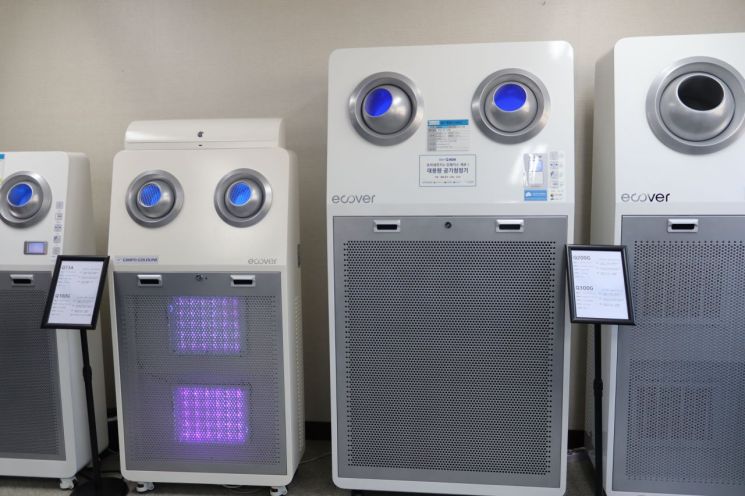
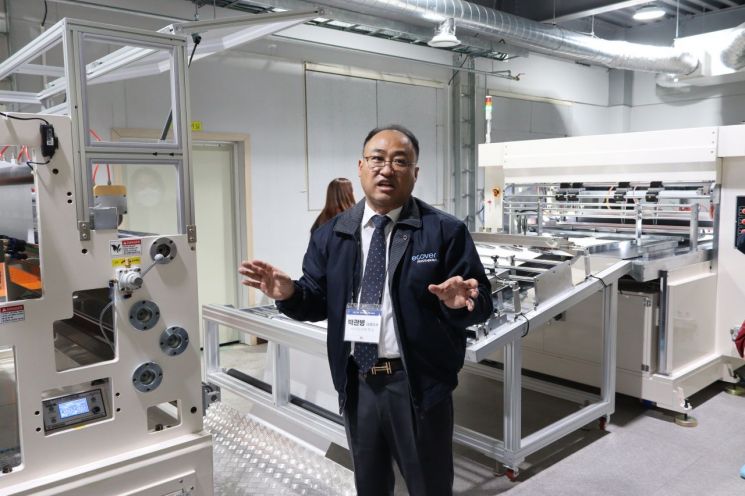
Easy Networks established a factory on a 25,530㎡ site in Paju to mass-produce filters, the core component of air purifiers. The Paju factory produces 200,000 filters annually for home-use air purifiers. With support from the Small and Medium Business Corporation (150 million KRW) and its own investment (50 million KRW), the entire production line was automated. Easy Networks also received the 'Inno-Biz Certification' in October 2018. This system, combining Innovation and Business, grants preferential treatment from the government to companies with technological competitiveness.
The filters produced by Easy Networks feature a three-stage purification filter and a purification device. The core of the purification device is the photocatalyst filter. When light hits the photocatalyst, reactive oxygen species are generated that remove various bacteria and viruses from the air. After South Korea experienced infectious disease outbreaks such as SARS in 2003 and MERS in 2015, the Korea Institute of Civil Engineering and Building Technology developed this technology, which Easy Networks later licensed. Park said, "The photocatalyst filter destroys the spikes and viral particles of the coronavirus," adding, "Shortly after developing the air purifier, COVID-19 broke out, leading to a surge in orders from large corporations, schools, and government offices."
Easy Networks recorded sales of 28 billion KRW last year, nearly doubling from 13.1 billion KRW in 2018. The sales target for this year is 35 billion KRW. The company plans to grow into a 100 billion KRW sales company by 2025 and pursue an initial public offering (IPO). Park said, "Currently, the rental business accounts for 70%, which is higher than air purifiers, but this year they will be similar, and next year air purifiers are likely to surpass rentals," adding, "We plan to expand into the B2C (business-to-consumer) market soon, starting with air purifiers for buses."
© The Asia Business Daily(www.asiae.co.kr). All rights reserved.



















