Google Commemorates 70th Anniversary of Korean War Armistice
38% of Korea's Endangered Species Inhabit the DMZ
The Demilitarized Zone (DMZ) has become a wildlife sanctuary after 70 years of no human contact following the Korean War, according to a report by the US CNN broadcast on the 24th (local time).
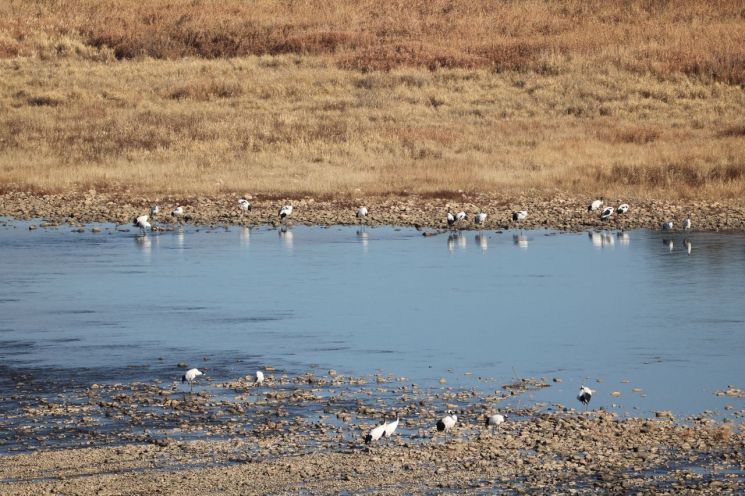
This report was based on the 'Google DMZ Street View' created by Google and Korean research institutions to commemorate the 70th anniversary of the Korean War armistice.
CNN evaluated that the DMZ Street View video released by Google offers a rare opportunity to see the flora and fauna inhabiting the area. More than 6,100 species of plants and animals thriving in the DMZ can be seen. Of Korea's 267 endangered species, 38% reside in the DMZ.
Google explained, "Due to restricted human activity in the DMZ for 70 years after the Korean War, the damaged nature has recovered on its own," adding, "As a result, a new ecosystem has been established that cannot be seen around cities, becoming a natural wildlife sanctuary."
Wildlife inhabiting the DMZ includes the Korean goral, musk deer, otters, and Steller's sea eagle. In 2019, the Asiatic black bear, which had been feared to be endangered due to poaching and habitat destruction, was photographed for the first time in 20 years. Photos captured by unmanned cameras installed by the National Institute of Ecology of Korea were also introduced.
CNN pointed out that although international environmental organizations have demanded the preservation of the DMZ for decades, it is not easy because it requires cooperation from both South and North Korea.
In 2018, former President Moon Jae-in promised North Korean Chairman Kim Jong-un to turn the DMZ into a 'peace zone,' which seemed to offer a breakthrough. However, CNN assessed that relations deteriorated again last year as North Korea launched a record number of missiles.
© The Asia Business Daily(www.asiae.co.kr). All rights reserved.

















