K-Bank Ended Last Year at 0.49%... K-Bank and T-Bank Also on the Rise
T-Bank Reduces Principal and Interest Repayment Burden
Enhanced CSS with Additional Alternative Information
Internet-only banks, whose loan proportions to middle- and low-credit borrowers increased last year raising concerns about defaults, have begun strengthening their soundness management.
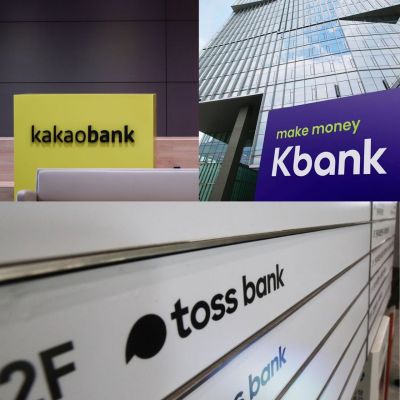
According to the financial sector on the 27th, Toss Bank recorded the highest proportion of loans to middle- and low-credit borrowers among the three internet banks (Kakao Bank, K Bank, Toss Bank), exceeding 41% as of the end of January this year. K Bank’s loans to middle- and low-credit borrowers accounted for 39.5% of its total credit loans at the end of last year, with the supply amount reaching 2.0265 trillion KRW. Kakao Bank also embraced vulnerable borrowers by achieving its target proportion of 25% for loans to middle- and low-credit borrowers last year. The target proportions for loans to middle- and low-credit borrowers for Kakao Bank, K Bank, and Toss Bank were 25%, 25%, and 42%, respectively, last year, but this year they have been set higher at 30%, 32%, and 44%, increasing by 2-7%.
The problem is that as loans to middle- and low-credit borrowers increased, delinquency rates also rose accordingly. Kakao Bank’s delinquency rate at the end of last year was 0.49%, up 0.13 percentage points from the previous quarter. Compared to the end of 2021 (0.22%), it more than doubled. K Bank and Toss Bank’s delinquency rates as of the third quarter of last year were 0.67% and 0.34%, respectively, increasing by 0.15 and 0.19 percentage points from the previous quarter. Although the fourth quarter delinquency rates have not yet been announced, considering the economic downturn at the end of last year and the further deterioration of vulnerable borrowers’ financial conditions, the increase is expected to be greater. These rates are higher compared to the 0.16-0.22% delinquency rates of the four major commercial banks?KB Kookmin, Shinhan, Hana, and Woori Bank?last year.
In response, each internet bank is making strenuous efforts to strengthen soundness through delinquency rate management and advancement of credit scoring models (CSS). For example, Toss Bank is extending the maturity of equal principal and interest repayment loans up to a maximum of 10 years (including the initial maturity) through its “Lower Monthly Payments” program. This aims to reduce the monthly principal and interest payments to lower borrowers’ risk of delinquency. Since its launch in October last year, a total of 15,000 accounts have used this program, of which 66% were middle- and low-credit borrowers.
K Bank and Kakao Bank are responding by advancing their CSS. They aim to lower delinquency rates by selecting borrowers with repayment ability. K Bank plans to add alternative information such as e-book purchase data and driving history data, in addition to telecommunications and shopping data it currently uses. Kakao Bank also plans to improve its model by utilizing new alternative information and MyData information. Kakao Bank has already achieved results by supplying loans to an additional 10% of middle- and low-credit borrowers who were previously rejected, through its self-developed credit scoring model called ‘Kakao Bank Score.’
An industry insider explained, “We are considering various methods to proactively prevent the vicious cycle of borrower delinquency from a risk management perspective.”
© The Asia Business Daily(www.asiae.co.kr). All rights reserved.
![Clutching a Stolen Dior Bag, Saying "I Hate Being Poor but Real"... The Grotesque Con of a "Human Knockoff" [Slate]](https://cwcontent.asiae.co.kr/asiaresize/183/2026021902243444107_1771435474.jpg)
















