A survey found that 6 out of 10 people with disabilities experience discrimination when moving around or using public transportation.
The Ministry of Health and Welfare announced the results of the "2021 Disability Discrimination Act Implementation Survey" on the 24th, which examined areas where discrimination against people with disabilities occurs, the nature of the discrimination, and its extent. The Disability Discrimination Act Implementation Survey is conducted every three years by the government to effectively establish policies to prevent discrimination against people with disabilities, and this is the first time the survey has been conducted.
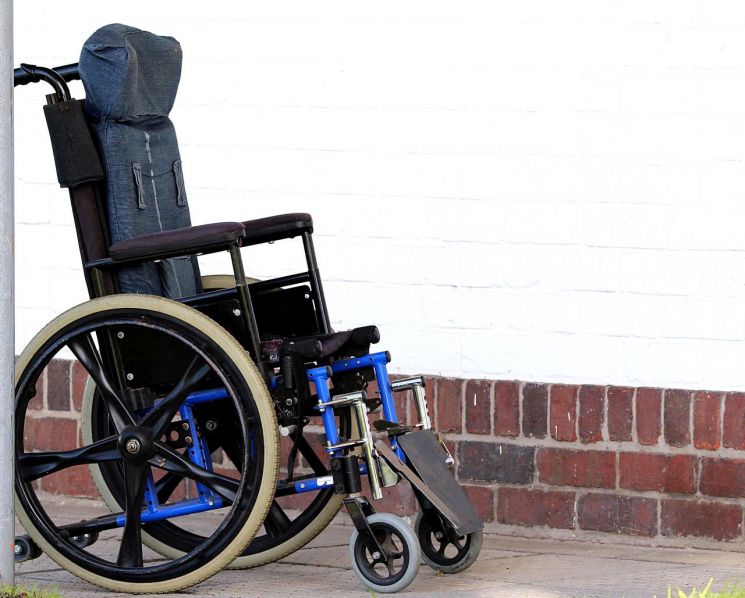
According to the results of a face-to-face interview survey conducted by the Ministry of Health and Welfare from May to July last year through the Korea Disabled Persons Development Institute and Next Research, targeting institutions (national/public institutions, employment/education institutions, product/service businesses, etc., totaling 2,194 places) and people with disabilities (workers, students, etc., totaling 2,062 individuals), the most common response was that discrimination is experienced most when ‘moving around and using public transportation.’ Following this, discrimination was reported in the order of ‘accessing and using facilities and evacuating in emergencies’ (32.0%), ‘using various financial products and services such as loans, credit card issuance, and insurance’ (21.9%), and ‘participation in cultural and artistic activities’ (20.5%).
The employment types of people with disabilities were 50% regular employees, 37.0% general contract employees, and 13.1% indefinite contract employees. The most common job category was ‘simple labor workers’ at 31.1%. ‘Office workers’ and ‘sales/service workers’ accounted for 30.2% and 13.2%, respectively.
Among institutions that hired workers with disabilities, 30.9% responded that they requested medical examination data. Institutions that requested it ‘during the hiring process’ (20.7%) were more than twice as many as those that requested it ‘after hiring’ (10.2%). When asked why medical examination data was requested during the hiring process, 63.0% answered it was ‘necessary for the job.’ 29.3% said it was requested to ‘understand the degree of disability.’
The most commonly installed convenience facility for people with disabilities within institutions was ‘parking spaces exclusively for people with disabilities’ (81.1%). Other facilities included ‘doors without height differences’ (73.8%), ‘elimination of floor height differences’ (73.5%), ‘braille blocks and braille guide maps’ (68.7%), ‘restrooms accessible to people with disabilities’ (68.1%), and ‘handrails on both sides of stairs’ (60.4%). However, ‘elevators for people with disabilities’ (48.5%) and ‘handrails in corridors and passageways’ (41.3%) were installed in less than half of the institutions.
Only 28.0% of institutions received requests for reasonable accommodations from people with disabilities. These requests mainly included screen magnification programs, sign language interpretation, and wheelchairs. Institutions received an average of 42.49 requests per year. 29.7% of the surveyed institutions had cases of providing auxiliary personnel to people with disabilities, supporting an average of 38.41 times per year. However, 57.6% of the surveyed institutions had not established response and evacuation plans for people with disabilities in the event of disasters such as fires or earthquakes. The most common reason was ‘lack of awareness of necessity’ at 40.3%.
The Ministry of Health and Welfare plans to reflect the discrimination realities revealed in the implementation survey in disability policies and use them to develop measures to prevent discrimination.
© The Asia Business Daily(www.asiae.co.kr). All rights reserved.

















