Daegu Companies, 68% Facing Financial Difficulties
Requesting LTV, DSR Relaxation and Tax Benefits
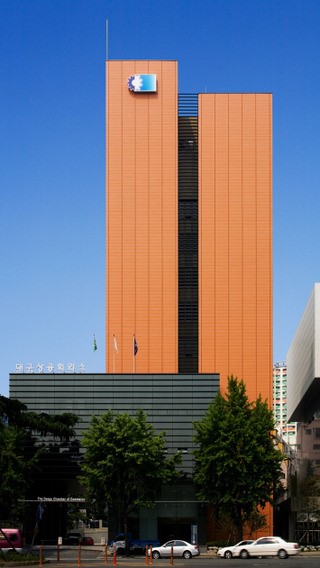
[Asia Economy Yeongnam Reporting Headquarters Reporter Koo Dae-seon] The Daegu Chamber of Commerce and Industry (Chairman Lee Jae-ha) announced the results of the "Survey on the Impact of Increasing Unsold Apartments and Industry Difficulties" on the 23rd.
According to the survey results, as of the end of last year, Daegu had 13,445 unsold apartments, the highest among the 17 cities and provinces nationwide, accounting for 19.7% of the total.
Additionally, real estate market-related indicators such as apartment transaction volume, construction orders, and mortgage loans all showed a downward trend. In particular, while construction orders nationwide continued to increase, Daegu experienced a sharp decline, making the situation even more difficult.
During the 2008 unsold apartment crisis, Daegu had 21,379 unsold units, accounting for 12.9% of the nationwide total of 165,599 units. Currently, it accounts for 19.7%, and the steep increase from 2021 to 2022 compared to 2008 has emerged as a bigger problem.
According to a survey of the construction industry and related sectors, local companies are already feeling the impact of the increase in unsold apartments (77.0%) and financial conditions are gradually worsening (68.9%). The outlook that the unsold apartment situation will either worsen or remain similar in the future was overwhelmingly high (100.0%).
The government support policies desired by companies in the Daegu area include direct support such as "purchase of unsold apartments" and "management stabilization fund support" (23.6%), but a larger portion (75.0%) expressed opinions that the real estate market should be normalized through measures to restore demand sentiment such as easing LTV/DSR, expanding tax benefits, relaxing resale restrictions, and controlling supply by linking incentives like subsidies with construction companies' price adjustments.
Furthermore, the industry showed a high level of willingness for self-help efforts such as "business sector adjustment" (33.6%), "tight management" (18.9%), "discovery of new businesses" (15.6%), along with "price reduction through cost-cutting" (31.1%).
Companies stated that in a situation where demand sentiment is extremely depressed due to high interest rates, loan regulations, and tax regulations, it is difficult to expect a visible short-term decrease in unsold apartments through industry self-help efforts alone, and ultimately, the current unsold inventory is very likely to lead to unsold units after completion.
They also pointed out the need for prompt government measures by citing the case in 2008 when the government announced the "Local Unsold Apartment Measures" (June 2008) before the unsold apartments peaked and subsequently implemented various follow-up measures such as "purchase of unsold apartments," which rapidly reduced the unsold inventory.
A Daegu Chamber of Commerce official emphasized, "The construction industry is a representative domestic industry with a significant and rapid impact on the real economy, so proactive measures must be taken before the unsold apartment crisis spreads to economic downturn." He added, "As in the 2008 case, the government should quickly prepare and implement measures, and especially for local unsold apartments where the situation is more severe, greater support in terms of loan regulations and tax benefits compared to the metropolitan area is necessary."
© The Asia Business Daily(www.asiae.co.kr). All rights reserved.
![Clutching a Stolen Dior Bag, Saying "I Hate Being Poor but Real"... The Grotesque Con of a "Human Knockoff" [Slate]](https://cwcontent.asiae.co.kr/asiaresize/183/2026021902243444107_1771435474.jpg)











