'Gungjeonbang' Awarded Five Million Dollar Export Tower
40-Year-Old Traditional Rice Cake Specialist Company... 80% of Sales from Exports
At the ‘59th Daegu Gyeongbuk Trade Day’ ceremony held at the Daegu Inter-Burgo Hotel on December 8 last year, Gungjeonbang received the Five Million Dollar Export Tower and the Daegu City Export Merit Award. They also received the Prime Minister’s Commendation and the Minister of Trade, Industry and Energy Commendation. Among many companies exporting over 100 million dollars, Gungjeonbang attracted attention because of its export items.
Gungjeonbang is a rice cake specialty company with a 40-year tradition, established in 1983. They produce rice cakes used in tteokguk (rice cake soup) and tteokbokki (spicy rice cakes). While rice cakes are generally considered to be focused on the domestic market rather than exports, Gungjeonbang started knocking on overseas markets from the 2000s. Now, 80% of their sales come from exports. There were many ups and downs to reach this point. We spoke with Song Cheong-ho, CEO of Gungjeonbang, about exporting rice cakes.
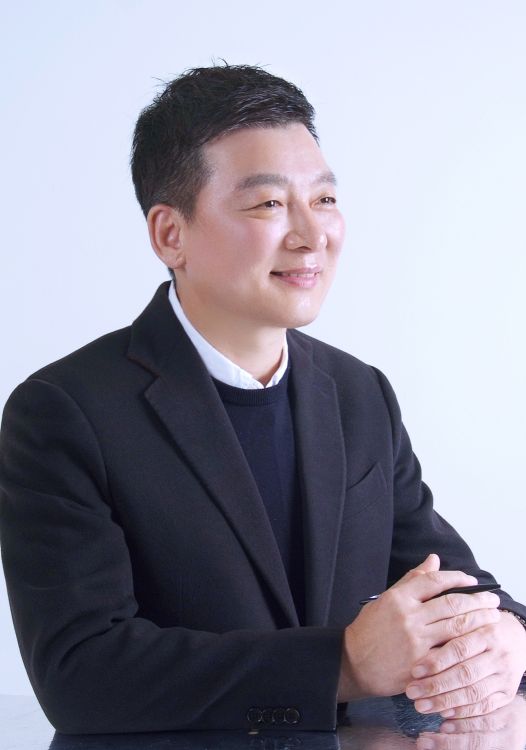
CEO Song said, “This year, we will focus on diversifying buyers in the existing North American market and intensively target Asian regions such as Taiwan, Hong Kong, and the Philippines to pioneer new markets and demonstrate the strength of K-Food.” Gungjeonbang exports rice cakes to North America, including the United States and Canada. This region accounts for more than 60% of total exports. It started in 2009 when they obtained FDA approval and entered the U.S. market. CEO Song saw that as the Korean Wave (Hallyu) began to surge, rice cakes could appeal as a representative of so-called ‘K-Food’ in the global market. He especially noted that tteokguk rice cakes are used as ingredients in various dishes beyond just tteokguk.
The obstacle was that rice cakes had to be produced domestically and sent to North America, but rice cakes can easily spoil. Rice cakes have a high moisture content, making them vulnerable to yeast and mold growth. This is why most products are sterilized at additional cost, vacuum-packed, and distributed refrigerated. Gungjeonbang solved this problem by developing rice cake manufacturing technology that allows room temperature distribution. CEO Song explained, “We reduced and blocked microbial growth factors in the manufacturing process to develop tteokguk rice cakes and tteokbokki that can be distributed at room temperature,” adding, “Even with room temperature distribution, they maintain a chewy texture like refrigerated products.”
Based on this technology, Gungjeonbang was able to achieve export success by supplying large supermarkets such as Costco Canada, Metro, and GW Supermarket in New York, USA. Since 2015, they have focused intensive investment on strengthening export capabilities. They reinforced the export team and obtained Halal certification, preparing to enter Muslim markets. Their performance increased, winning the One Million Dollar Export Tower in 2015 and the Three Million Dollar Export Tower in 2020.
However, the COVID-19 pandemic broke out. Although large orders increased as countries locked down to secure products, it became difficult to find export containers. Logistics costs soared. The support from the Small and Medium Business Corporation (SBC) played a decisive role in helping Gungjeonbang overcome this crisis. Gungjeonbang solved the rising logistics cost problem through SBC’s logistics-only export voucher. This program supports up to 70% of logistics costs per company to alleviate difficulties faced by small businesses. Last year, 1,252 companies received support.
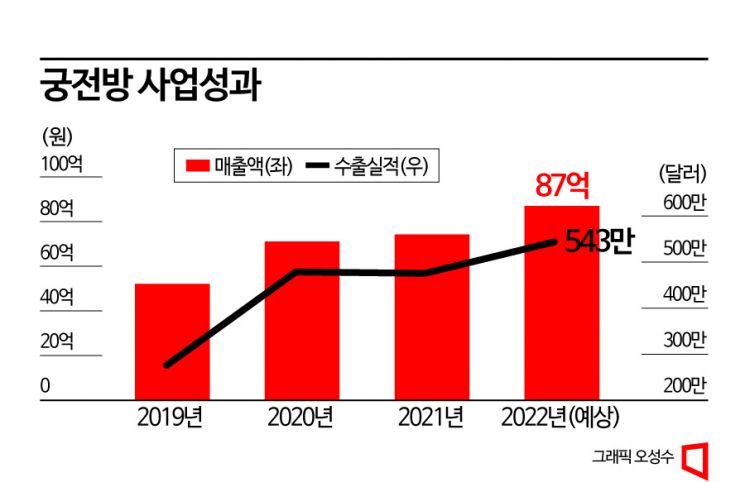
With the logistics-only export voucher support easing the logistics cost burden and focusing on exports, Gungjeonbang recorded export sales of 5.43 million dollars last year, an increase of about 14% compared to the previous year. They newly entered markets in Thailand, Malaysia, and Singapore, increasing the number of export countries to 15. CEO Song explained, “The rise in logistics costs is not just a matter of expenses. Even if we want to reflect the increased logistics costs in product prices, it can affect trust relationships with buyers.” He added, “Despite logistics costs rising two to three times, we proceeded with exports without raising product prices, which strengthened our relationships with buyers.”
© The Asia Business Daily(www.asiae.co.kr). All rights reserved.


















