30% of Global Investors Say "At Least $3 Million Needed After Retirement"
[Asia Economy Reporter Haeyoung Kwon] One in three investors worldwide believes that at least $3 million (approximately 3.9 billion KRW) is needed for a comfortable retirement. Four out of ten investors in the United States and Canada think that having $5 million (approximately 6.5 billion KRW) is necessary for a prosperous retirement life.
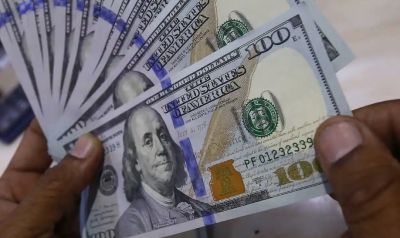
According to the MLIV Pulse Survey conducted by Bloomberg on the 21st (local time), which surveyed 553 investors, one-third of all respondents answered that at least $3 million is needed after retirement. The proportion of those who said retirement funds should exceed $5 million also surpassed 30%.
Investors in the United States and Canada set higher asset requirements for retirement compared to investors in Europe and other regions. Among respondents, 89.5% believed that more than $3 million is needed for retirement funds. Specifically, 42.6% of investors answered that $5 million is necessary. This was followed by $3 million at 31.4%, $20 million (approximately 25.9 billion KRW) at 13%, and $1 million (approximately 1.3 billion KRW) at 7.6%.
Among European investors, 42.9% answered that $3 million is needed. Responses indicating $5 million were 23.6%, and those saying $1 million accounted for 19.2%. In the Asian region, 35.3% said $5 million is needed for retirement funds, followed by $3 million (29.4%) and $1 million (17.6%).
Most respondents expected that their retirement balances would increase this year compared to the end of last year, bringing them closer to their retirement goals. Last year, inflation and rising loan interest rates severely impacted stock and bond markets, significantly reducing assets. According to Vanguard Group, the largest asset management company in the U.S., the balance of 401(k) retirement accounts decreased by an average of 20% from initial plans.
However, respondents anticipated that living expenses after retirement would increase due to inflation. They expressed uncertainty about whether they could save enough to maintain their lifestyle after retirement. Christine Benz, Director at Morningstar, explained, "Although inflation appears to be easing, the funds needed after retirement are increasing."
That said, investors are not postponing their retirement plans. Despite observations that corporate profits may decline this year and that a recession could occur even amid a stronger-than-expected U.S. economy, 56% of respondents are sticking to their existing retirement plans. Only 8% said they are not considering retirement at all.
Regarding the U.S. stock market, half of the respondents predicted that new market leaders will emerge over the next three years to replace the existing big tech companies.
© The Asia Business Daily(www.asiae.co.kr). All rights reserved.

















