1st and 2nd Instance Courts "Deeming It a Non-Prosecution Agreement Is Appropriate" Dismissal Ruling
Supreme Court "Agreements Ignoring the Legislative Intent of Mandatory Rules Are Invalid"
[Asia Economy Reporter Heo Kyung-jun] The Supreme Court has ruled that even if the sale conversion price of public rental housing exceeds the legal standard, a lawsuit can be filed despite an agreement between the construction company and residents not to pursue civil or criminal claims.
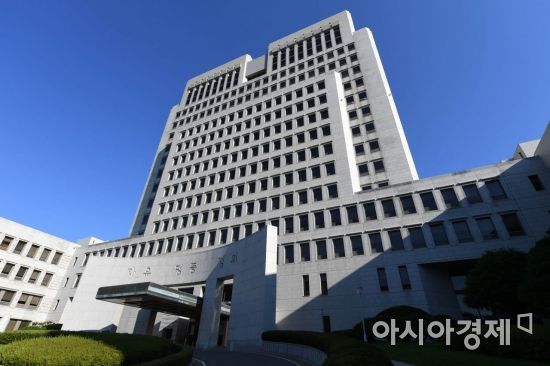
The Supreme Court's 3rd Division (Presiding Justice Noh Jeong-hee) announced on the 21st that it overturned the lower court's dismissal ruling in an unjust enrichment refund lawsuit filed by 132 apartment residents, including Mr. A, against construction company B, and remanded the case to the Gwangju High Court.
Company B and the public rental housing residents had negotiated in 2013 regarding the sale price and agreed to sign contracts at a sale price reduced by 500,000 KRW per household, drafting an agreement not to file any civil or criminal claims or lawsuits concerning the sale price.
Subsequently, the residents raised objections, claiming that they purchased the apartments at prices more than 10 million KRW higher than the standards set by the relevant laws, including the Public Rental Housing Act.
When the construction company did not accept the residents' opinions, the residents filed a lawsuit arguing that even if the sale price was agreed upon between the parties according to the calculation standards for sale conversion prices stipulated in the mandatory provisions of the former Public Rental Housing Act, any sale contract concluded at a sale conversion price exceeding those standards is invalid.
The first and second trials dismissed the case without substantive examination, stating, "It is reasonable to view that the parties agreed not to raise any objections regarding the agreed sale price and defect repairs at the time of the sale contract, and that they made a non-litigation agreement not to dispute the sale conversion price."
However, the Supreme Court ruled, "If a non-litigation agreement prevents a party from claiming that the contract is invalid due to violation of mandatory provisions, thereby undermining the legislative intent of such provisions, the non-litigation agreement is invalid unless there are special circumstances," and ordered a retrial by the second trial court.
© The Asia Business Daily(www.asiae.co.kr). All rights reserved.

















