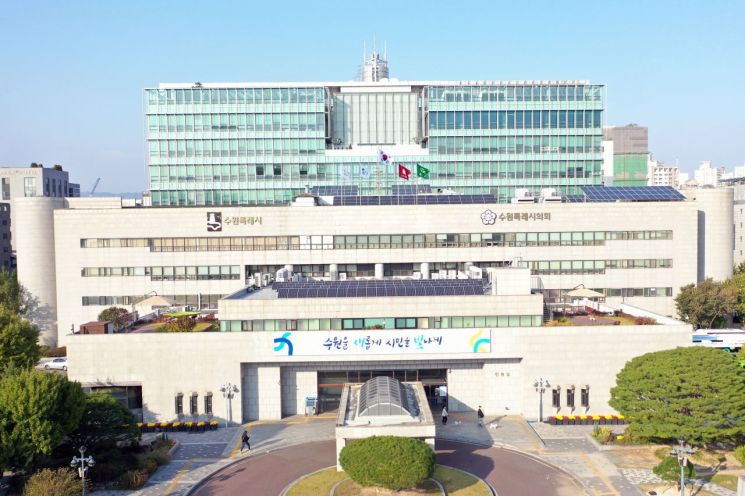
[Asia Economy (Suwon) = Reporter Lee Young-gyu] Suwon City in Gyeonggi Province provides subsidies of 32.5 million KRW and 9.8 million KRW respectively to citizens who purchase hydrogen electric vehicles and electric passenger cars.
On the 21st, Suwon City announced that it will carry out the '2023 Suwon City Hydrogen Electric Vehicle Distribution Project' until December 8 and the '2023 First Half Electric Vehicle (Passenger and Cargo) Distribution Project' until June 30.
Through this support project, the city plans to distribute 150 hydrogen electric vehicles and 1,570 electric vehicles (1,440 passenger cars and 130 cargo vehicles).
Applicants must be Suwon citizens who have continuously resided in Suwon for more than 60 days as of the subsidy application date, or businesses, organizations, or corporations with an address in Suwon.
Purchasing a hydrogen electric vehicle Nexo (passenger car) qualifies for a subsidy of 32.5 million KRW (per vehicle). Application documents must be submitted through the Ministry of Environment's Zero-Emission Vehicle Purchase Subsidy Support System. Support recipients are selected in order of vehicle delivery and registration.
Micro electric passenger cars receive 5.5 million KRW, and general passenger cars receive up to 9.8 million KRW. Electric cargo vehicles can receive up to 21.9 million KRW (based on small special vehicles). Subsidized vehicles can be viewed on the Zero-Emission Vehicle Integrated Website.
Applicants should sign a purchase contract at the car dealership of the desired vehicle model and submit the application within two months if vehicle delivery and registration are possible. Applications can be submitted on the Zero-Emission Vehicle Integrated Website.
The city is implementing the 'Eco-Friendly Vehicle Distribution and Air Pollution Reduction Project Plan' aiming for a 5% distribution rate of zero-emission electric and hydrogen vehicles by 2025 and air quality improvement under the Ministry of Environment's 2nd Basic Metropolitan Air Quality Management Plan by 2024.
The implementation tasks include ▲transition from internal combustion engine vehicles to zero-emission vehicles (distribution of 28,000 electric and hydrogen vehicles, 520 LPG and CNG vehicles) ▲installation of 8,700 charging facilities ▲air pollution source reduction projects (early retirement and installation of reduction devices for grade 4-5 diesel vehicles, replacement of old boilers), etc.
Electric vehicles emit no air pollutants such as carbon monoxide, nitrogen oxides, or fine dust. Operating one vehicle can reduce 1.4 tons of greenhouse gases annually. Driving 20,000 km per year can save about 2.5 million KRW in maintenance costs compared to gasoline vehicles of the same class.
A city official stated, "We will actively promote eco-friendly vehicles such as hydrogen electric vehicles and electric vehicles to improve air quality."
© The Asia Business Daily(www.asiae.co.kr). All rights reserved.

















