100 Billion KRW Allocated for Education Expenses in 2023, Nurturing Future Talent in 48 Elementary, Middle, and High Schools
Securing High-Quality Educational Content and Improving Educational Conditions, the Highest Level of Educational Investment Among Autonomous Districts
Emotional Cultivation and Character Education Provided to Support Emotional Well-being Amid COVID-19 Blues
[Asia Economy Reporter Park Jong-il] Jungnang-gu (Mayor Ryu Kyung-gi) is taking a step forward as Seoul’s top public education city. The district announced that it will support 10 billion KRW in education expenses this year to advance public education.
This amount is an increase of 2 billion KRW compared to the previous year, ranking second highest among Seoul’s autonomous districts.
Jungnang-gu has steadily increased its education expenses from 3.8 billion KRW in 2018 to activate public education and nurture future talent. This year, it has reached 10 billion KRW in education expenses and plans to increase it by 2 billion KRW annually to secure 16 billion KRW by 2026, aiming to provide the highest level of education expenses in Seoul.
To this end, on the 13th, the district held an Education Expense Subsidy Deliberation Committee composed of education officials, local parents, district council members, and education experts. The committee initially approved 257 academic achievement enhancement education projects and decided to support about 4 billion KRW for all 48 elementary, middle, and high schools in the area in line with the new semester.
The district plans to support basic academic skills improvement programs through school-specific contests and operate distinctive programs. For elementary schools, smart education such as computer science, STEMA, and the 4th Industrial Revolution, as well as the “Elementary School 1,000 Books Reading Project” will be implemented. Middle schools will run free semester programs, and high schools will expand autonomous study room operations, focusing intensive support on school curricula and actively investing in revitalizing public education.
Additionally, to support students needing emotional support due to COVID-19 blues, emotional and character education programs will be provided. The district will expand support for reading discussion programs from elementary to middle schools to promote a reading culture.
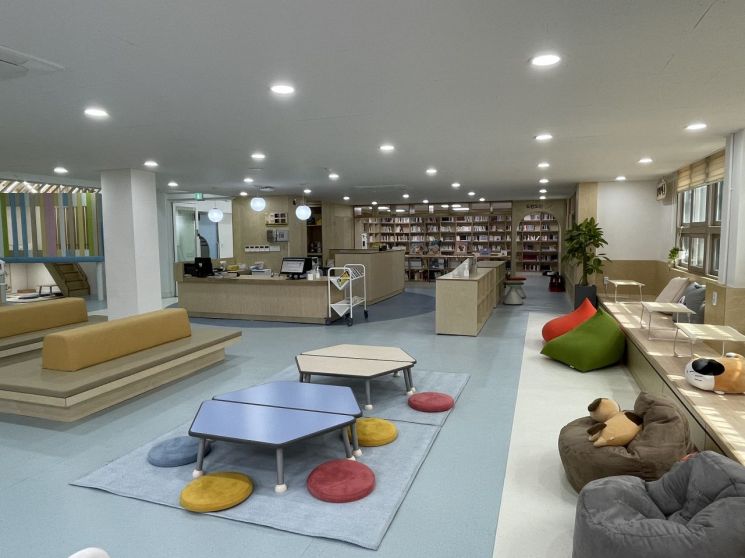
Small-scale facility improvements such as libraries and study rooms within schools and modernization of educational equipment are also being prepared. In March, the “Dream Library” remodeling project will be launched, and in May, improvements to study cafes and counseling welfare rooms will be promoted.
Ryu Kyung-gi, Mayor of Jungnang-gu, said, “Jungnang-gu prioritizes education policies and always strives for the future of Jungnang. We have increased education expenses significantly from 8 billion KRW to 10 billion KRW this year and will expand it to 16 billion KRW in the future. We will continue to create an education environment suited to the times, continuously improve educational conditions, and build Jungnang as an educational city full of dreams and hope without educational gaps compared to other regions.”
The district is also making efforts to attract external funding in addition to its own education expenses. Last year, it secured 1.4 billion KRW from the Ministry of Education and Seoul City budgets to support facility improvement costs for 16 schools. This year, it plans to actively cooperate with Seoul City and the Office of Education to secure external funding.
Gwanak-gu Secures 8 Billion KRW in ‘Education Expense Subsidies’
First Education Expense Subsidy Deliberation Committee Held… 4.79 Billion KRW Prioritized for Support
Strengthening Future Education through AI-Based Future Talent Nurturing Education and Specialized Space Creation Support
Gwanak-gu (Mayor Park Jun-hee) is significantly increasing its ‘education expense subsidies’ this year, expanding support for kindergartens and schools in the area and accelerating educational programs and school facility environment improvement projects.
The district has steadily worked to revitalize public education by doubling education expense subsidies from 1.5 billion KRW in 2018 to 3 billion KRW in 2019 and increasing it by 1 billion KRW annually thereafter.
This year, the subsidy has been expanded to 8 billion KRW, an increase of 2 billion KRW from last year. After deliberation by the Education Expense Subsidy Deliberation Committee on February 6, it was decided to prioritize support of 4.79 billion KRW for 88 kindergartens, elementary, middle, high, special, and various schools in the area.
Major support includes basic academic skills improvement and special aptitude programs reflecting school field demands, after-school activation programs, and student psychological and emotional counseling costs for 88 schools. Additionally, 51 schools will receive customized specialized program funds tailored to each school’s characteristics.
Especially, with the growing importance of future education in the digital transition era, 26 schools will receive operational expenses such as professional instructor fees, coding teaching materials, and supplies for ‘AI-based coding and 4th Industrial Revolution future talent nurturing education.’ Three schools will receive facility construction costs including information device installation and classroom remodeling fees.
Furthermore, to encourage the creation of ‘school specialized spaces’ that foster creativity, nine schools selected through contests will receive up to 100 million KRW each to strengthen education for cultivating students’ future capabilities.
This ‘school specialized space creation’ project supports the construction of various spaces such as multipurpose sports field stands and study caf?-style discussion learning spaces, expected to create regional specialized spaces accessible not only to students but also to all local residents.
The district provides entrance preparation funds to all new students entering elementary, middle, and high schools. 2,070 elementary school freshmen will receive 200,000 KRW each, and 5,429 middle and high school freshmen will receive 300,000 KRW each, benefiting a total of 7,499 students.
Park Jun-hee, Mayor of Gwanak-gu, said, “We aim to actively support the establishment of a quality educational environment through continuous expansion of education expenses. We will continue to spare no effort to help students, the future leaders, nurture and realize their dreams.”
Seocho-gu’s ‘Resident-Customized Lifelong Education’ Turns Learning Enthusiasm into Jobs!
District Supports ‘Resident-Led Customized, Productive Lifelong Education’ Helping Middle-Aged and Older Adults with Cultural Leisure and Employment
Job-Linked Instructor Support Project for Lifelong Education Facility Instructor Training Graduates Opens Applications Until the 27th
“When I came to Korea, I never imagined this career path, but through the ‘Seocho-type Job-Linked Instructor Support’ program, I have been able to work as an instructor introducing cultures of various countries, fulfilling my dreams of learning and employment.”
A (35-year-old) married immigrant woman who completed the ‘Multicultural Understanding Education Instructor Training Course’ at Seocho Women and Family Plaza last year has since worked as an instructor teaching children about multiculturalism, including traditional games and customs from different countries, realizing her practical employment dream.
In the ‘new normal’ era, Seocho-gu has launched support for ‘resident-led customized, productive lifelong education’ that helps middle-aged and older adults with cultural leisure and employment, providing lifelong education that residents can truly feel.
Seocho-gu (Mayor Jeon Seong-su) is accepting applications until the 27th for the ‘2023 Seocho-type Job-Linked Instructor Support Project,’ which links learning and jobs for career interrupters and retirees.
The ‘Seocho-type Job-Linked Instructor Support Project’ is a specialized program that provides administrative and financial support to groups of three or more residents who have completed instructor training courses or obtained certifications at lifelong learning institutions directly operated or commissioned by the district, helping them secure jobs.
This year, the district will allocate about 24 million KRW to support preparation costs for instructor activities. Five groups will be selected and receive differential support of up to 4.75 million KRW per team for instructor operation costs, teaching materials, and other necessary expenses. The district also assists in job linkage through local networks.
Since its launch in 2019, the ‘Job-Linked Instructor Support Project’ has supported instructor activities for a total of 20 groups, offering a second chance in life to career interrupters and retirees. Last year, programs reflecting residents’ needs were opened, ranging from lectures on digital literacy required in the 4th Industrial Revolution era to multicultural understanding and art docent activities, expanding job opportunities.
Additionally, the district runs lifelong education projects that help residents proactively develop and operate educational courses in culture, arts, and humanities. First, it operates the ‘Neighborhood Learning Center Support Project,’ utilizing five accessible learning centers in four areas (Seocho, Banpo, Bangbae, Yangjae) to enable residents to engage in lifelong learning nearby. Five groups will be selected and receive differential support of up to 4.75 million KRW. Applications are accepted at the district’s Education and Sports Department until the 28th.
Also, the ‘Lifelong Learning Club Support Project,’ which supports residents’ learning, talent donation, and local sharing activities, will accept applications at the Seocho-gu Lifelong Learning Center from the 27th to the 3rd of next month. It targets adult clubs of seven or more members that can meet at least once a month. Ten teams will be selected and receive 1 million KRW for educational activity expenses.
The three projects mentioned above will select participating groups next month and run for eight months from April to November.
Meanwhile, the district is making multifaceted efforts to revitalize lifelong education. This year, it plans to establish a ‘Mid- to Long-Term Lifelong Education Development Plan’ to lay the foundation for lifelong education. Last year, it was the first local government to link with the National Lifelong Education Voucher System of the National Institute for Lifelong Education and promoted a lifelong education voucher project providing 200,000 KRW annually to career-interrupted women in their 40s.
Jeon Seong-su, Mayor of Seocho-gu, said, “We expect that resident-led lifelong learning programs such as the Job-Linked Instructor Support Project will become an opportunity to create a high-quality ‘Seocho-type lifelong education environment.’ We will continue to strive to foster a virtuous cycle of lifelong learning culture in the community through resident-led ‘Seocho-type lifelong education support.’”
© The Asia Business Daily(www.asiae.co.kr). All rights reserved.



















