Selected for Seoul Fashion Industry Smart Work Environment Creation Contest... 27 million KRW Invested
Free automatic cutting service support for local fashion sewing companies, strengthening competitiveness of sewing companies
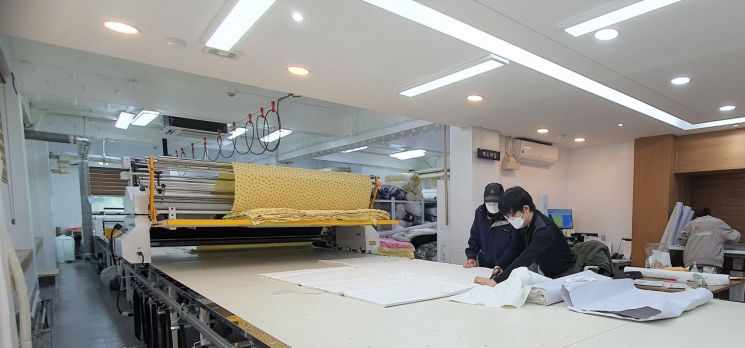
[Asia Economy Reporter Park Jong-il] Dongdaemun-gu (Mayor Lee Pil-hyung) announced that it has expanded the Dongdaemun-gu shared cutting room, measuring 176.8㎡ (approximately 53 pyeong), in the space of the North Korean defector caf?, which ceased operation on December 31 last year.
Following the opening of the shared cutting room in 2021, it was selected for the Seoul Fashion Industry Smart Work Environment Creation Contest last year and received 27 million KRW in support to carry out expansion construction.
The shared cutting room, located on the first floor of Building B at Dongdaemun-gu Startup Support Center (19 Dapsimni-ro 38-gil), is equipped with automatic cutting machines (CAM/CAD), automatic pressing machines, pressing tables, and other facilities, providing free automatic cutting services to local fashion sewing companies.
Through the automatic cutting service, tasks that previously had to be done manually are converted to automated equipment, greatly helping sewing companies improve productivity as well as reduce time and costs, thereby strengthening their competitiveness.
With the expansion of the shared cutting room, it is now possible to cut up to 3,000 pieces per day, which is expected to meet the high demand for automatic cutting from many local sewing companies.
The shared cutting room is free to use for fashion micro-enterprises and sample/pattern room designers with business locations in Dongdaemun-gu. Companies wishing to use the service can apply through the Dongdaemun-gu Fashion Sewing Support Center website. For related inquiries, contact the shared cutting room.
Lee Pil-hyung, Mayor of Dongdaemun-gu, said, “This expansion will reduce the economic and time burdens on small-scale garment manufacturers. We will continue to support the activation of Dongdaemun-gu’s representative manufacturing industry, the fashion sewing industry.”
◆Dongdaemun-gu
Jongno-gu Improves Work Environment for Clothing Manufacturers... Up to 9 million KRW Support
Wide support including fire extinguishers, fire detectors, old wiring cleanup costs, as well as air purifiers, heating and cooling devices, and dehumidifiers
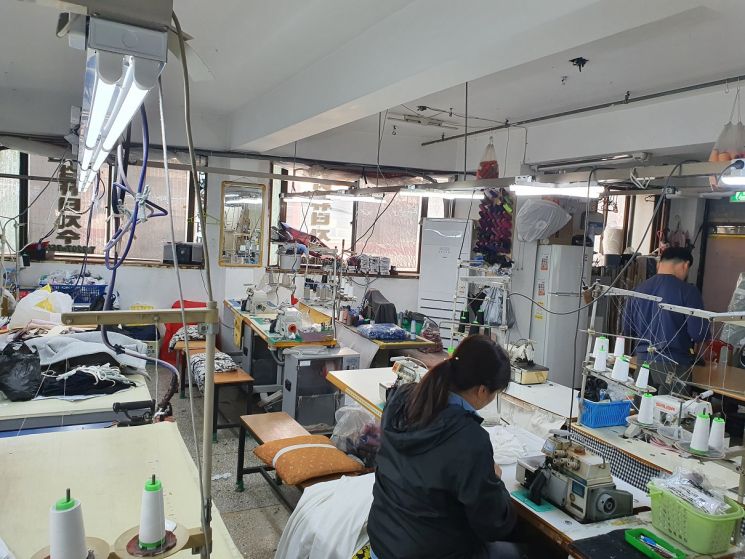
Jongno-gu (Mayor Jeong Mun-heon) is recruiting participating companies for the '2023 Clothing Manufacturer Work Environment Improvement Support Project' until March 2.
The purpose is to improve working conditions for workers in clothing manufacturing companies who are constantly exposed to health hazards such as dust due to the nature of their work and to create a safe working environment.
The target is micro-enterprises with fewer than 10 employees registered in Jongno-gu, including sewing apparel, fur products, knitted apparel, and apparel accessories manufacturing.
Support areas include ▲hazard removal ▲work environment improvement ▲work efficiency enhancement, covering 10 essential items for safety management such as fire extinguishers, fire detectors, and leakage breakers, as well as old wiring cleanup, wastewater piping, and circulating boilers.
Additionally, 15 items that help improve the work environment such as air purifiers, heating and cooling devices, radiators, and dehumidifiers, as well as cutting tables, sewing auxiliary tables, work chairs, contamination washers, and pressing machines to enhance work efficiency, are also supported.
Applications can be submitted by downloading the required documents from the district office website, filling them out, and submitting them along with copies of business registration certificates, lease contracts, small business certificates, and national and local tax payment certificates by direct visit, mail, or email to the Job Economy Division by March 2.
The district plans to announce the selected companies in April after on-site inspections and review by the Seoul City Subsidy Management Committee. Support funds will be provided in the second half of this year after the companies complete their own construction.
Selected companies can receive support up to 9 million KRW, covering up to 90% of actual expenses, with the remaining 10% borne by the company.
Mayor Jeong Mun-heon said, “We hope this project will improve the poor working environment of clothing manufacturers, increase worker satisfaction, and contribute to productivity improvement.”
Gwangjin-gu Improves Poor Working Conditions for Clothing Manufacturers
Targeting micro-enterprises with fewer than 10 employees in Gwangjin-gu, up to 9 million KRW per company
Supports 34 equipment items including wiring boxes, sound absorption and insulation, air purifiers, and restroom construction
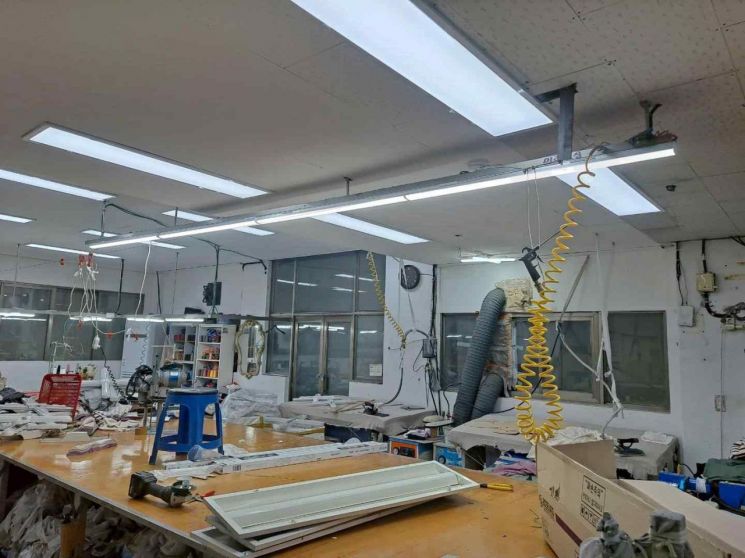
Gwangjin-gu (Mayor Kim Kyung-ho) is recruiting participating companies for the ‘2023 Clothing Manufacturer Work Environment Improvement Support Project’ until March 3, providing up to 9 million KRW per company.
Due to the nature of clothing manufacturing, workers are constantly exposed to dust, poor ventilation, and various harmful substances. However, micro-enterprises find it difficult to improve their work environment due to cost and other issues.
Therefore, the district is promoting this support project to improve the poor working conditions of small businesses, creating a safe and pleasant working environment to boost work efficiency and productivity.
Support areas include ▲hazard removal ▲work environment improvement ▲work efficiency enhancement, with a total of 34 equipment items to choose from.
Specifically, essential safety management items such as fire extinguishers, fire detectors, leakage breakers, and wiring boxes are supported. Old wiring cleanup, sound absorption and insulation facilities, and circulating boiler installation are also possible. Environmental improvements include ventilators, air purifiers, heating and cooling devices, floor replacement, wallpapering, and restroom renovations. Work tables, chairs, and pressing machines are also supported to help improve work efficiency.
Business owners only need to bear 10% of the construction costs and can receive support up to 9 million KRW per company within 90% of actual expenses. In cases of severe safety risks, support can be increased up to 18 million KRW.
The target applicants are clothing manufacturers located in Gwangjin-gu with fewer than 10 regular employees. Those wishing to participate can apply by submitting the application form and business registration certificate to the district office’s Regional Economy Division by visit, mail, or email.
The selection results will be announced in May after on-site inspections and Seoul City review, with construction to be completed by November. Priority may be given to companies with long business history located in basements or semi-basements with poor ventilation or below-average dust, lighting, and noise standards.
Kim Kyung-ho, Mayor of Gwangjin-gu, said, “We hope this project will enable clothing manufacturing workers to work in healthier and safer environments. We will generously support micro-enterprises, the backbone of the local economy, to enhance their productivity and competitiveness.”
Last year, the district selected a total of 55 companies and improved their work environments. One micro-enterprise said, “We struggled with frequent dust and poor lighting, but with the addition of air purifiers and brighter workspaces, it has become much more pleasant and motivated us to work.”
For more details, please check the Gwangjin-gu Office website’s Notice Board.
Seongbuk-gu Provides Up to 9 Million KRW Support for Clothing Manufacturer Work Environment Improvement
Supports safe work environment creation for outdated sewing companies... Expected productivity improvement
Up to 9 million KRW per company... 10% cost borne by business owner with 90% matching support
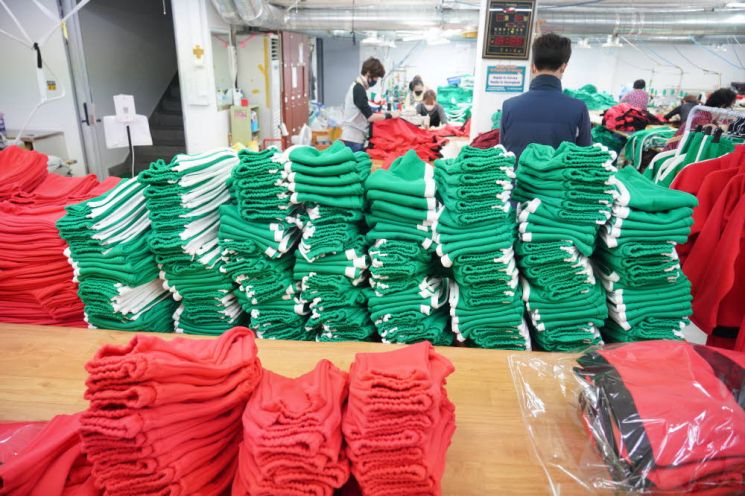
Seongbuk-gu (Mayor Lee Seung-ro) is recruiting companies to participate in the ‘Clothing Manufacturer Work Environment Improvement Support Project’ until March 3. The aim is to improve outdated work environments to strengthen production competitiveness and create a safe working environment for workers.
If business owners bear 10% of the construction costs needed for work environment improvement, they can receive matching support up to 90% of the expenses, with a maximum of 9 million KRW. Additionally, services such as organization consulting and worker health management are also provided.
Support items include installation of fire extinguishers and fire detectors, old wiring cleanup, replacement of circulating boilers, and 10 types of hazard removal items within the workplace; 15 types of work environment improvement items such as ducts, industrial vacuum cleaners, heating and cooling devices, and LED lighting; and 9 items for work efficiency improvement such as vacuum dies, sub-motors, and raceways.
After conducting work environment surveys on dust, lighting, noise, and safety for applicants, final support recipients will be selected through Seoul City review. The improvement project will be carried out from May to the end of November.
Eligible applicants are clothing manufacturers with fewer than 10 regular employees located in Seongbuk-gu, with no outstanding national or local tax arrears. They must also agree to three years of follow-up management and monitoring for support.
Companies wishing to apply can download the documents from the Seongbuk-gu Office website, fill them out, and submit them in person to the Job Policy Division on the 11th floor of Seongbuk-gu Office.
Lee Seung-ro, Mayor of Seongbuk-gu, said, “Through this work environment improvement, we hope the production capacity of the 1,500 sewing companies that have led Seongbuk-gu’s urban traditional manufacturing industry will increase and revitalize the local economy. We will also seek various support measures to widely activate the fashion sewing industry through cooperation with Seoul City and related organizations.”
© The Asia Business Daily(www.asiae.co.kr). All rights reserved.
![From Bar Hostess to Organ Seller to High Society... The Grotesque Con of a "Human Counterfeit" [Slate]](https://cwcontent.asiae.co.kr/asiaresize/183/2026021902243444107_1771435474.jpg)


















