Clear Opposition from Bar Association Following Prosecution, Police, and Corruption Investigation Office
Concerns Raised Over Investigation's 'Secrecy and Speed'... Even Courts Express Worries
Legislative Notice Until March 14, Implementation Scheduled for June
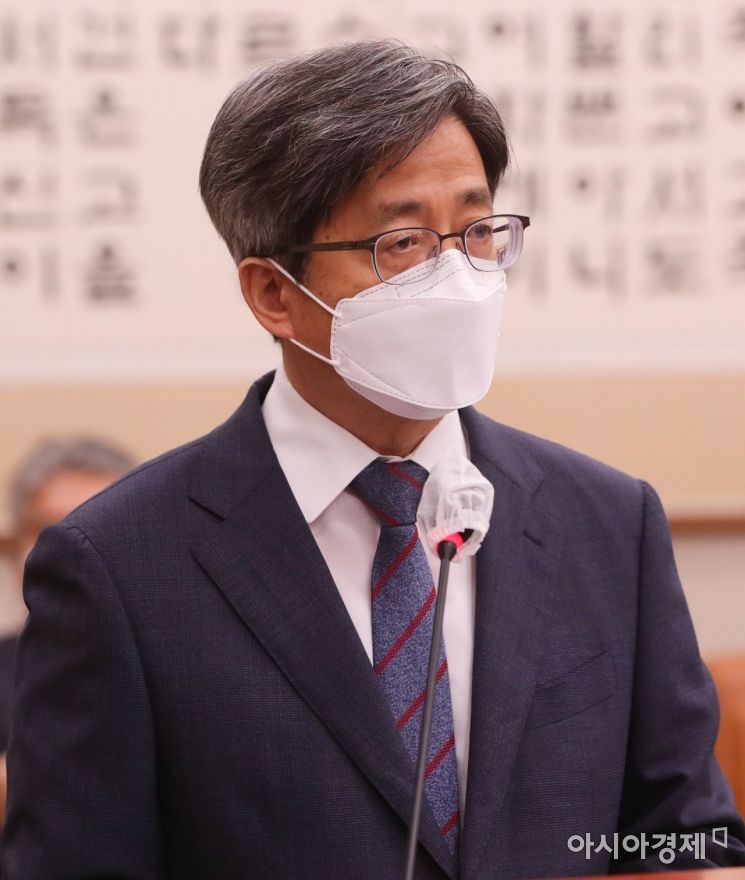
[Asia Economy Reporter Choi Seok-jin, Legal Affairs Specialist] The Korean Bar Association clearly opposed on the 18th the 'Voluntary Face-to-Face Hearing Before Issuance of Search and Seizure Warrants' system that Chief Justice Kim Myung-soo of the Supreme Court is promoting through amendments to the Criminal Procedure Rules.
Investigation agencies such as the prosecution, police, and the Corruption Investigation Office for High-ranking Officials (CIO), strongly oppose it on grounds that it contradicts the essence of the 'secretive' nature of search and seizure, and voices of concern have also emerged within the courts. Now, even the bar association, one of the three pillars of the legal profession, has come out against it.
In the legal community, considering that securing evidence through 'search and seizure' at the early stage of investigation plays a significant role in determining the success or failure of the entire investigation process, there are calls for Chief Justice Kim to immediately halt the rule amendment, which was made without sufficient consultation with related agencies, and to re-examine the necessity and appropriateness of the amendment from the beginning.
On the morning of the same day, the Korean Bar Association announced through a notification message sent to reporters that "the Korean Bar Association submitted 'Review Opinions on the Partial Amendment to the Criminal Procedure Rules' to the Supreme Court on the 17th."
The Bar Association stated, "We agree on the need to improve the procedures for search and seizure of electronic information, and among them, we support provisions that strengthen the right to participate in the execution of search and seizure warrants."
However, the Bar Association pointed out, "Introducing a hearing system before the issuance of a search and seizure warrant may allow the suspect to prepare in advance for the execution of the warrant to be issued later, which could undermine the secrecy of the investigation and hinder the discovery of substantive truth."
It further stated, "Moreover, introducing the hearing system at the stage of issuing search and seizure warrants solely through amendments to the Criminal Procedure Rules without revising the Criminal Procedure Act poses legal system issues, and we oppose it."
The Bar Association also expressed concerns about the proposed amendment requiring investigative agencies to pre-specify search terms in the warrant application when requesting search and seizure warrants for electronic information such as mobile phones.
The Bar Association emphasized, "While we support the intent to exclude information unrelated to the crime in the part that requires the warrant application for search, seizure, and verification of electronic information to specify the information storage medium where the electronic information is stored, search terms to be used for analysis, and the execution plan such as the search period, if applied strictly, it may hinder the discovery of substantive truth through the execution of search and seizure warrants. Therefore, there is a need to widely listen to the opinions of related agencies and approach the specifics of how to specify these details with caution."
The Supreme Court's Court Administration Office announced on the 3rd a draft amendment to the Criminal Procedure Rules, newly establishing Article 58-2 (Hearing on Search and Seizure), which introduces a preliminary hearing system allowing the court to question suspects or their attorneys before issuing search and seizure warrants.
Newly established Article 58-2 (Hearing on Search and Seizure), Paragraph 1 states, "The court may, when deemed necessary, set a hearing date before issuing a search and seizure warrant and question persons who have necessary information for examining the requirements of search and seizure." Paragraph 2 of the same article states, "The prosecutor may attend the hearing under Paragraph 1 and present opinions."
As concerns grew following the disclosure of the amendment draft, the Supreme Court explained regarding the phrase 'persons who have necessary information' in the provision, "The 'persons who have necessary information for examining the requirements of search and seizure' specified as subjects of the hearing in the amendment draft are usually investigative agencies or informants, and suspects and attorneys may be questioned only in very exceptional cases considering the secrecy of the investigation."
Nevertheless, despite this explanation, the legal community remains highly concerned that allowing the suspect to be aware in advance that they may be subject to search and seizure before it is conducted is problematic in itself.
Meanwhile, the amendment draft newly adds Subparagraph 2-2 to Paragraph 1 of Article 107 (Matters to be Stated in Applications for Search, Seizure, and Verification Warrants), requiring the inclusion of search terms to be used for analysis in warrant applications related to electronic information such as mobile phones.
Paragraph 1 of Article 107 states, "Applications for warrants for search, seizure, or verification must state the following matters."
The newly added Subparagraph 2-2 states, "The following matters (applicable only when the object of search and seizure is electronic information)," with Item (a) specifying "the information storage medium where the electronic information is stored," and Item (b) including "search terms to be used for analysis, the search period, and other execution plans" as matters to be stated in the warrant application.
Concerns about this amendment draft have also been raised within the courts.
Judge Guk Yang-geun of the Bucheon Branch of Incheon District Court, who has a background as a prosecutor and a deep understanding of investigative practice, recently posted on the court's internal bulletin board an article titled "Chief Justice, Please Reconsider the Amendment to the Criminal Procedure Rules," stating, "The amendment draft raises doubts about its effectiveness itself and disregards the essence of investigation, which is speed and secrecy, thus posing a significant risk of facilitating evidence destruction by investigation subjects".
He continued, "It is obvious that if the investigation subject becomes aware of the start of the investigation, they will try to destroy related evidence. Therefore, the application and issuance of search and seizure warrants must be conducted without the investigation subject knowing," and questioned, "If the person who has necessary information is notified of the application for a search and seizure warrant, can the secrecy of the investigation be maintained?"
Judge Guk also criticized, "If the warrant is issued by limiting searchable keywords, it will become practically impossible for investigative agencies to find evidence related to the charges in electronic information in the future, and excessively restricting evidence collection activities may degrade the nation's crime response capabilities."
The Court Administration Office has announced that it will accept opinions on the amendment draft until the 14th of next month.
Article 1 (Effective Date) of the supplementary provisions of the amendment draft states, "These rules shall come into effect on June 1, 2023."
Article 2 (Application Cases) of the supplementary provisions stipulates, "The amended provisions of Article 107 shall apply to cases where applications for search, seizure, and verification warrants are made after the enforcement of these rules."
By reverse interpretation, Article 107, which requires specifying search terms in the search and seizure warrant application, applies only to warrants requested after the enforcement date of the amended rules. However, other amended provisions, such as Article 58-2 (Hearing on Search and Seizure), which newly establishes the 'face-to-face hearing before issuance of search and seizure warrants' system, can be applied retroactively to warrant cases requested before the enforcement of the amended rules.
© The Asia Business Daily(www.asiae.co.kr). All rights reserved.

















