Passed Review by Seoul City Urban Planning Committee
Construction of a Special School and Complex Facility with a Total Floor Area of 16,662㎡
Creation of Complex Facilities Including Gymnasium and Lifelong Education Center Accessible to Both Students and Residents
[Asia Economy Reporter Park Jong-il] Dongjin School, a special school (tentative name), will be established in Sinnae-dong, Jungnang-gu (Mayor Ryu Gyeong-gi).
The district announced that on the 15th, at the 3rd Seoul City Urban Planning Committee meeting, the ‘Urban Planning Facility (School) Decision (Draft)’ for the construction of the school and complex facility was approved with modifications.
Dongjin School, planned to be built with a total floor area of 16,662㎡, comprising 18 classes and 111 students, will operate from kindergarten through high school. After graduation, a specialized course will be offered focusing on employment skills such as barista training and baking.
The establishment of Dongjin School is expected to greatly improve convenience for intellectually disabled students in the eastern part of Seoul who have faced difficulties due to long-distance commuting.
Construction of Dongjin School is scheduled to begin in 2024, with the goal of opening in 2025.
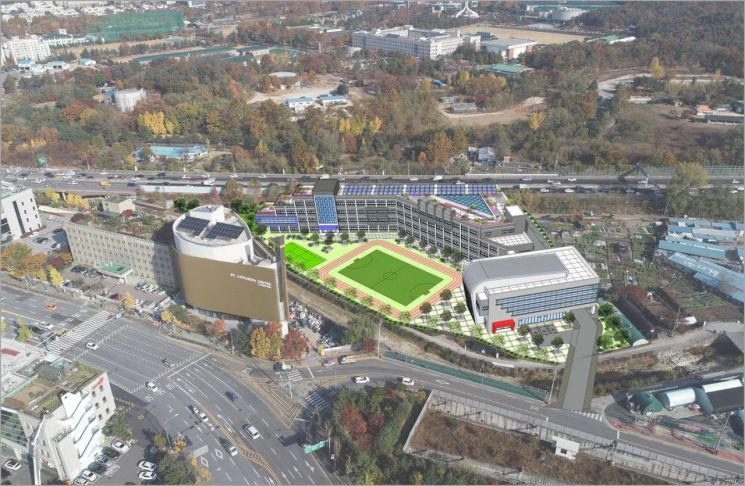
Alongside the school, a variety of complex convenience facilities with a total floor area of 4,984㎡, consisting of one basement floor and three above-ground floors, will be created for use by local residents as well. The basement level will include a swimming pool that can be used for swimming lessons, the first floor will house a community center for cultural exchange among residents, the second floor will feature a lifelong education center for information technology education programs for residents and vocational experience spaces for students, and the third floor will contain a gymnasium for sports activities such as basketball, table tennis, and badminton.
The complex convenience facilities will operate by separating usage times for students and local residents.
To build the complex facility, the district signed a business agreement with the Seoul Metropolitan Office of Education in April 2020 for the construction of the (tentative name) Seoul Dongjin School Complex Facility and has been working diligently to ensure smooth project progress.
Going forward, the district plans to invest a total of 13.8 billion KRW to successfully complete the construction. It will spend 2.5 billion KRW to create new access roads for safe commuting and convenient facility use, and cover 60% of the school construction costs, amounting to 11.3 billion KRW.
Ryu Gyeong-gi, Mayor of Jungnang-gu, said, “The establishment of Dongjin School will guarantee equal educational rights for students with disabilities and provide essential sports and cultural facilities for local residents. We will strive to ensure the school is built smoothly without any setbacks.”
Official Name Decided as ‘DDM Youth Startup Center Unicorn’ Following Naming Contest for Hwigyeong-dong Youth Startup Center in Dongdaemun-gu
Scheduled to Open in May on the 3rd Floor of Hwigyeong-dong Station Area Youth Housing... Plans to Promote Various Projects for Young Entrepreneurs
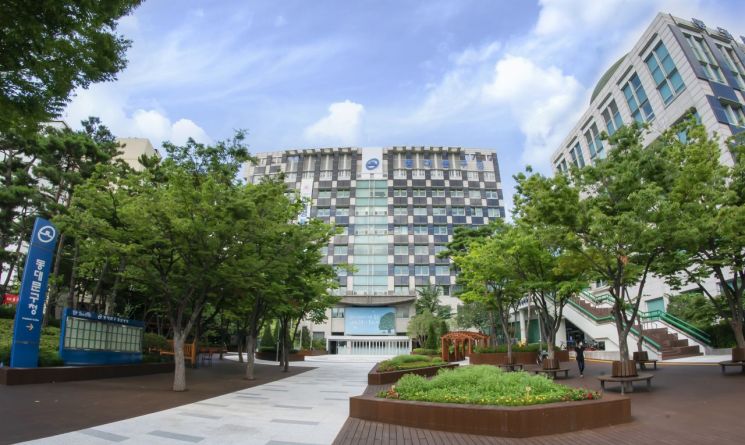
Dongdaemun-gu (Mayor Lee Pil-hyung) announced that the naming contest result for the Hwigyeong-dong Youth Startup Center, scheduled to open in May, was decided as ‘DDM Youth Startup Center Unicorn.’
The district is currently establishing the youth startup center on the 3rd floor of the Hwigyeong-dong station area youth housing to support young entrepreneurs in the region. To give it a fresh and distinctive name, a public contest was held among residents in January.
A total of 70 name submissions were received, and after evaluation, ‘DDM Youth Startup Center Unicorn’ was selected as the official name.
The name ‘DDM Youth Startup Center Unicorn’ is inspired by the term ‘unicorn company,’ which refers to a startup that has achieved great success. It expresses the hope that young entrepreneurs at the Hwigyeong-dong Youth Startup Center will grow and succeed like unicorn companies.
The center will include startup spaces for resident companies, meeting rooms, studios, and community spaces, with construction actively underway aiming for a May opening.
After opening, the center plans to implement various projects to strengthen young entrepreneurs’ capabilities, including resident company growth management, startup counseling and consulting, and operation of startup support programs.
Lee Pil-hyung, Mayor of Dongdaemun-gu, expressed gratitude to those who participated in the naming contest and stated, “We will do our best to create a space where young entrepreneurs want to come, and through ‘DDM Youth Startup Center Unicorn,’ we will provide wholehearted support so that prospective and early-stage young entrepreneurs in the region can grow and become self-reliant.”
Seongdong-gu Completes Full Survey of 5,279 Semi-basement Households... Aiming for Zero Flood Risk
‘Seongdong-type Residential Environment Improvement Project’ to Prevent Flooding and Support Ventilation Facilities After Surveying 5,279 Semi-basement Households
Applications Open Until March 10 for 1,453 Households Needing Support to Install Flood and Fire Damage Prevention Facilities
Seongdong-gu, Seoul (Mayor Jung Won-oh) announced the launch of the Seongdong-type Residential Environment Improvement Project aimed at achieving ‘zero flood risk for semi-basement homes.’
Last August, record-breaking heavy rains in the central region caused flooding and fatalities. In response, Seongdong-gu formed a residential safety task force in September and conducted a full survey of 5,279 semi-basement households in the district.
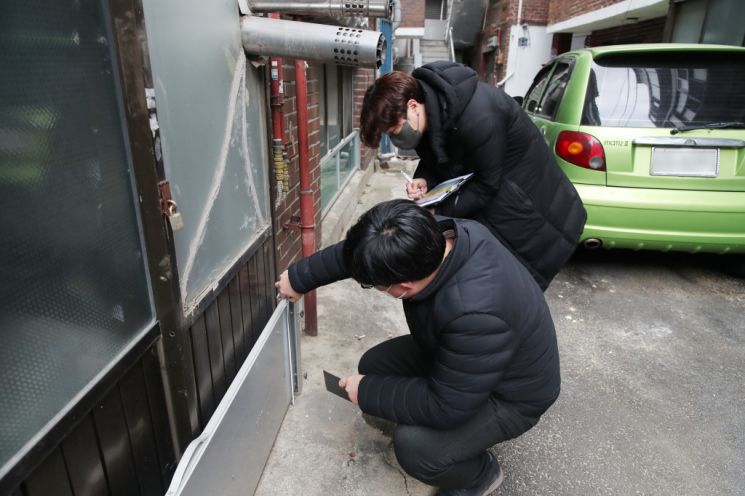
Based on existing administrative data, 14 architects visited every semi-basement home to examine site topography and blueprints. Excluding 1,456 non-residential or demolished households, 3,823 households were graded.
Each home was assigned a comprehensive grade from A+ to D, reflecting safety and health factors, and the necessity and location of prevention facilities were surveyed to determine priority support targets and scale.
The survey found that 2,157 flood prevention facilities are needed for 1,453 semi-basement households, including 712 flood barriers or backflow prevention devices, 955 operable security windows, 12 flood alarms, and 471 ventilation fans.
The district will begin by installing flood prevention facilities in semi-basement homes and will carry out the residential environment improvement project over the next four years, aiming to raise the living standards of all semi-basement homes in Seongdong-gu.
Applications will be accepted from semi-basement homeowners and tenants until March 10. To complete installations before the rainy season in June, 17 neighborhood community centers and local community leaders will assist with application support and identifying additional project candidates. Detailed information is available on the Seongdong-gu Office website.
For households graded C and D, the district plans to conduct in-depth resident interviews and implement customized residential environment improvements such as insulation and air conditioning, sanitary facilities like sinks, toilets, and tiles, and air quality improvement devices including dehumidifiers and air purifiers.
Additionally, future surveys and resident interviews will be conducted for rooftop and goshiwon (small dormitory) housing, with phased expansion of the Seongdong-type Residential Environment Improvement Project based on analysis.
Last month, the district signed an agreement with SH Seoul Housing & Communities Corporation to establish a public-private cooperation system for customized residential environment improvement projects. In late December, Seongdong-gu also enacted a basic housing ordinance and reorganized the apartment housing division into the housing policy division to lay the foundation for an inclusive housing welfare city.
A district official said, “Until now, support was mainly provided to homes that experienced flooding, but the significance of the Seongdong-type Residential Environment Improvement Project lies in proactively supporting flood prevention facilities through a full survey of semi-basement homes.”
Jung Won-oh, Mayor of Seongdong-gu, stated, “The lowest places in a city reflect the quality of life. We will actively implement residential environment improvement projects for semi-basement, rooftop, and goshiwon housing to raise the minimum housing standards and make Seongdong a leading city for housing welfare.”
© The Asia Business Daily(www.asiae.co.kr). All rights reserved.



















