[Asia Economy New York=Special Correspondent Joselgina] It has been revealed that wholesale prices in the United States are also under upward pressure in the new year. Following the previously released January Consumer Price Index (CPI), employment report, and retail spending, indicators suggesting that inflation may persist longer than expected have been pouring in daily. Some speculate that the Federal Reserve (Fed) might expand the rate hike to 0.5 percentage points again.
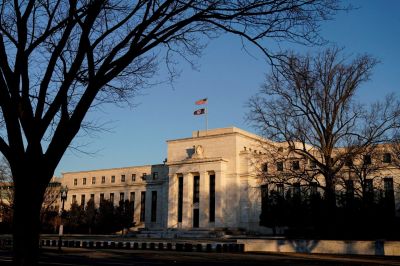
◆Wholesale Prices Also Under Upward Pressure...Is High Inflation Becoming Entrenched?
According to the U.S. Department of Labor on the 16th (local time), the Producer Price Index (PPI) for January rose 6.0% compared to the same month last year. Although this is lower than the 6.5% increase in December last year, continuing a seven-month trend of slowing growth, it exceeded market expectations of 5.4%. In particular, the month-over-month PPI rose 0.7%, marking the largest increase since June last year. This also surpassed the market forecast of 0.4%. Before the pandemic (global outbreak), the average monthly PPI increase was around 0.2%.
The core PPI, which excludes energy and food, rose 0.5% month-over-month and 5.4% year-over-year. The month-over-month core PPI increase is the highest in the past 10 months.
With the January CPI and now the wholesale price index PPI exceeding market expectations, concerns have intensified that U.S. inflation may become entrenched at a high level. Kurt Rankin, chief economist at PNC, said, "We are retreating in the fight against inflation," adding, "The rise in (wholesale price) PPI means consumers will face price increases tomorrow." On the same day, Nestl?, the world's largest food company, announced plans to raise prices again this year to offset cost increases due to inflation.
The recently released strong employment and consumption data also fuel concerns about the Fed tightening further. This suggests that despite the high-intensity tightening since March last year, inflationary pressures have not decreased as much as expected. In particular, the overheated labor market is considered a key concern for the Fed as it could further fuel upward inflationary pressures.
The unemployment data released on the day added to concerns about the overheated labor market. According to the Department of Labor, new unemployment claims for the week of February 5?11 were 194,000, down 1,000 from the previous week. This also fell below market expectations of 200,000. Steve Chiavaron, chief portfolio manager at Federated Hermes, expressed concern, saying, "With such a tight labor market, achieving the 2% inflation target becomes difficult."
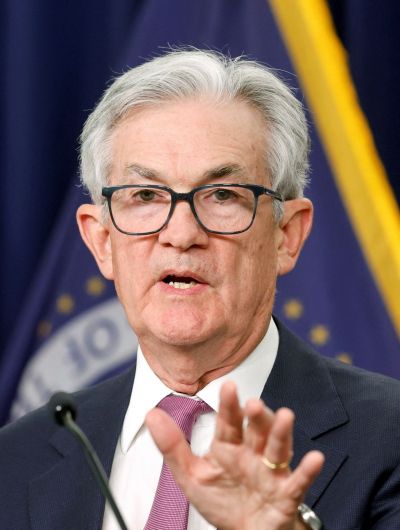
◆Fed Tightening Gains Momentum...Possibility of a Big Step Open
As indicators suggesting an overheated labor market, strong consumer spending, and prolonged inflation continue to emerge daily this year, the Fed's dilemma appears to have deepened. Just three weeks ago, the market expected the Fed to pause rate hikes in March and possibly cut rates within the year, but after the stronger-than-expected January employment report earlier this month, these early tightening pause theories have lost momentum.
Peter Boockvar, Chief Investment Officer at Bleakley Financial Group, evaluated, "These indicators remind us that the fight against inflation will not be easy."
Some even speculate that the Fed might expand the rate hike to 0.5 percentage points again at the March Federal Open Market Committee (FOMC) meeting. According to the Chicago Mercantile Exchange (CME) FedWatch tool, the federal funds (FF) rate futures market currently prices in an over 18% chance of a big step (0.5 percentage point rate hike) in March. While bets on a baby step (0.25 percentage point hike) still dominate, this is up from the 9% range just a week ago.
Loretta Mester, President of the Cleveland Federal Reserve Bank, also left the possibility of a big step open. In a speech that day, she said, "At the last FOMC, we saw a compelling case to raise rates by 0.5 percentage points, contrary to market expectations," adding, "It will take time to stabilize prices, and pain will be involved."
President Mester said, "The Fed still has more work to do," and "How much to raise rates and how long to maintain high rates depends on inflation and inflation expectations." She also warned about the CPI exceeding market expectations, saying, "It is a caution not to conclude too early that inflation is heading to 2%."
James Bullard, President of the St. Louis Federal Reserve and a prominent hawk within the Fed, also said, "Inflation is still too high," signaling more aggressive tightening ahead. He stated, "I have advocated for a 0.5 percentage point hike," and that he would not rule out a big step at the March FOMC. Despite the strong labor market and economic growth recently confirmed, he said inflation would be curbed through higher rates. He expressed confidence that "2023 could be the year of disinflation." However, both President Mester and President Bullard do not have voting rights at this year's FOMC.
© The Asia Business Daily(www.asiae.co.kr). All rights reserved.


















