Consumers Feeling Burdened by 'Overeating'... Shift to 'Small Portions'
"Let's Not Leave Leftovers"... Environmental Concerns Also Arise
Distribution Industry Introduces Food and Beverages with Reduced Portions
As prices continue to rise day by day, the '0.5 portion,' which reduces both quantity and price at once, is becoming a hot topic. The increase in single-person households and solo diners, as well as the trend of 'Sosikja (people who eat small amounts)' in the media, are said to have influenced this trend.
A Chinese restaurant in Siheung, Gyeonggi-do, is famous as a '0.5 portion specialty store.' All the menu items here are 0.5 portions, with both volume and price halved. The price of a bowl of Jjajangmyeon is 2,900 won, and Jjamppong, Gan Jjajang, and fried rice are 3,900 won. The owner of this restaurant told KBS YouTube channel 'Crab' in an interview that the average spending per customer is not very high. He explained, "It was an idea to overcome the commercial district challenges," adding, "It targets preferences of those who want to taste a variety of dishes in small amounts rather than eating a lot."
A famous tteokbokki restaurant located in Yongsan also offers 'half portions.' Customers visiting this place said, "It's just the right amount to enjoy alone, so it's good for solo dining." Restaurants promoting '0.5 portions' are becoming a hot topic in various online communities.
Stop Mukbang and Overeating... Now It's 'Sosik'
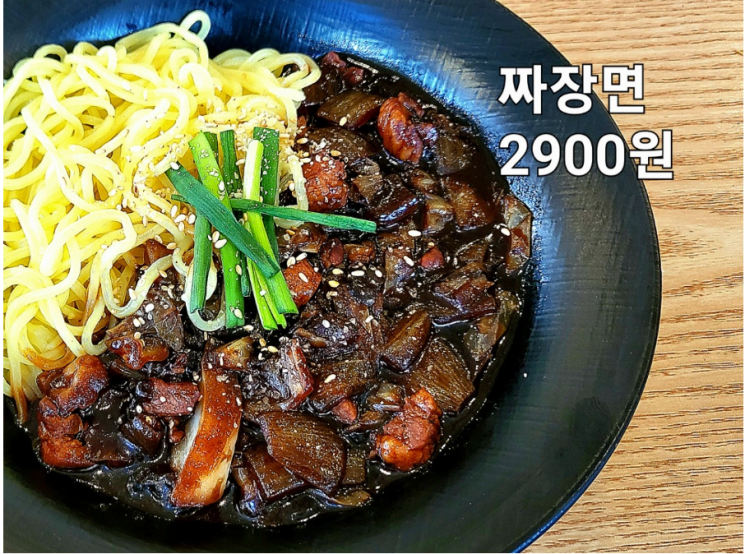 The appearance and price of the '0.5 serving' Jajangmyeon presented by a Chinese restaurant in Siheung, Gyeonggi Province.
 [Image provided by Jjeomogak]
Consumers who felt burdened by overeating, once represented by 'mukbang,' are shifting towards eating small amounts (Sosik). Since last year, the trend of Sosikja (people who eat small amounts) has taken root in the media. Eating habits of celebrities who eat small amounts, such as broadcaster Park Sohyun, Sandara Park, and Joo Woojae, have gained great sympathy. Especially as people age and their digestive abilities decline, the advantages of eating small amounts have become attractive to modern people who maintain the eating habits of their 20s and 30s.
Environmental pollution issues are also strengthening the small-eating economy. Movements like 'food refurb (food ingredient recycling),' which actively consume and utilize leftover and discarded agricultural products, are forming values such as 'take only as much as you can eat,' spreading throughout the food and beverage industry with environmental considerations.
Consumers respond positively, saying things like, "It's good to be able to try various foods in small amounts," and "It's better to eat only as much as you can rather than leaving and throwing away food, and it's environmentally friendly."
The distribution industry is also paying attention to the Sosikja trend. They are competing to launch small-quantity and small-package products that can be enjoyed in just the right amount at one time. Foods called '0.5 portions' or 'half portions' are quantities that can be enjoyed anywhere without burden and are small in size, making them easy to carry.
HiteJinro Beverage released a 240ml can version of its non-alcoholic beer-flavored drink 'Hite Zero,' and Orion packaged jelly in 10g small packs. Daesun Brewery introduced a 'half bottle of wine,' which is half the usual volume, and lunchbox brand Hansot introduced a service that allows ordering nearly half the usual amount.
© The Asia Business Daily(www.asiae.co.kr). All rights reserved.

















